
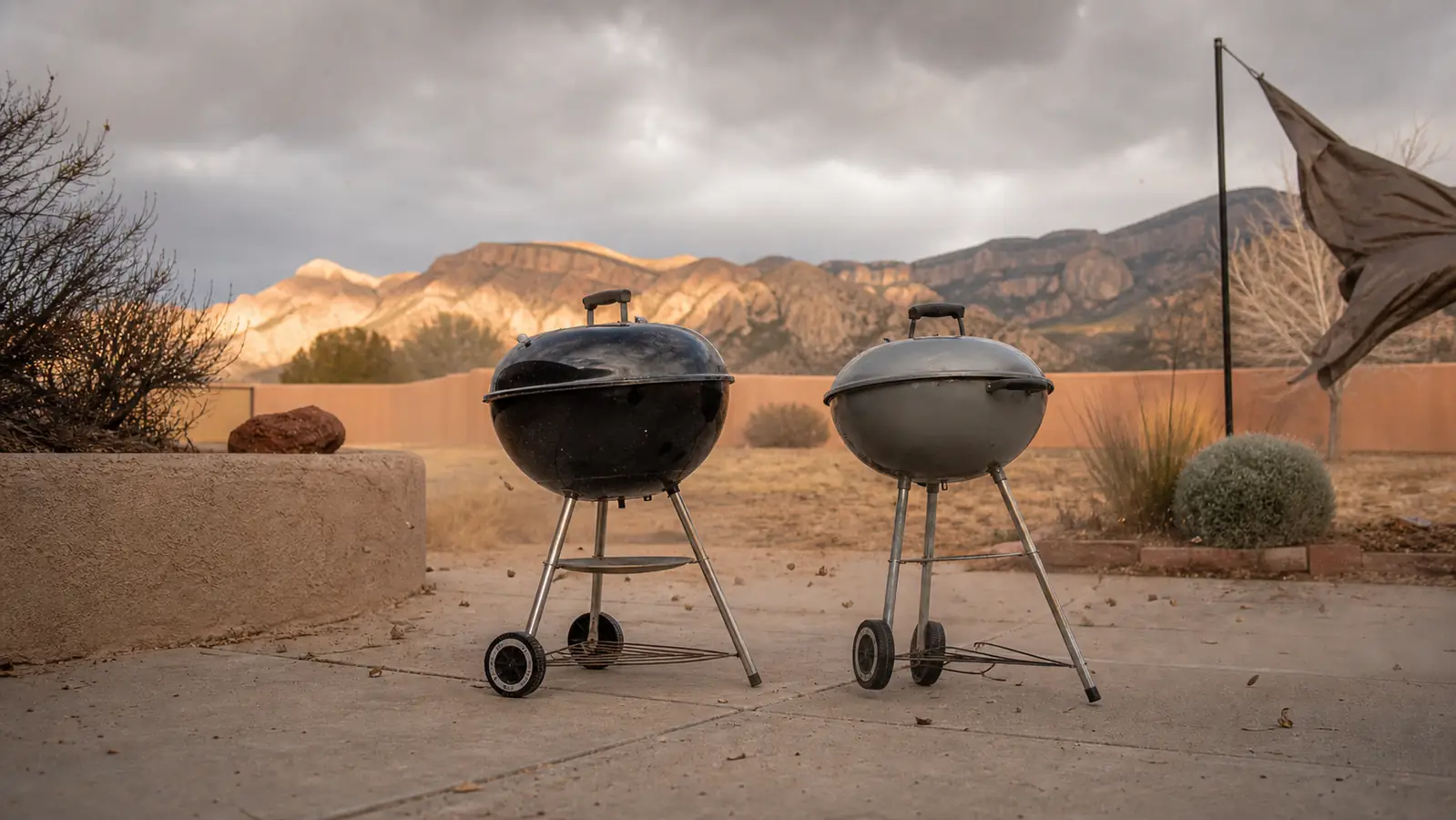
A neighbor named Ray moved in three doors down last spring and set up a cookout for the block. He'd bought a kettle grill from the hardware store for about sixty dollars, same silhouette as mine, same size bowl, and over burgers he asked me the question I get more than any other now that people know I've run a Weber kettle for over a decade: is the Weber Original Kettle Premium actually worth twice what his cost, or am I just loyal to a brand because it's the one I happened to buy first. That's a fair question, and it's the one this article is actually trying to answer, not the softer version I gave in my long-term review. I went back through twelve years of notes, ran a side-by-side wind test against Ray's kettle in March, and looked hard at where the extra money in a Weber actually goes versus where it's just a name on the lid.
Here's what nobody tells you before you buy one: the marketing photos show a kettle sitting pretty on a clean deck in still air, and that's not the environment either of our grills actually lives in. My patio in Albuquerque catches wind funneling down off the Sandias most spring afternoons, and that wind is the real test of a grill's build quality, not the glossy renders on the box. A lightweight kettle bounces around temperature-wise in a way a heavy one doesn't, and that difference showed up fast once I started actually measuring it instead of assuming.
I'm not interested in defending Weber just because I've used one for over a decade. If this review only existed to validate a purchase I made in 2014, it wouldn't be worth your time. So everywhere below, I'm naming the real dollar gaps, the real weights, and the real failure points I found on both grills, not just the one with my name attached to it for twelve years.
The Quick Verdict
Twelve years in, and a fresh side-by-side against a much cheaper kettle, the Weber Original Kettle Premium earns its price mainly through wind stability, resale value, and parts availability, not through anything flashy. The word 'Premium' oversells what you actually get over Weber's own base model, and the assembly experience is rougher than the marketing lets on.
Amazon Check Today's Price →Tired of a Cheap Kettle That Swings 40 Degrees in a Breeze?
The Weber Original Kettle, 22-Inch, is the same grill I put through a real wind test against a budget kettle this spring. Here's today's price if you want to see it for yourself.
Amazon Check Today's Price on Amazon →What I Actually Went Back and Checked
For this second look I didn't just cook on the grill and call it a review. Over four weekends this past March I ran my Weber next to Ray's off-brand kettle, both loaded with the same weight of lump charcoal, both holding a target of 275 degrees for a rack of ribs, and I logged grate temperature every ten minutes with a probe thermometer clipped through the top vent. I also dug up my original 2014 receipt and assembly notes, because half of what people ask me about now is whether the buying experience matches what the box promises, not just how the metal holds up years later.
I picked a genuinely windy stretch on purpose. Albuquerque throws steady 15 to 20 mph gusts through the East Mountain gap most March afternoons, and that's exactly the condition that separates a well-built kettle from a cheap one. A stagnant, calm test in a garage tells you almost nothing useful about how a grill actually performs in a real backyard, and most spec sheets are written as if wind doesn't exist.
The Wind Test Nobody Runs Before Buying
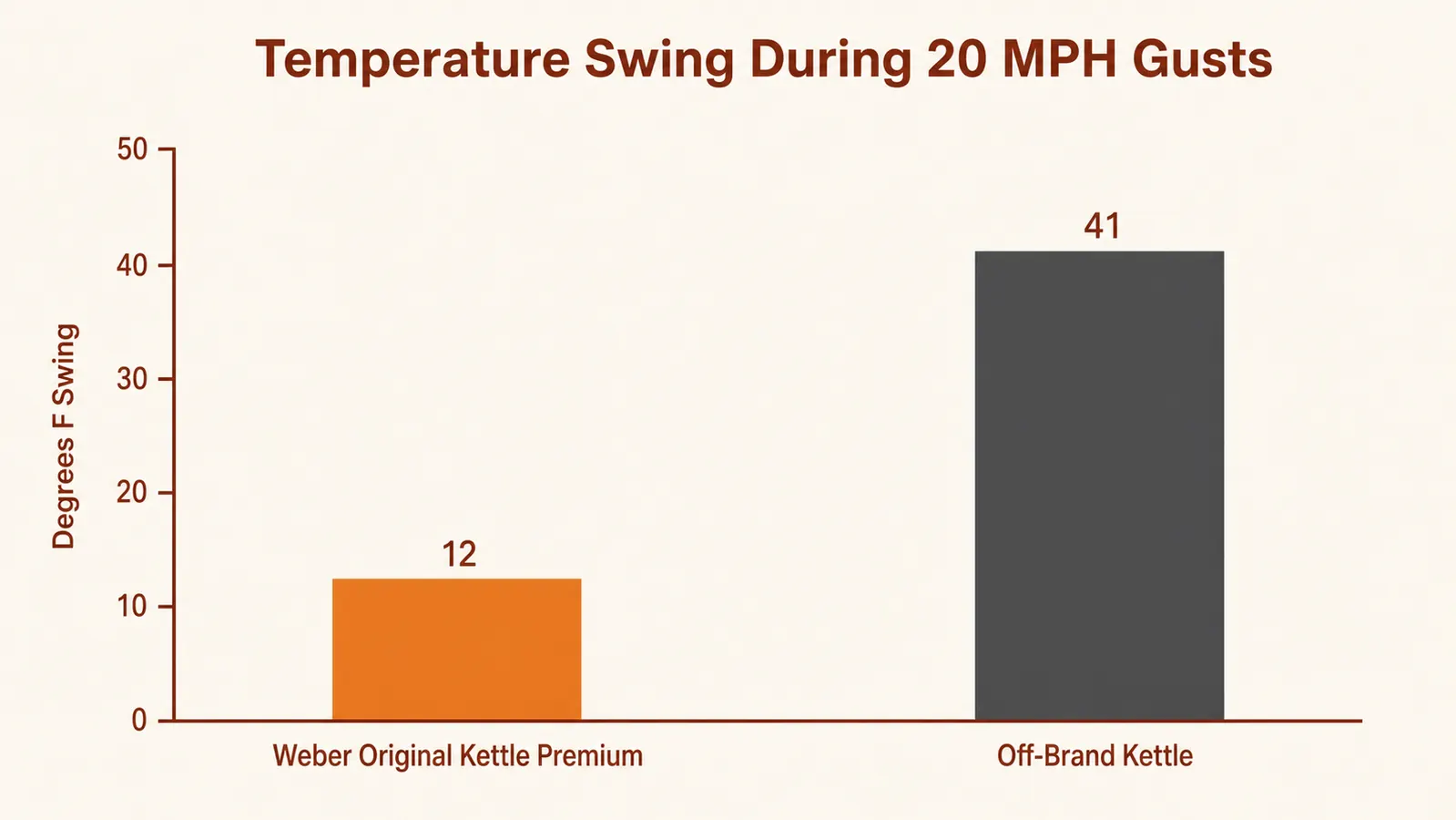
Over four cooks, my Weber held between 268 and 280 degrees through repeated wind gusts, a swing of about 12 degrees total. Ray's kettle, thinner steel and noticeably lighter when I picked up both bowls empty side by side, swung as wide as 41 degrees on the same afternoon, dropping to the low 240s when a gust hit the open side vent and then spiking past 300 once he closed it back down to compensate. That's not a small difference if you're trying to hit a specific finish temperature on a rack of ribs or a spatchcocked chicken.
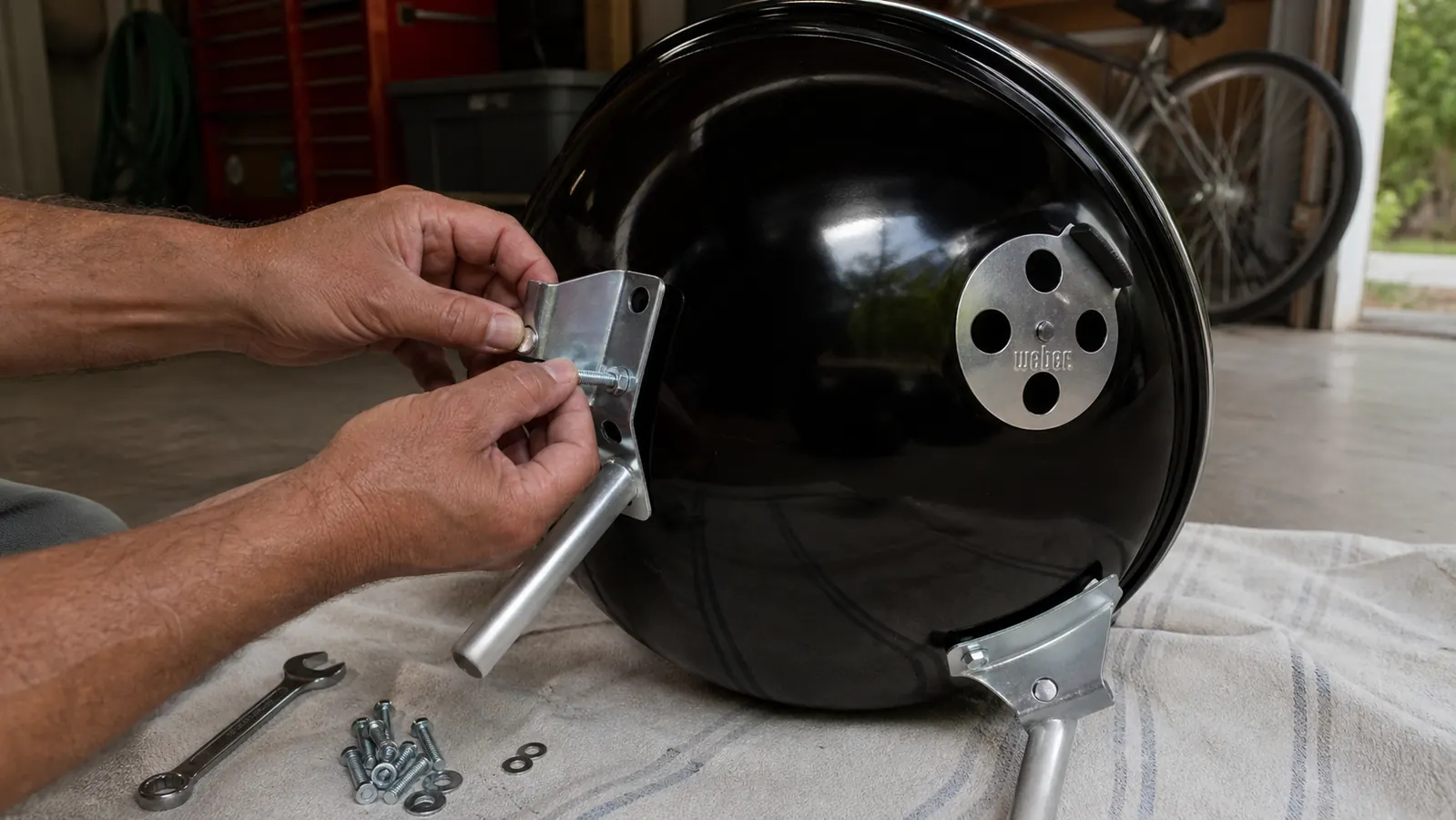
I put both empty bowls on my bathroom scale before any of this started, mostly out of curiosity. My Weber came in at just under 32 pounds for the kettle and lid alone, not counting the cart or ash catcher. Ray's kettle weighed 19 pounds. That 13-pound gap doesn't sound like much until you watch what a 20 mph gust does to each one. His lid actually lifted and clattered against the bowl rim twice during our second test cook, something that's never happened to mine in over a decade on the same patio.
The weight difference is the whole story here. My Weber's porcelain-enameled bowl is heavy enough that it doesn't rock when wind hits the side of it, and the thicker steel holds heat like a flywheel instead of bleeding it out the second a gust passes through the vents. Ray's kettle is lighter to carry across the yard, which he likes, but that same lightness is exactly what let the wind push his temperature around so much. If you cook somewhere genuinely windy, that's worth more to your food than almost any other spec printed on the box.
The ribs cooked on my side finished within about ten minutes of my target time both days, bark set even across the rack. Ray's ribs on the windier of the two afternoons came out with one end noticeably darker than the other, a direct result of that temperature spike after he choked the vent down to fight the gust. Good technique on his part, the tool just made it harder than it needed to be.
What 'Premium' Actually Buys You Over the Base Kettle
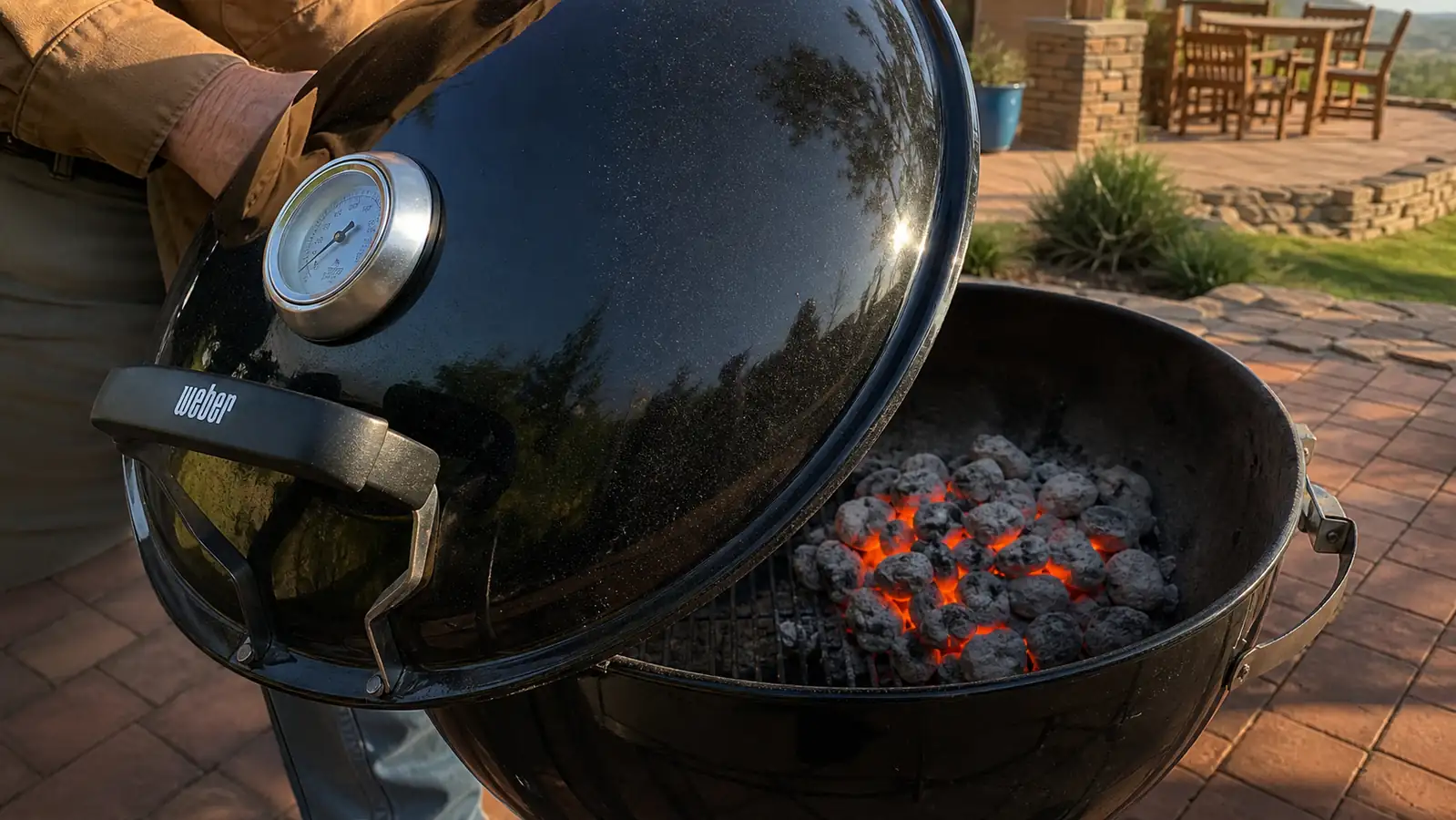
Here's the part of the honest review most reviews skip, because it's less flattering to Weber specifically. The 'Premium' name on this kettle suggests a meaningfully upgraded product, and the truth is closer to modest. Compared to Weber's own non-Premium Original Kettle, you're mainly paying for a tuck-away lid holder, a slightly nicer ash catcher, and a couple of color options. The bowl, the grates, the vent system, and the one-touch cleaning mechanism, the parts that actually determine how the grill performs and how long it lasts, are shared across both tiers.
Weber's own website lists the Premium tier for roughly 30 to 40 dollars more than the base Original Kettle at any given time, depending on color and size. For that difference, you get the lid holder, a marginally better ash catcher, and the color selection. You are not getting a thicker bowl, better grates, or a different vent design. Knowing that changes the calculation for a lot of buyers who assume 'Premium' automatically means structurally different metal underneath.
If money is tight and you don't care about a spot to rest the lid while it's off the grill, Weber's base model does the same job for less, and I'd tell a first-time buyer that plainly instead of steering them toward the Premium out of habit. The gap that actually matters isn't between Weber's own tiers, it's between any Weber kettle and the off-brand kettles competing on price at the same store.
The Assembly Story the Box Doesn't Mention
Nobody writes about this, but I remember it clearly because it annoyed me at the time. I put mine together on a Saturday afternoon in April 2014, and the hardware bag was short one leg bolt. I called Weber's customer line expecting a runaround and instead had a replacement part in the mail within five days, no receipt required, no hassle. That's a real point in the brand's favor, but it doesn't erase the fact that the box itself, fresh out of the factory, shipped incomplete. Quality control on the hardware bag is clearly not perfect, and I'd count on setting aside closer to 45 minutes for assembly rather than the 20 the included instructions imply, especially if you're doing it solo.
Ray had a smoother assembly on his cheaper kettle, for what it's worth, though the wheel axle on his cracked within its first year of moving the grill across a gravel path, something I've never once had happen to mine in twelve years of the same kind of use. So the story isn't as simple as 'Weber gets everything right.' It got the first hour wrong and the next decade right.
Where the Off-Brand Kettle Actually Holds Its Own
I want to be fair to Ray's kettle too, because an honest review doesn't mean pretending the cheaper option has nothing going for it. On a calm evening with no wind, his kettle cooked burgers just as well as mine. The thinner steel actually came up to searing temperature a couple minutes faster than my heavier bowl, which makes sense, less mass to heat through. If you're doing quick weeknight cooks in a garage or on a covered patio where wind isn't a factor, a lot of what makes my Weber worth the money simply doesn't come into play.
It's also lighter to store. Ray tucks his against the side of his shed without much effort, where mine takes a real push to get up onto the flagstone and under its cover. If storage space or the ability to haul a grill to a tailgate or a campsite matters more to you than long-term durability, that weight difference cuts the other way and favors the cheaper option. I'd rather be straight about that than pretend the heavier build is a win in every situation.
The Cost Math Nobody Actually Runs
Do the arithmetic instead of trusting either of our guts. At the current price, my Weber works out to somewhere around 18 dollars a year spread over twelve seasons, and it's still fully functional with only a couple of small part swaps along the way. Ray's kettle cost him roughly a quarter of that up front, but the wheel is already cracked at under a year old, and if it follows the pattern I've seen from other cheap kettles friends have owned, he's likely replacing the whole thing within three to four years. Two or three of those cheap kettles back to back easily crosses what I paid for one Weber that's still going strong.
I checked what twelve-year-old Weber kettles are going for on local marketplace listings while writing this, and even ones with real cosmetic wear were selling for 60 to 90 dollars, more than Ray paid for his brand new. I've never seen an off-brand kettle that age listed for more than scrap-metal money. That resale floor is part of the cost math too, even if most buyers don't think about it until they're the one trying to sell.
That math only holds if you actually use the grill enough to wear it out on your own timeline rather than losing interest after a summer or two. If you're not sure grilling is going to stick as a habit, the cost argument for the pricier kettle weakens fast, and that's worth being honest about instead of pretending every buyer needs the durable option.
What I Liked
- Heavy porcelain-enameled bowl held temperature within about 12 degrees through real wind gusts, where a lighter off-brand kettle swung 41 degrees on the same afternoon
- Weber's customer service replaced a missing assembly bolt within five days with no receipt required
- Shared core components with Weber's cheaper non-Premium kettle mean you're not overpaying for performance, just for the lid holder and finish
- Parts availability means a twelve-year-old grill can still be repaired instead of replaced
- Resale value on used Weber kettles stays meaningfully higher than off-brand kettles at the same age
Where It Falls Short
- The 'Premium' name oversells the actual upgrade over Weber's own base kettle, mostly a lid holder and ash catcher
- My hardware bag shipped short one leg bolt in 2014, and assembly took closer to 45 minutes than the box's estimated 20
- The lid thermometer sits off to one side of the dome, so its reading depends heavily on where you've banked the coals
- At 30-plus pounds assembled, it's noticeably harder to reposition on gravel or uneven ground than a lighter kettle
- The cost advantage only pays off if you actually grill often enough to wear the thing out
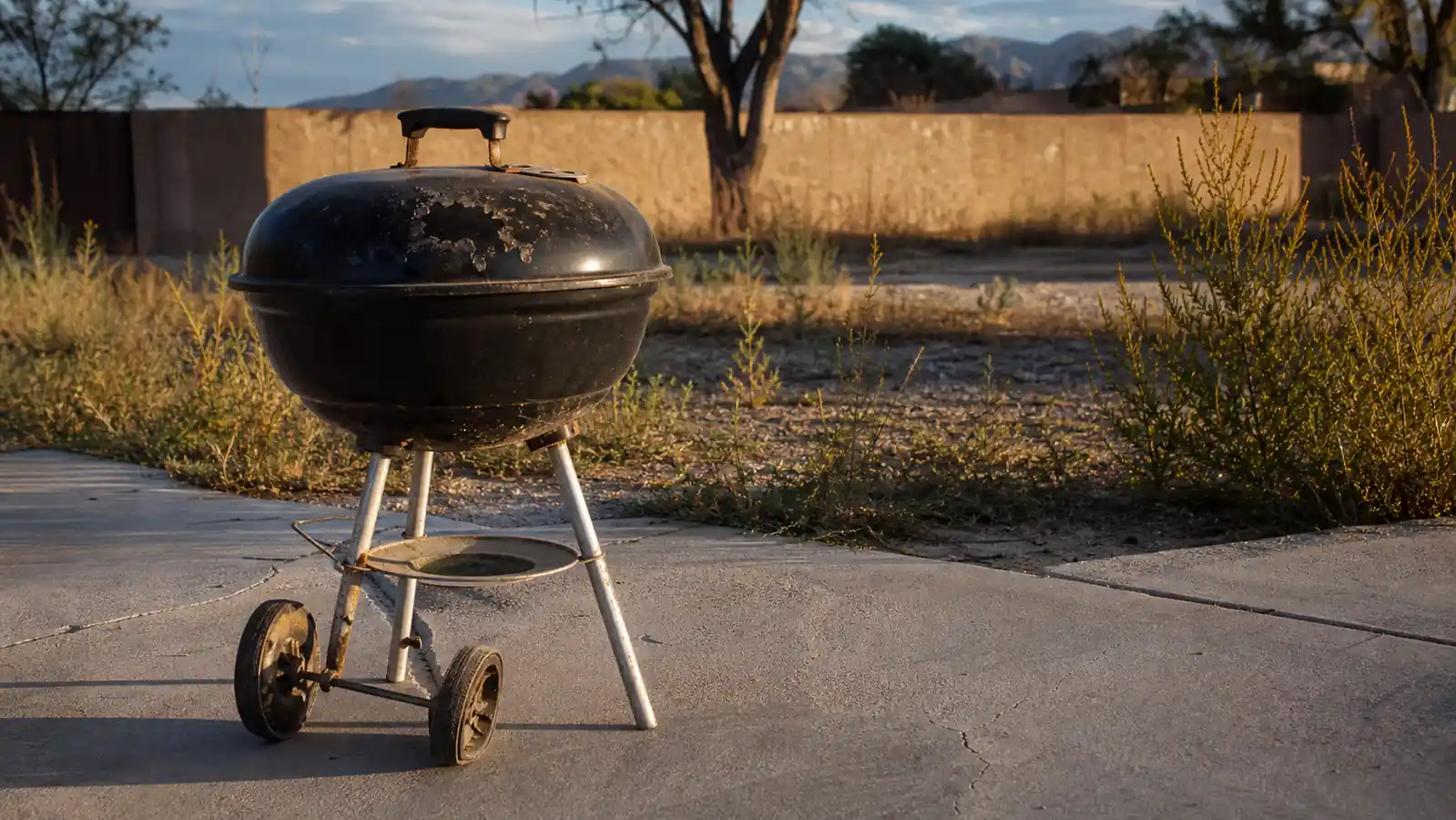
My kettle swung 12 degrees in the same wind that pushed Ray's cheaper one around by 41. That's not brand loyalty talking, that's a probe thermometer.
Who This Is For
This is for the buyer who's genuinely comparing a name-brand kettle against a bargain one and wants real numbers instead of a marketing page, especially if you cook somewhere with real wind or weather exposure like mine. It's also for anyone deciding between Weber's own tiers, since knowing the Premium mostly buys a lid holder and a color choice should save some people real money before they check out. If you plan to grill often enough for years of use to matter, the math in this review is built for you specifically.
Who Should Skip It
If you're grilling three or four times a summer and storing the thing in a shed the rest of the year, an off-brand kettle will probably do the job fine, and you won't be around long enough to hit the failure points that showed up on Ray's. Skip the Premium tier specifically if all you want is the base cooking experience and don't care about a lid holder, since Weber's cheaper non-Premium kettle gets you the same bowl, grates, and vent system for less. And if your patio is genuinely sheltered from wind, some of the argument in this review simply won't apply to your backyard the way it applies to mine.
The Math Held Up Against a Cheaper Kettle. Here's the One I'd Still Buy.
Twelve years of real cooks and a side-by-side wind test against a budget kettle, and the Weber Original Kettle, 22-Inch, is still the one on my patio. See today's price before you decide which way to go.
Amazon Check Today's Price on Amazon →