
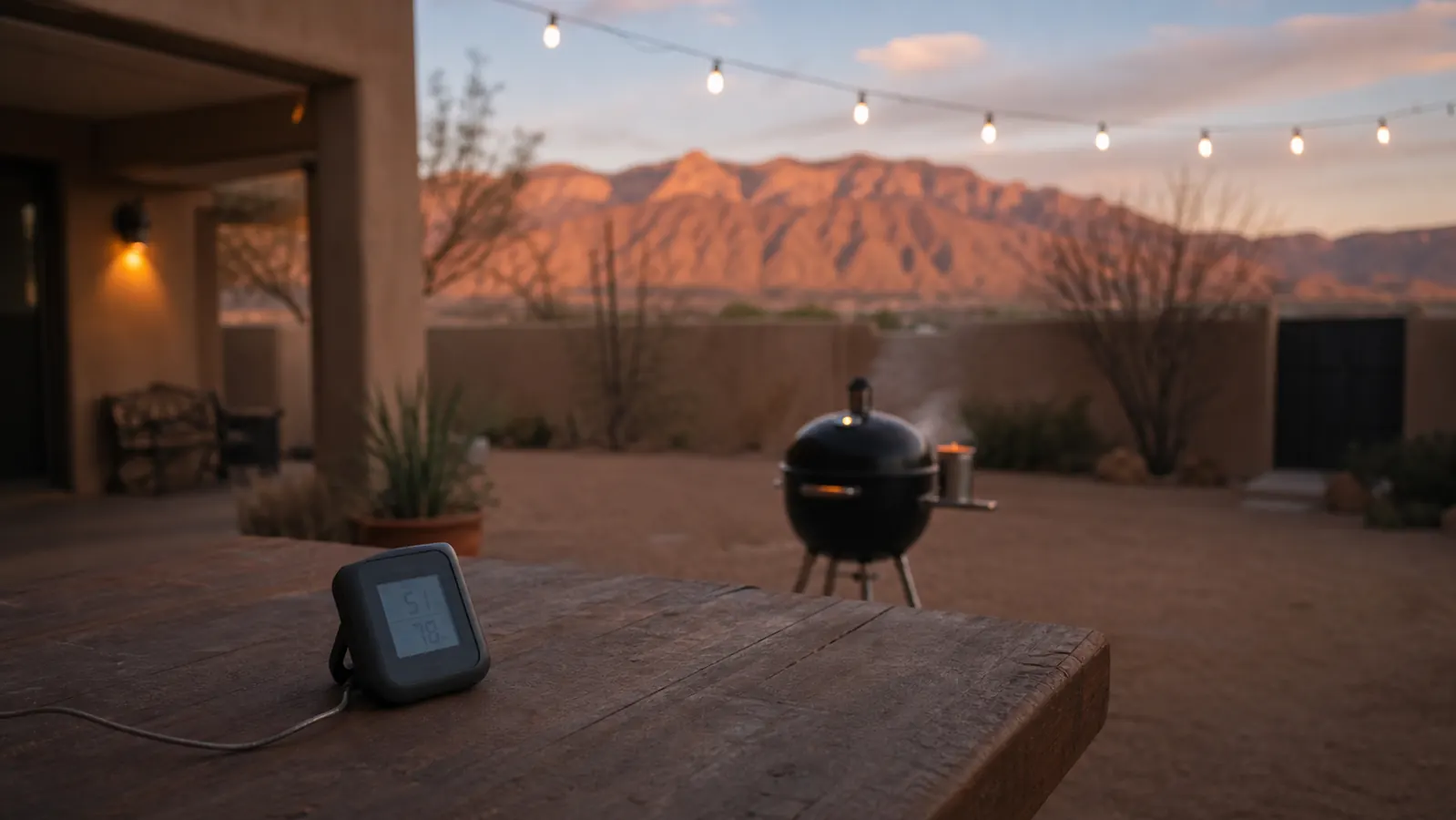
I picked up the Inkbird IBT-4XS in March of 2025, after burning through two cheap single-probe thermometers that both quit on me inside a year on my patio in Albuquerque. This one is a four-probe Bluetooth setup, Inkbird's mid-tier model, running at a mid-range price point as of this writing, and it has been clipped, taped, or wired into some part of nearly every low-and-slow cook I've run since. That's somewhere around 60 cooks by my grilling log, spanning brisket, pork shoulder, ribs, spatchcocked chicken, and more weeknight chicken thighs than I bothered to count. Twelve years running kettles and gas grills at 5,000 feet taught me one thing early: you cannot eyeball doneness the way people at sea level can. Water boils around 202 degrees here instead of 212, a brisket stall can drag on longer than any recipe card predicts, and guessing gets you dry chicken more often than it should.
The pitch on the Inkbird is straightforward. Four probes, a small base station, Bluetooth to your phone, and alarms that go off when any probe hits its target. Inkbird claims a range of about 150 feet. Thin, dry air up here doesn't do much to a Bluetooth signal one way or the other, but adobe walls and a kitchen full of metal appliances absolutely do, and that turned into one of the real findings of this season. Before I get into range, accuracy, and battery life, here's where I landed after a full season with it strapped to my smoker.
The Quick Verdict
After a full season of near-daily use, the Inkbird IBT-4XS earns its spot as my go-to probe thermometer for anything over an hour on the grill or smoker. The four probes and steady accuracy have replaced a lot of guesswork, but the 150-foot Bluetooth range promise falls apart the moment a wall gets involved.
Amazon Check Today's Price →Tired of Cutting Into a Brisket Just to Find Out If It's Done?
The Inkbird IBT-4XS is the four-probe wireless thermometer I've had strapped to nearly every low-and-slow cook this season. No more guessing, no more slicing early and losing juice.
Amazon Check Today's Price on Amazon →How I've Used It, Cook After Cook
On a normal weeknight I'm only using one probe, dropped into a batch of green chile chicken thighs or a quick flat-iron steak, mostly just to catch the moment I hit 165 or 130 without hovering over the grill the whole time. That's the low-stakes use case, and it works exactly as expected. The color-coded silicone boots on the probe tips make it easy to keep track of which channel is reading which piece of meat, which matters more than I expected once I started running two or three probes at once.
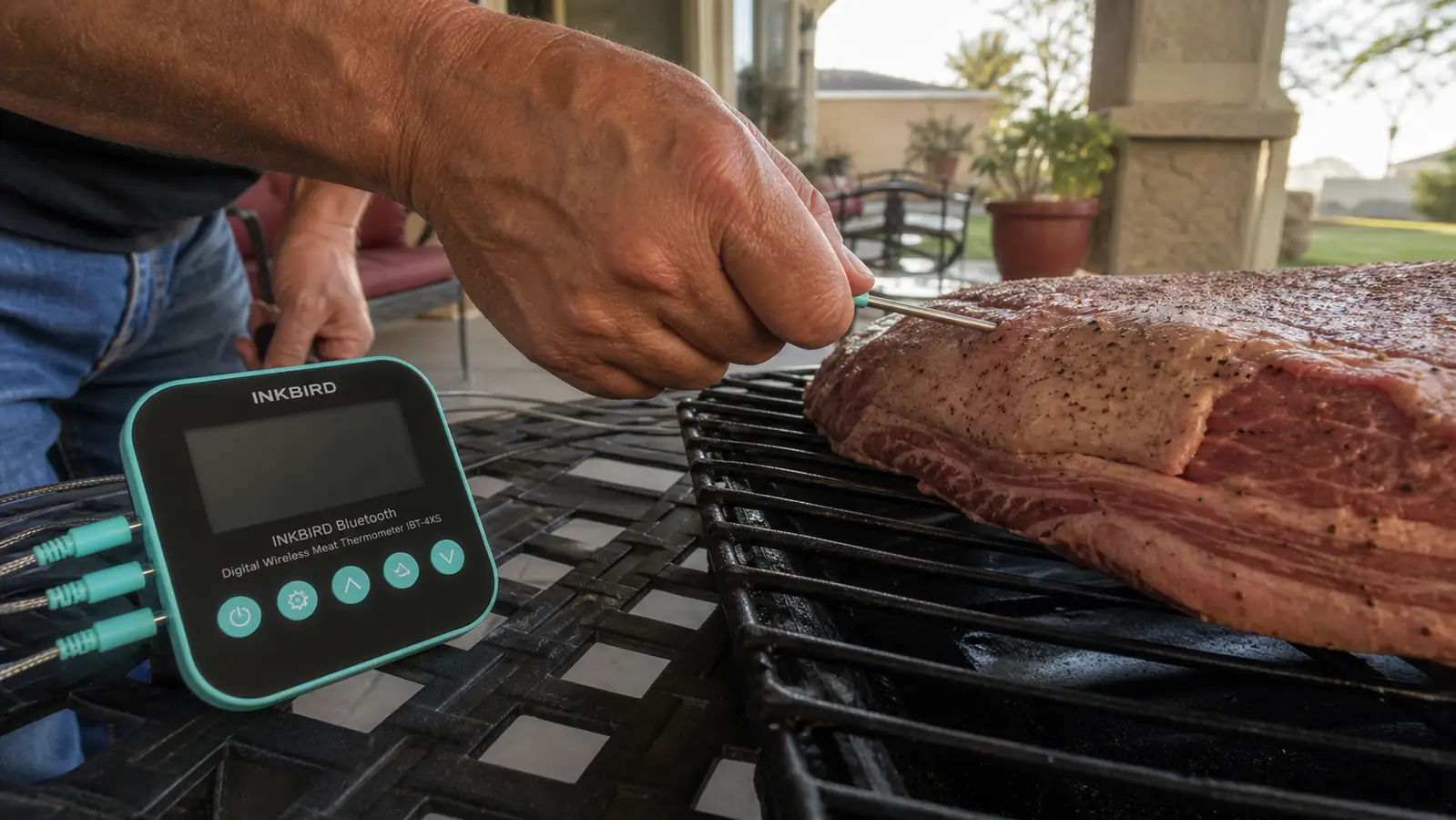
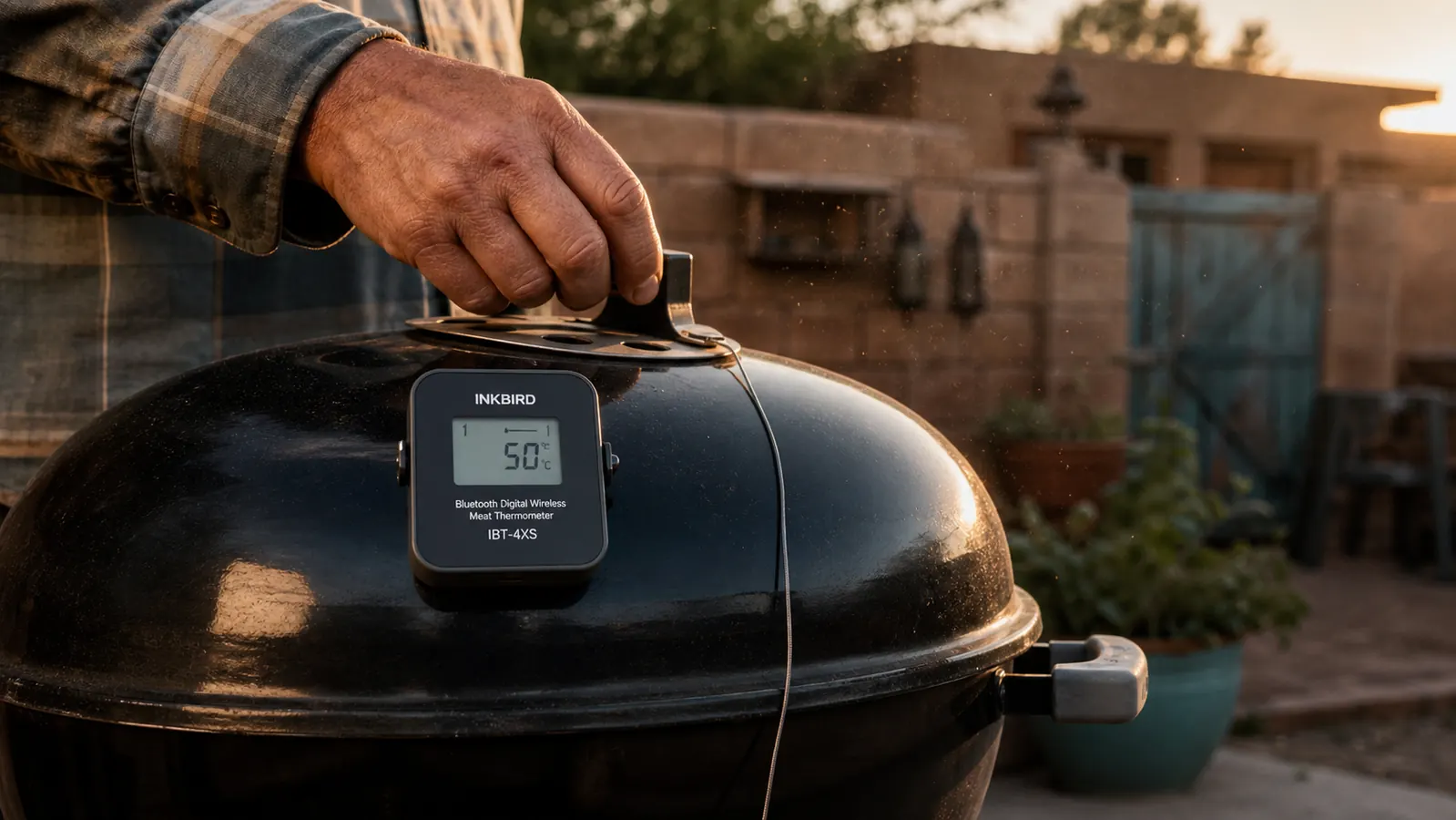
The real test came on longer weekend cooks. Over Memorial Day weekend in 2025 I ran a 7-pound brisket flat on the kettle using the snake method, mesquite mixed with a little pecan, and I ran the setup Inkbird designs it for: one probe deep in the thickest part of the flat for meat temp, a second probe clipped to the grate near the meat for ambient temp, and the base station magnet-mounted to the curved hood. That cook ran just under eight hours, holding around 250 degrees at the grate, and I could watch both numbers from my kitchen table instead of lifting the lid every twenty minutes and losing heat I'd have to build back up in this thin air. On July 4th I ran two pork shoulders side by side with two more probes, four channels total, all tracked from one base station, which is the exact scenario this model is built for and the one place a single-probe thermometer just can't compete.
The probe cables themselves have held up fine through the season, no fraying or exposed wire despite getting looped over hot grates more times than I can count. The base station lives in a cabinet just inside the back door between cooks, and the magnet mount has been strong enough to hold it steady on the kettle hood through wind gusts that regularly roll off the mesa in spring.
Probe Accuracy After a Season of Hard Use
I cross-checked the meat probes against a calibrated instant-read thermometer periodically through the season, dunking both in ice water and again in near-boiling water, which at my elevation reads about 202 degrees rather than 212. Fresh out of the box, the Inkbird probes read within a degree of the instant-read in both tests, which is about as good as you can ask for. After roughly seven months of regular use, one of the four probes had drifted about 2 degrees warm on the ice bath test, and the ambient probe, which takes the most direct heat exposure clipped to the grate, had drifted closer to 4 degrees warm by month nine.
That drift is worth knowing about but not a dealbreaker. A 4-degree error on an ambient reading of 250 doesn't ruin a brisket. Where it would matter is on a meat probe reading close to a food-safety threshold, so about every couple of months I still dunk the meat probes in ice water as a quick sanity check, a five-minute habit that costs nothing and has caught the drift before it caused a problem. I'd tell anyone buying this thermometer to build that same habit in rather than trusting the readings blindly a year or two down the line.
Bluetooth Range, Real Numbers From My Patio
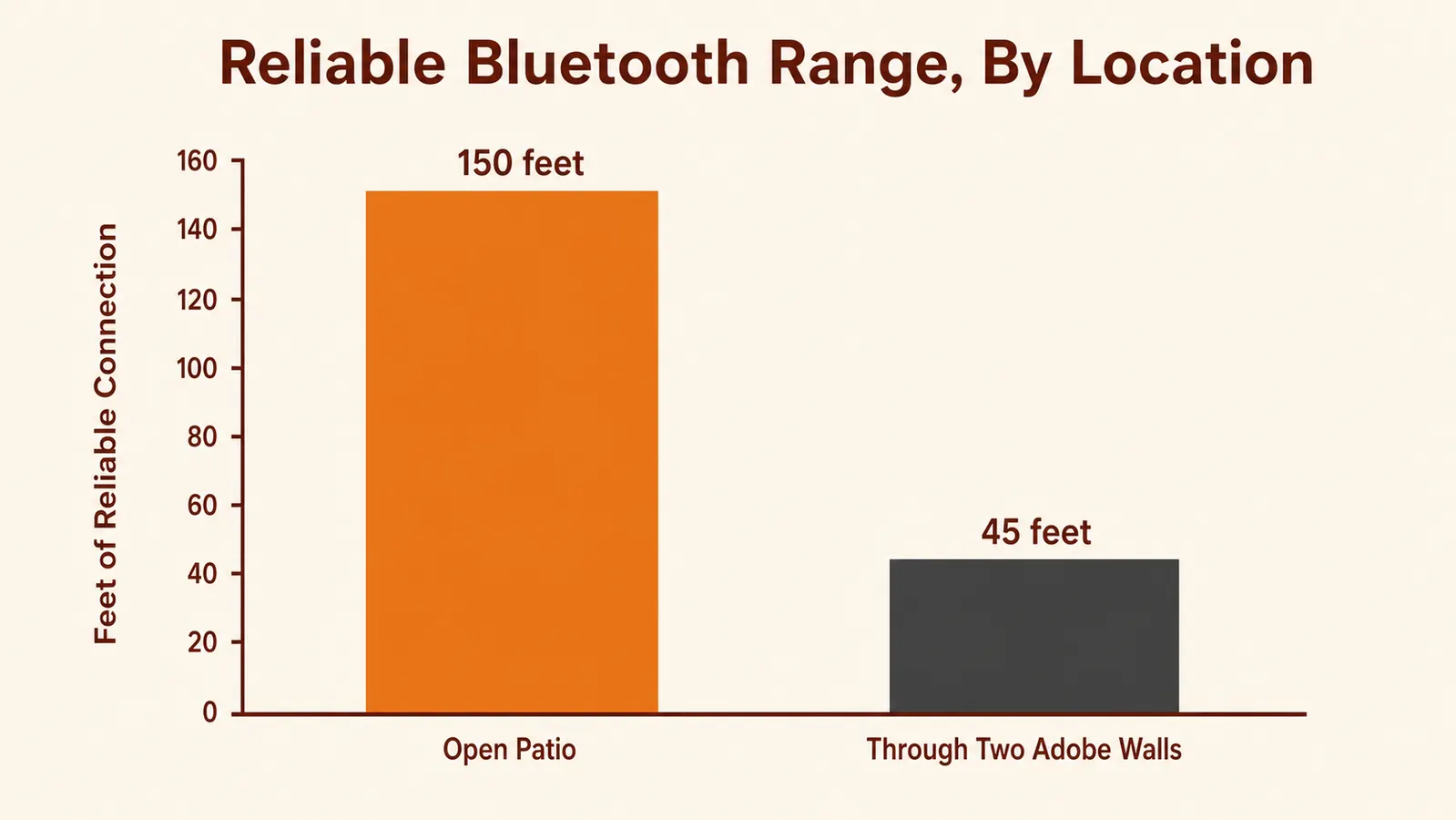
Inkbird advertises about 150 feet of Bluetooth range, and out on my open patio with a clear line of sight to my phone, that number held up well. I walked the yard with the app open during a slow cook and kept a steady connection out past 140 feet before it started dropping alarms. That's plenty for checking on a cook from the far end of the yard while I'm dealing with the dog or hosing off the patio.
The number falls apart once you bring the house into it. My kitchen sits behind two thick adobe walls from the patio where the smoker lives, and once I'm inside past both walls, the connection gets unreliable past about 45 feet, sometimes dropping out closer to 35 feet if the microwave happens to be running at the same time. Adobe construction is dense and older homes around here often have chicken wire lath under the plaster, both of which chew up a Bluetooth signal fast. That's not really an Inkbird problem specifically, any Bluetooth device would struggle through the same walls, but it's exactly the kind of local detail most reviews never mention because most reviewers aren't cooking behind two feet of adobe.
In practice, that means I can walk to the mailbox and back with a live connection, but I can't count on checking the brisket from my recliner in the living room the way the box art seems to promise. If your kitchen or living room sits more than a wall or two from where you cook, plan on the real range being a fraction of the advertised 150 feet.
Battery Life and the Charging Habit I Had to Build
The base station runs on two AAA batteries, and Inkbird's packaging suggests they'll last around six months under normal use. Running this thing on 8 to 10 cooks a month, most lasting one to three hours but a handful stretching past seven or eight, I got closer to four months out of a set of alkaline AAAs before the low-battery icon showed up on screen. That's not a complaint exactly, heavy use is heavy use, but if you're cooking as often as I do, don't expect the six-month figure to hold.
I switched to lithium AAAs partway through the season after reading they perform more consistently in temperature swings, and Albuquerque swings hard, 90-degree afternoons dropping to the 50s by the time a long brisket cook wraps up at night. The lithium batteries have run a little longer than the alkaline set did, closer to five months, and I keep a spare pair in the kitchen drawer now so a dead battery mid-cook is a two-minute fix instead of a scramble.
The App, Alarms, and What Actually Works at 5,000 Feet
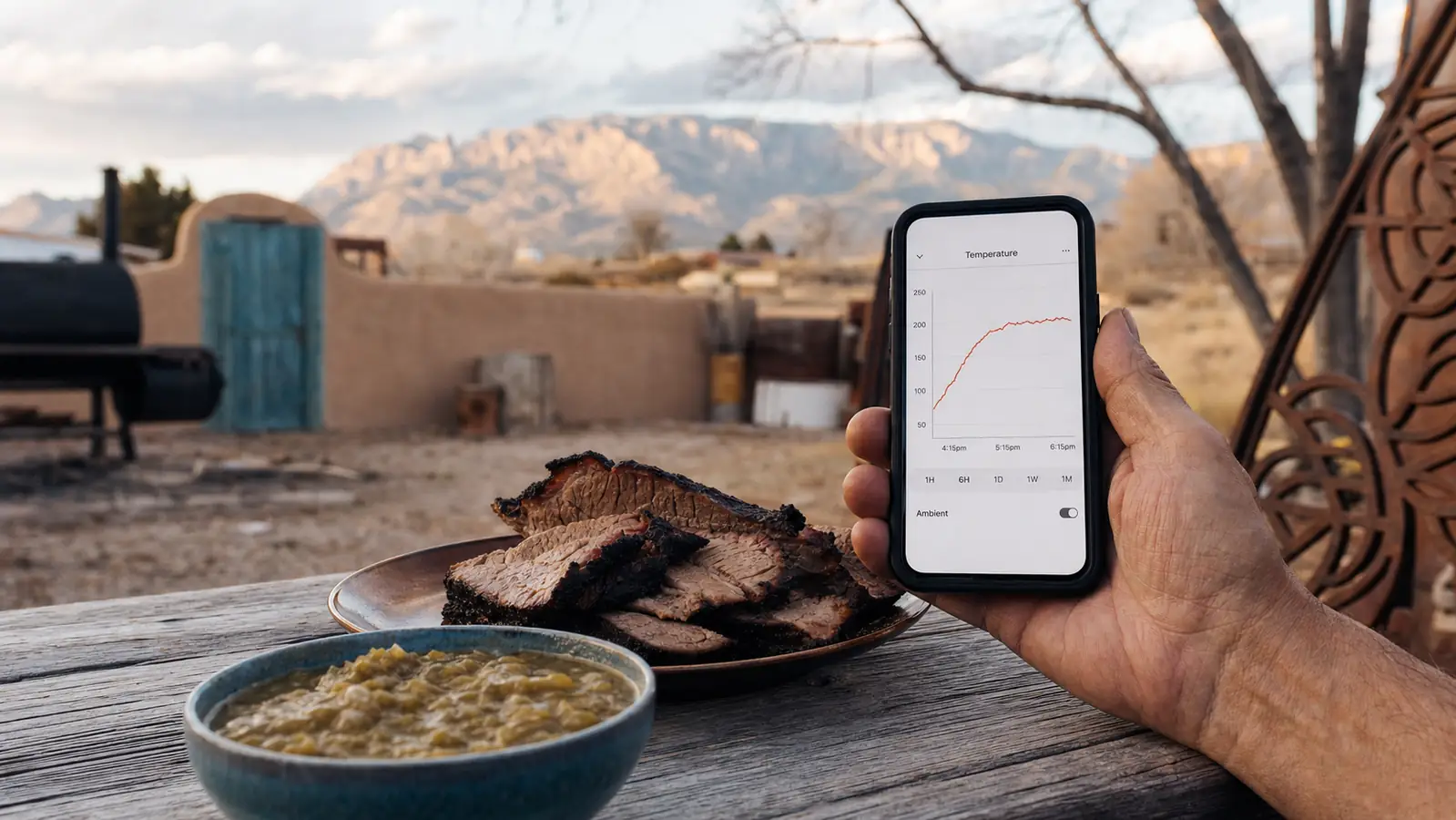
The companion app is where the Inkbird earns a lot of its convenience. You set a high and low target for each probe, and it'll sound an alarm on your phone and beep on the base station when meat is climbing too fast or a smoker's ambient temp has dropped, which happens more than I'd like when a wind gust off the mesa pushes cool air across the vents mid-cook. The graph view showing temperature over time has genuinely changed how I read a brisket stall. Instead of guessing whether the flat has actually plateaued, I can see the line go flat on the screen and know it's just the stall doing its thing rather than something wrong with my fire.
The one recurring annoyance is reconnecting after the app drops in the background, which iOS seems to do more aggressively than I'd like if I've switched apps to check the weather or answer a text. It usually takes 10 to 15 seconds to reconnect once I reopen the app, not a real problem, but enough of an annoyance that I've learned to just leave the Inkbird app open and glance at it rather than tabbing away during a critical stretch of a cook.
What I Looked at Before I Bought It, and What I'd Look at Now
Before landing on the IBT-4XS, I looked at a couple of single-probe Bluetooth thermometers running less up front, and at a wired dual-probe unit from a different brand that a neighbor swears by. The single-probe units are fine for weeknight cooking but useless once you want to track both meat and ambient temperature at the same time, which is the whole point of a long smoker cook. The wired dual-probe unit my neighbor uses skips Bluetooth entirely in favor of a small standalone display, which sidesteps the range issue completely but means you're back to walking outside to check it, the exact habit I was trying to break.
If I were buying today, I'd still land on this same Inkbird model. Four probes covers the two-shoulder, one-brisket cooks I run most weekends without needing a second device, and the accuracy has held up well enough that I only trust it a little less than I did on day one, not a lot less. I've also looked at Inkbird's higher-end model with a longer claimed range and a rechargeable battery instead of AAAs, and given how much I've fought the range issue through my adobe walls, that upgrade is genuinely tempting for whenever this one wears out.
What I Liked
- Four color-coded probes handle a real weekend cook, two meats plus ambient temperature, without a second device
- Meat probe accuracy stayed within about 2 degrees of a calibrated instant-read after seven months of regular use
- Graph view in the app made reading a brisket stall far less stressful than guessing by feel
- Magnet base station mount held steady through spring wind gusts on the kettle hood
- Open-line-of-sight Bluetooth range genuinely reached past 140 feet in testing
Where It Falls Short
- Advertised 150-foot Bluetooth range drops to roughly 45 feet through two adobe walls
- Battery life ran closer to four months on alkaline AAAs under heavy use, not the suggested six
- Ambient probe drifted about 4 degrees warm by month nine of regular use
- App sometimes takes 10 to 15 seconds to reconnect after dropping to the background on iOS
- No rechargeable battery option on this model, you're restocking AAAs
A 4-degree drift on an ambient reading won't ruin a brisket. A dead thermometer at hour six of an eight-hour cook will ruin your evening. The Inkbird has only ever cost me the first, never the second.
Who This Is For
This is for anyone running regular low-and-slow cooks, brisket, pork shoulder, ribs, who's tired of lifting the lid to check on things and losing heat every time in thin air that already makes vent management harder. If you're feeding more than one thing at once, two shoulders, a brisket and a rack of ribs, the four-probe setup earns its keep fast, letting you track meat and ambient temperature across the whole smoker from one base station. It's also a solid fit for anyone who wants to actually understand a stall instead of just white-knuckling through it, since the app's graph view has done more for my confidence during long cooks than any single feature on this unit.
It's also worth it for anyone who cooks in a yard with real open space between the smoker and the house, since that's where the advertised Bluetooth range actually holds up and the convenience shows the most.
Who Should Skip It
If your kitchen or living room sits behind thick walls between you and where you cook, adobe, brick, or otherwise, don't expect to monitor a cook from the couch the way the packaging implies. You'll be checking from the yard, not the recliner. It's also not the right pick if you only grill quick weeknight meals and never run anything longer than 20 minutes, a single cheaper probe thermometer will do that job fine without paying for four channels you'll rarely use. And if you want a rechargeable unit so you're never digging through a drawer for AAAs mid-season, this particular model will leave you wanting Inkbird's higher-end line instead.
A Season of Briskets, Four Probes, No Guesswork
That's the honest track record on the Inkbird IBT-4XS after a full season strapped to my smoker. If you're ready to stop slicing into meat just to check if it's done, this is the thermometer I'd point you toward.
Amazon Check Today's Price on Amazon →