
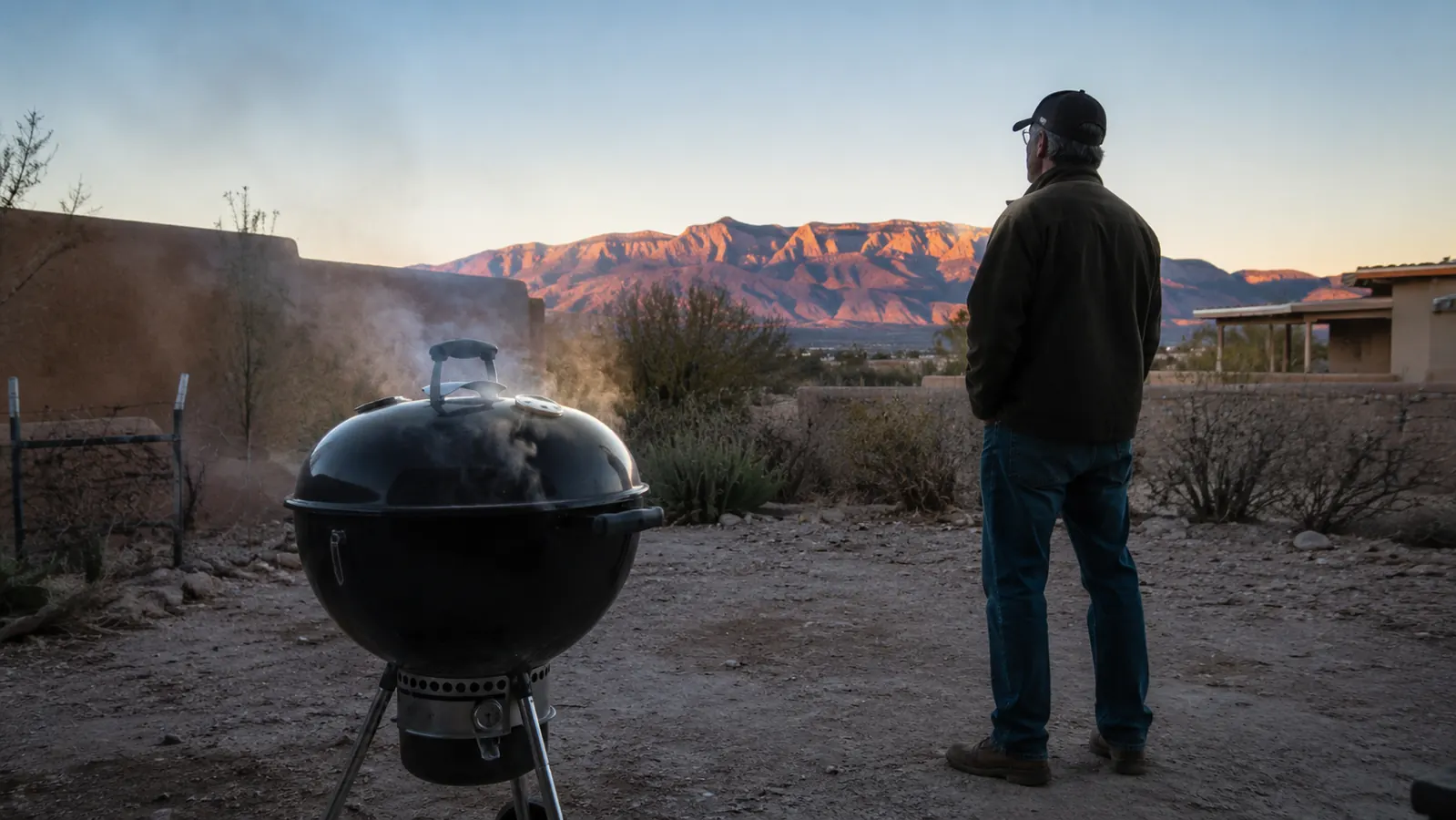
Labor Day weekend, 2024, my brother-in-law Danny drove up from Tucson with his wife Priscilla and their two kids, Mateo and Sofia, and I had spent the better part of two years telling him my brisket was worth the five-hour drive north. These days there is an Inkbird base station sitting on a shelf just inside my back door, close enough to the smoker that I can check it without opening the screen door, but that Labor Day it was not there yet. What I had was a dial thermometer I had bought at a hardware store on Central Avenue years earlier, the kind you jab into the meat and wait for the needle to settle, and a plan built entirely around guesswork.
I started that brisket, an 8-pound packer, at four in the morning so it would be ready by early afternoon. At 5,000 feet, water boils around 202 degrees instead of 212, and a stall can run longer than any recipe card accounts for, something twelve years of cooking up here had taught me the hard way more than once. Around noon the dial read 195 in the flat, close enough to call it, and I had somewhere to be. My son had a flag football scrimmage across town at eleven thirty, and I needed to leave, watch the game, and get back before everyone showed up hungry.
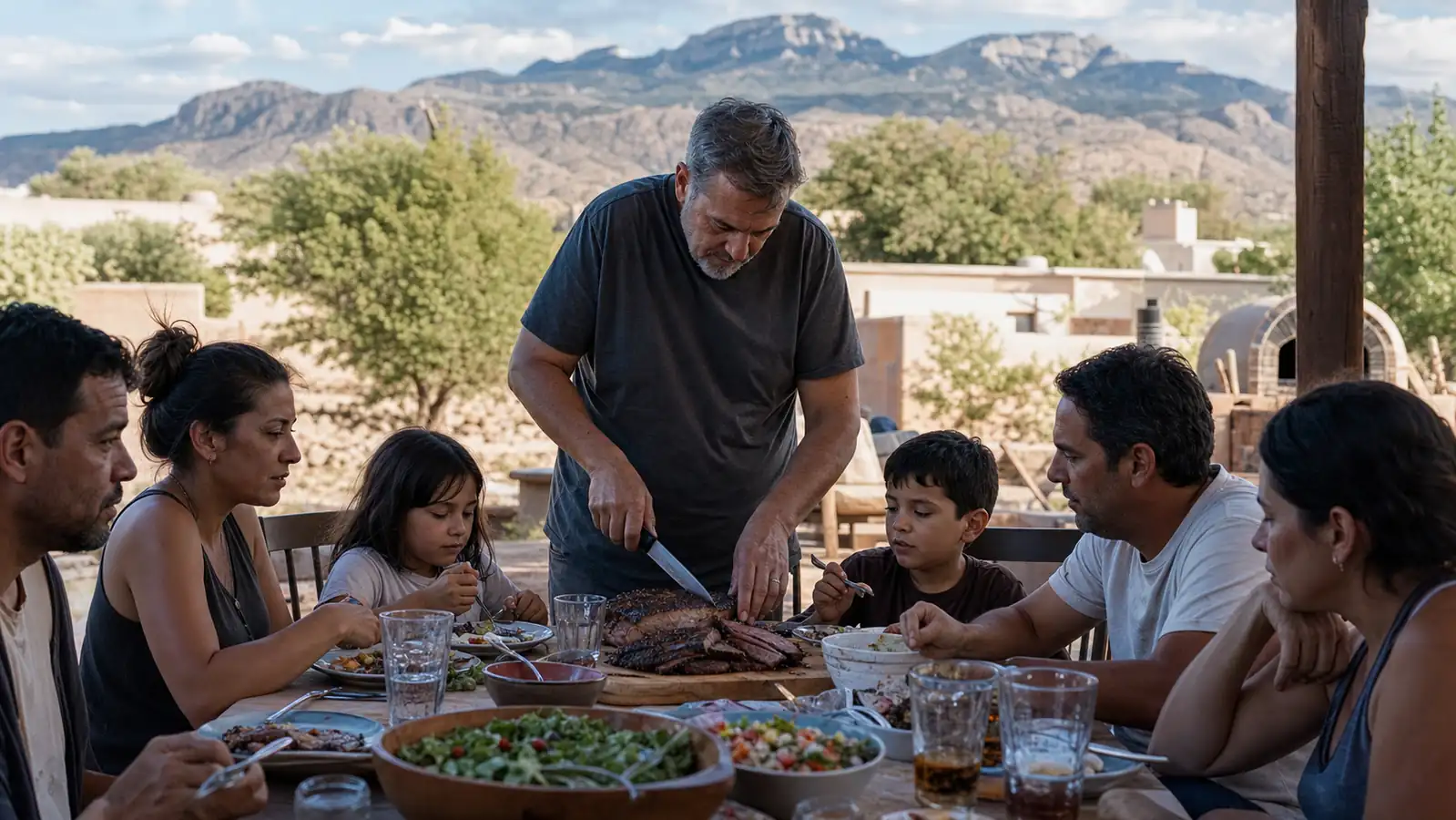
So I pulled it. Wrapped it in butcher paper, set it in a cooler with towels the way I always do to hold heat, and left for the game telling myself an hour and a half of resting would finish whatever the dial had not quite gotten to. I got back with maybe twenty minutes to spare, unwrapped it on the cutting board in front of everybody, and started slicing. The bark looked right. The smoke ring looked right. But the knife told a different story, dragging through the flat instead of gliding, and the slices held together in a way brisket never should.
Danny was polite about it, he always is, but his kids picked at their plates and asked for the beans instead, and my wife Elena caught my eye across the table in the way she does when she wants me to let something go without saying it out loud. After everyone left I stuck an old candy thermometer, the only backup I owned, into what was left of that flat, and it read 187. My dial thermometer, the one I had trusted to call the whole cook, had been reading eight degrees hot the entire time, probably longer than I wanted to admit, and nobody had told it to stop lying to me.
That was the week I finally looked seriously at a wireless setup instead of another five-dollar dial gauge from the same hardware store. I read through more probe thermometers than I care to admit, most of them either too limited for a real weekend cook or priced like they came with a warranty on the brisket itself. I landed on the Inkbird IBT-4XS, a four-probe Bluetooth unit that let me track meat temp and grate temp at the same time, which is the exact combination that would have caught my dial thermometer's lie months earlier.
A dial thermometer that reads eight degrees hot doesn't announce itself. It just quietly hands you a brisket that isn't ready and lets you find out in front of your family.
Tired of Finding Out Your Thermometer Was Wrong After Everyone's Already at the Table?
The Inkbird IBT-4XS is the four-probe wireless thermometer that replaced my old dial gauge for good. Meat temp and fire temp, tracked together, so you catch a problem while there's still time to fix it.
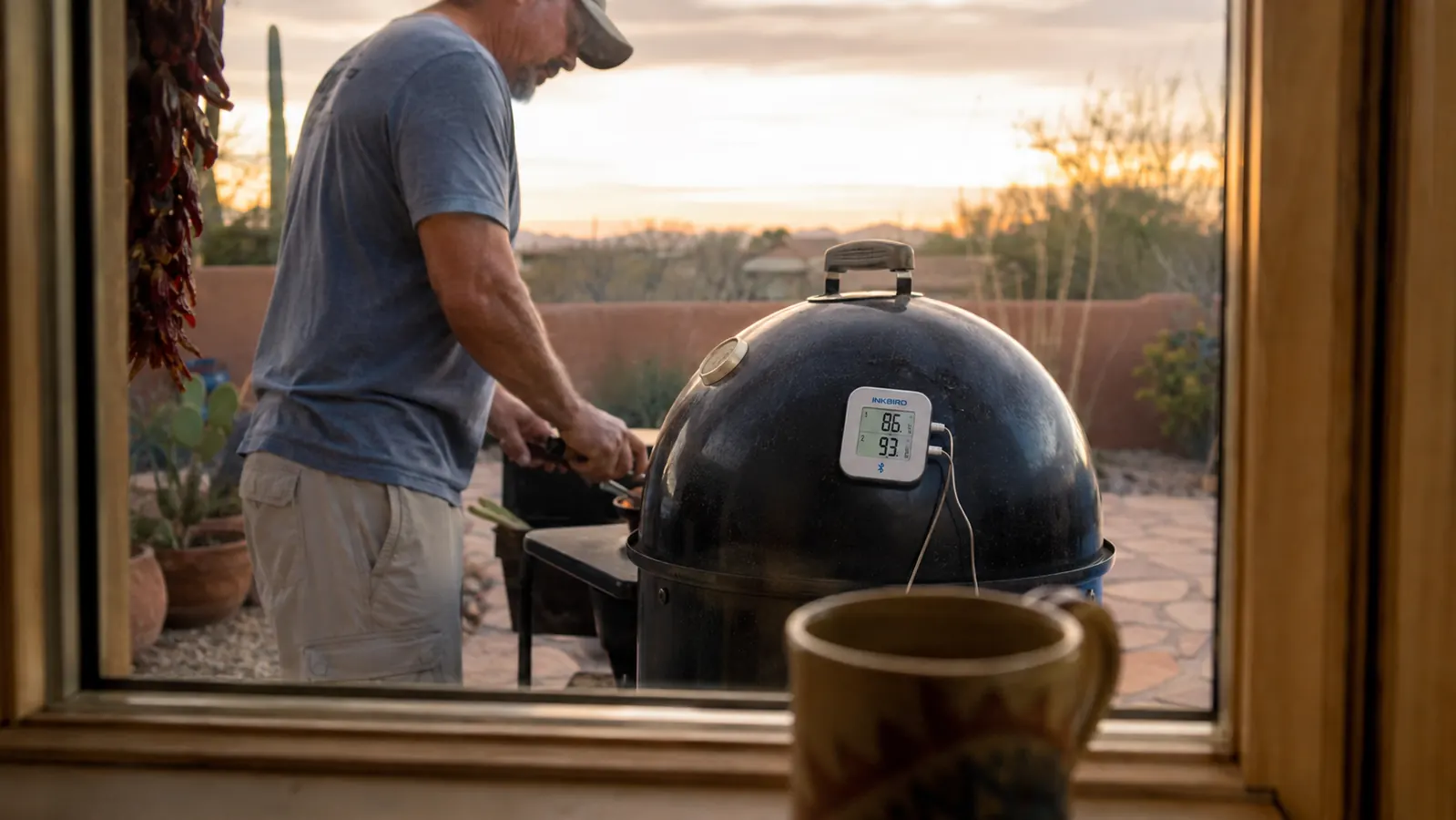
Amazon Check Today's Price on Amazon →Three weeks later I ran it back. Smaller crowd this time, just Elena and the kids and our neighbor Ruben from two doors down, but I wanted the redo before the memory of that Labor Day brisket had a chance to settle into a habit of doubting my own cooking. I set the Inkbird up the way I have run nearly every long cook since: one probe deep in the thickest part of the flat, a second clipped to the grate for ambient heat, and the base station magnet-mounted to the kettle hood where I could glance at it from the kitchen window.
This time the ambient probe told me the fire had dipped to 232 around hour five, something the dial thermometer never would have caught because it only ever measured the meat, never the fire underneath it. I opened a vent, brought it back to 250, and the meat probe crossed 203 right around when the graph on my phone showed the stall had finally broken, not when a needle happened to look close enough. I pulled it, rested it, and this time the knife went through clean.
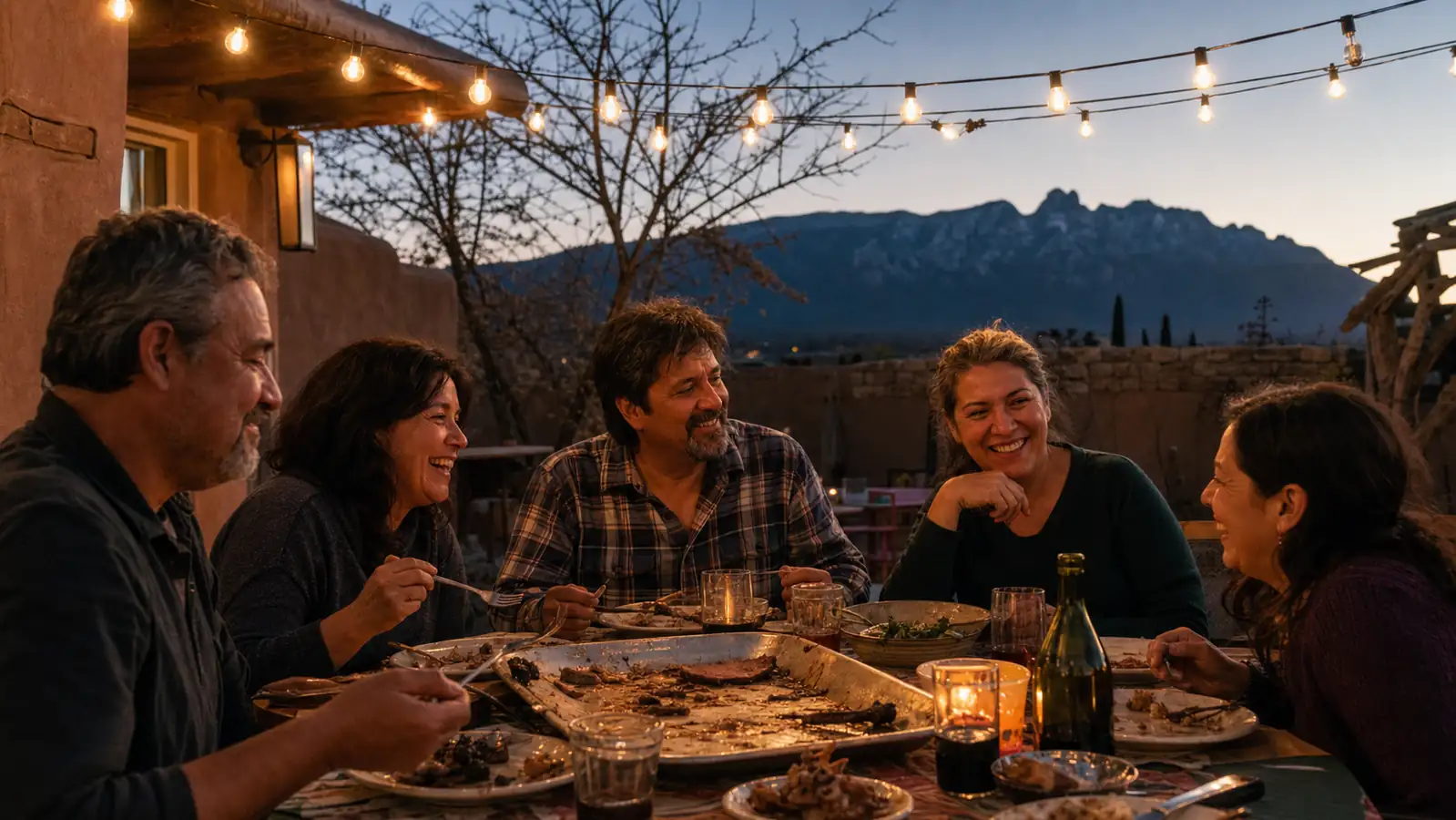
Ruben went back for seconds. Sofia, who had barely touched her plate three weeks earlier, ate two helpings and asked if I'd smoke another one before they drove home. I did not tell them the difference was a $49.99 gadget with four probes and a base station, because it sounded small compared to how much that first failure had actually cost me, not in dollars but in the kind of confidence you need standing over a smoker at four in the morning.
I still think about that Labor Day brisket more than any cook I have gotten right since. It is the reason there is an Inkbird base station on the shelf by my back door instead of a dial gauge in a kitchen drawer, and the reason I no longer leave a smoker's fate to a needle that has never once told me when it was wrong.
What I'd Tell You If We Were Sitting at My Kitchen Table
If you were sitting across from me right now, I would not tell you a wireless thermometer makes you a better cook, because it does not, the fire and the meat and the hours still do all the real work. What I would tell you is that a cheap dial gauge can be wrong for months without ever admitting it, and the first time you find out is usually in front of the people you were trying to feed. The Inkbird did not fix my brisket technique. It just finally told me the truth about my fire and my meat at the same time, which turned out to be the piece I was missing the whole time.
A Dial Gauge Lied to Me for a Year. I Haven't Trusted One Since.
If you're still cooking on a dial thermometer and hoping it's telling you the truth, the Inkbird IBT-4XS is the fix I wish I'd made a year earlier. Four probes, meat and fire temp together, no more guessing at the table.
Amazon Check Today's Price on Amazon →