
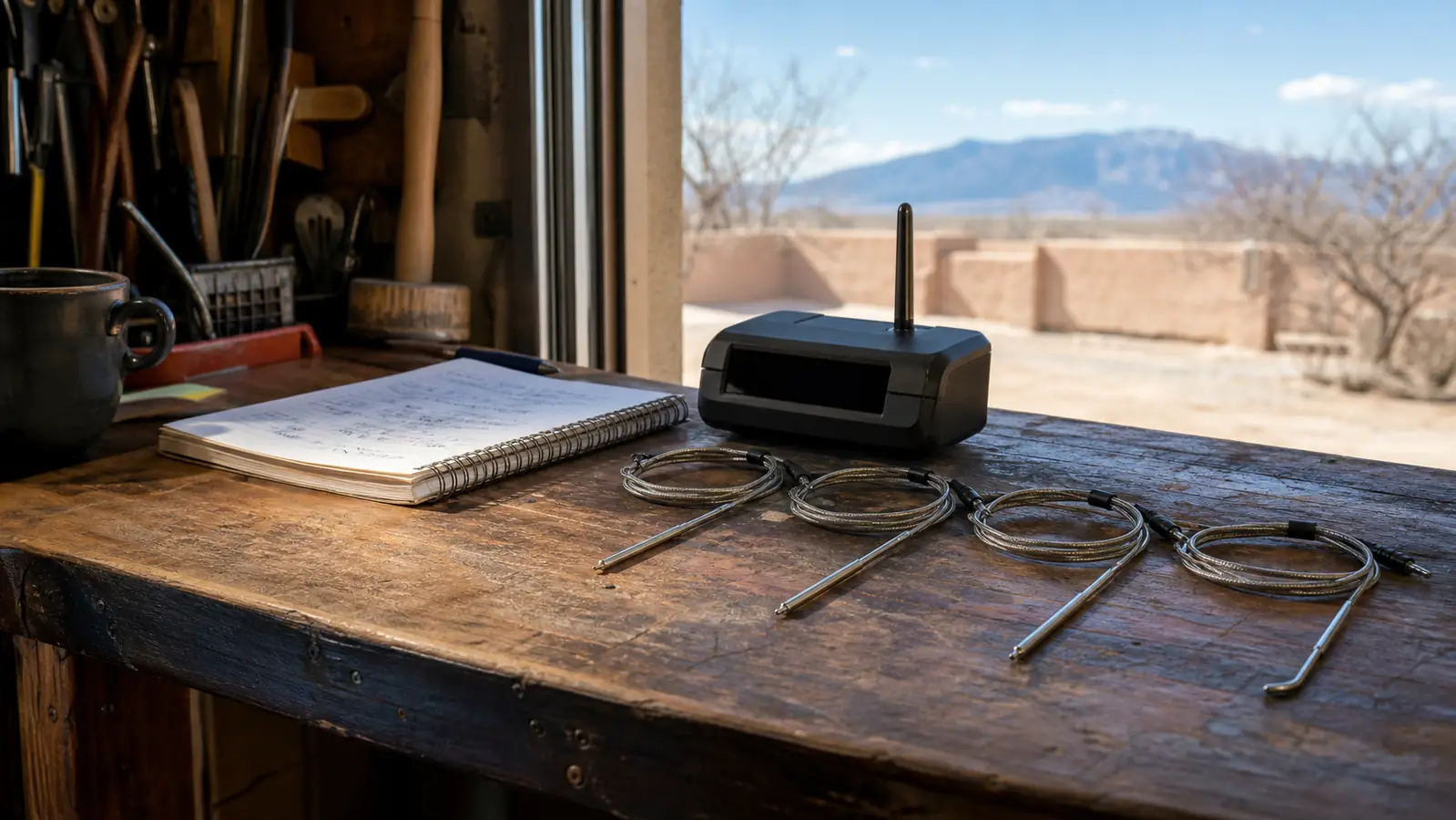
My cousin Danny runs a green chile cheeseburger truck out of Rio Rancho, and last October he called me before he dropped money on a wireless thermometer for the truck, wanting to know if the Inkbird IBT-4XS was actually as good as the review videos made it look. I'd owned mine since March of 2025 by then, so I told him what I'm telling you here: it's a genuinely useful piece of gear, but almost nothing in the marketing photos or the five-star blurbs mentions the stuff that actually changes how you'd use it day to day. I went back through my notes on it specifically to answer him honestly, not to sell him on it, and what I found surprised me even after a year and a half of near-daily use.
This isn't a rehash of my long-term review, where I laid out cook times, probe drift, and Bluetooth range in detail. This one's about what fell through the cracks the first time around: the out-of-box calibration quirks, why four probes is a bigger number than most kitchens actually use, what direct heat does to those color-coded silicone boots, and the one compatibility issue that caught my neighbor Ray off guard on his own smoker. If you're deciding whether the Inkbird earns a spot on your grill cart, these are the details that actually move the needle, not the ones on the box.
The Quick Verdict
The Inkbird IBT-4XS does exactly what the box promises for anyone running two or more things on the grill at once, but the fine print, probe boots that don't love direct flame, an app that wants an account, a magnet mount that only works on real steel, is worth knowing before you buy, not after.
Amazon Check Today's Price →Still Guessing Whether the Ribs Are Actually Done?
This is the same honest rundown I gave my cousin Danny before he bought one for his food truck, the good and the parts nobody puts on the box. Here's where to check today's price if you want it on your own grill.
Amazon Check Today's Price on Amazon →What I Actually Went Back and Checked
Instead of just describing another cook, I spent a weekend in July 2026 going back through eighteen months of notes and testing specific claims one at a time: the out-of-box calibration on each of the four probes individually, not just the one I usually grab first, how the magnet mount handles different grill materials, whether the app's account requirement is as much of a hassle as I remembered it being, and what happens to the probe boots when they get too close to direct flame instead of the indirect heat a smoker usually gives them.
Some of what I found lines up with what most reviews already tell you. Some of it doesn't get mentioned anywhere I could find, not on Amazon, not in the video reviews, not even in Inkbird's own manual, which reads like it was translated in a hurry and skips past a few things a first-time buyer would genuinely want to know before their first cook.
Testing Each Probe Individually, Not Just the One I Grab First
Here's the first thing nobody tells you: with four probes in the box, most people calibrate the one they use most and never bother with the other three until the day they actually need all four at once, usually over a holiday. When I finally ice-bathed and boiling-tested each probe separately instead of just my go-to, probe three came back reading about 3 degrees cool in both tests, straight out of the box, not after months of use the way I've written about elsewhere. It's a small number, but it's exactly the kind of gap that matters if that's the probe someone grabs for a turkey breast on Thanksgiving without checking it first.
The fix is simple, five minutes with a bowl of ice water before you trust any probe with a holiday bird, but it's not a step the packaging suggests, and it's not something the glowing reviews mention because most people are reviewing the thermometer after one good cook with whichever probe they happened to grab that day.
Four Probes Sounds Generous Until You Look at How Often You Use Them
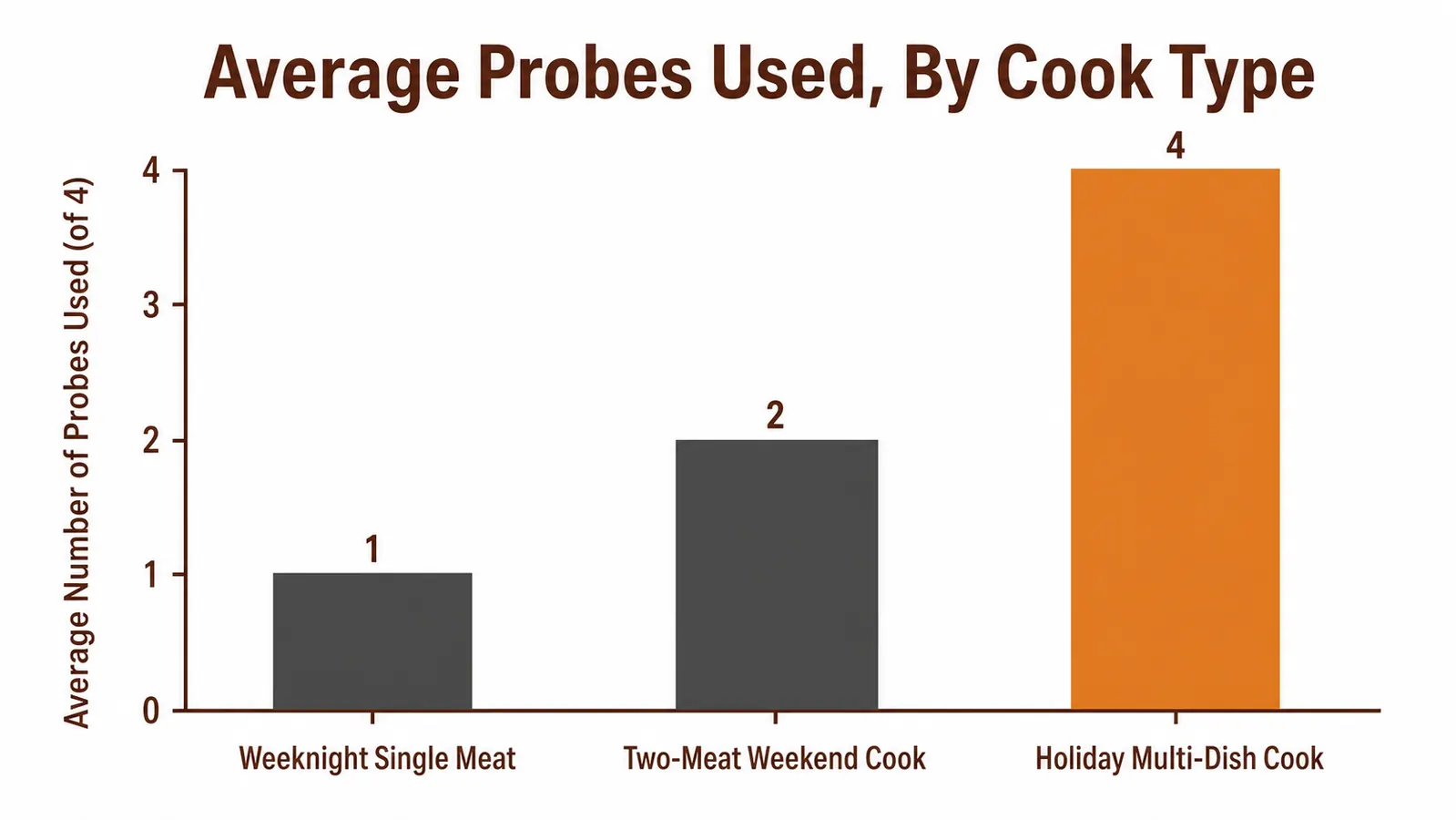
The headline feature on the box is four probes, and it's the reason most people buy this model over a cheaper two-probe unit. What the box doesn't tell you is how rarely a typical week actually calls for more than one or two. I pulled my cook log and sorted by how many probes were actually active: on ordinary weeknight cooks, green chile chicken thighs, a couple of burgers, I used exactly one probe almost every time. On a real weekend cook, two meats or a meat and an ambient read, I used two. The only cooks where all four earned their keep were the handful of holiday spreads, Thanksgiving turkey plus two side dishes needing a hold temperature, a Super Bowl spread in February with ribs, wings, and a pot of queso all going at once.
That's not a knock on the thermometer, four probes genuinely solved a real problem on those cookouts. But if you're buying this specifically because the box says four probes and picturing yourself using all of them regularly, be honest about how often you actually cook for a crowd. A lot of buyers are paying for capacity that sits idle in a kitchen drawer eleven months a year.
What Direct Flame Does to the Silicone Boots Nobody Warns You About
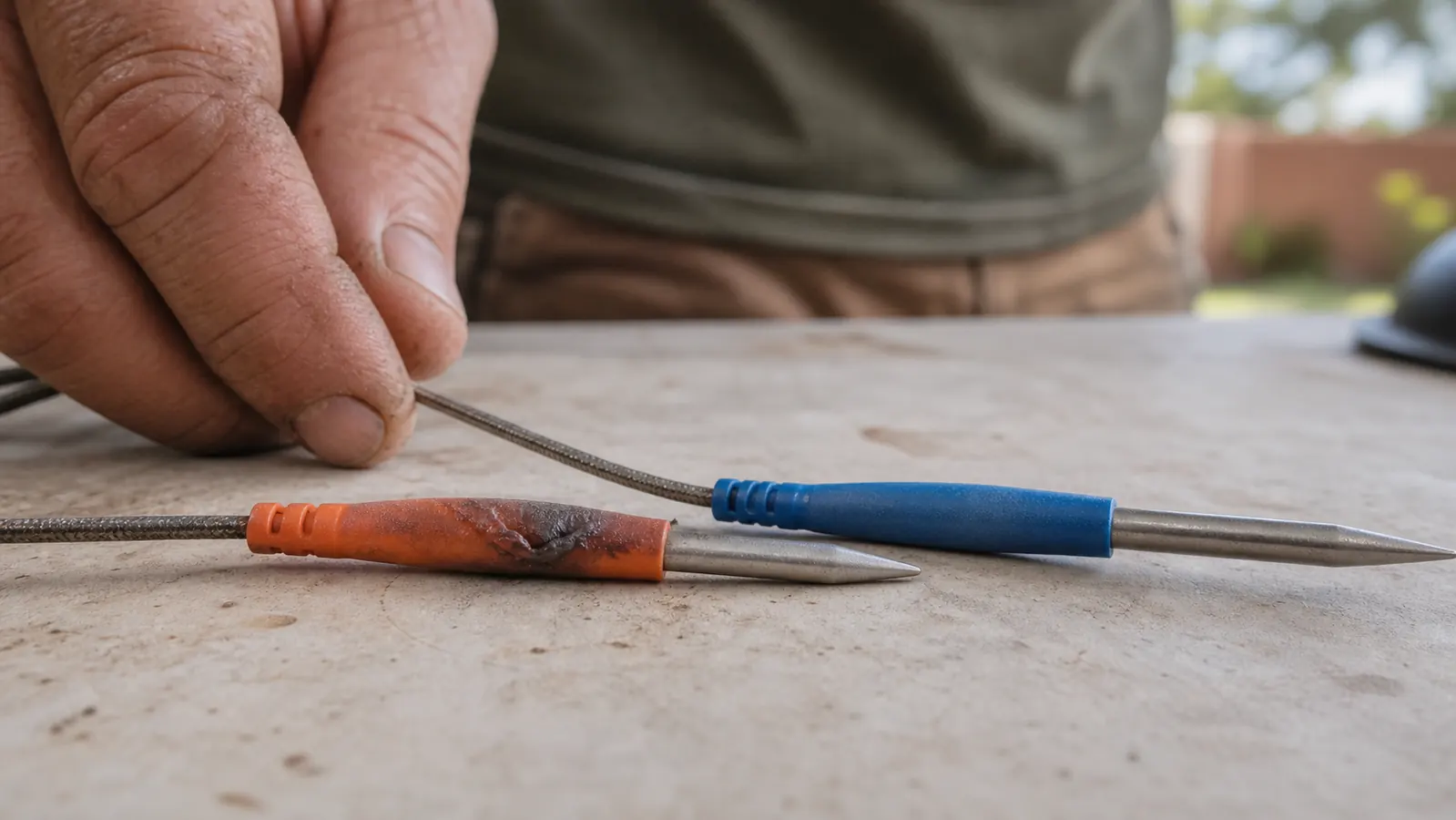
In September 2025 I reverse-seared a tri-tip on the kettle, meat probe in, ambient probe clipped near the coals for the final sear stage, and I let the ambient probe's cable drift too close to the actual coal bed for about ninety seconds while I was flipping the meat. The colored silicone boot at the probe tip discolored and went slightly tacky, not melted through, but clearly not built for that kind of direct exposure. The probe itself still reads accurately months later, so it's cosmetic more than functional, but it's the first time I'd seen anything on this unit show real heat damage.
The lesson, and it's one the manual doesn't spell out clearly, is that these probes are built for indirect low-and-slow heat, the ambient reading near the grate on a smoker, not a probe sitting an inch from open coals during a hard sear. If you're the kind of cook who reverse-sears often, keep the ambient probe well clear of the coal bed during the sear stage or you'll shorten the life of that boot faster than you'd expect.
The App Wants an Account Before It'll Do Anything Useful
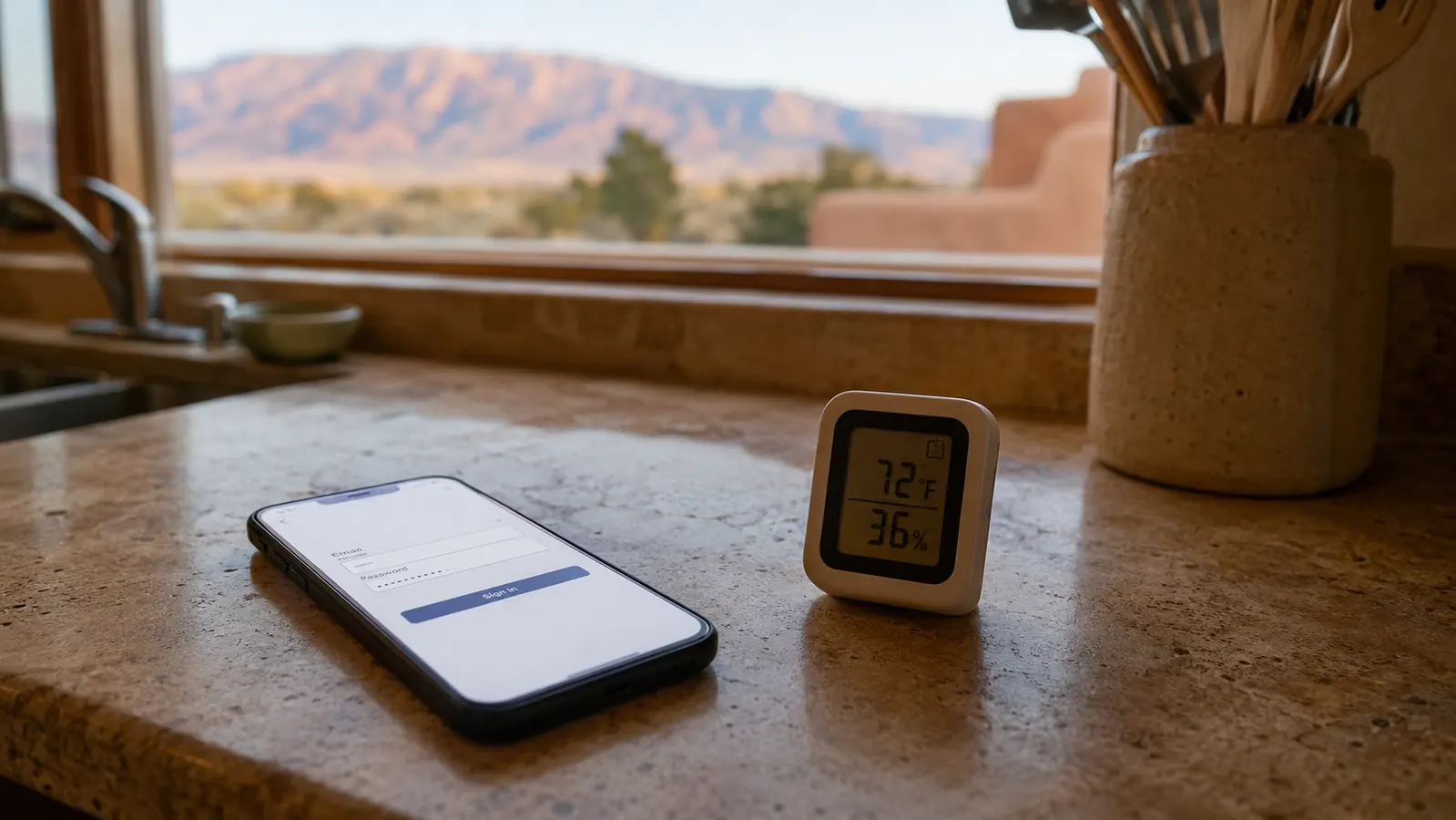
Setup out of the box is quick, but the first thing the Inkbird app asks for is an account, an email address, a password, and permission to send push notifications, before it'll pair with the base station at all. That's a small thing, but it's not mentioned anywhere in the product photos or the bullet points on the listing, and it caught my wife off guard when she tried to set it up on her phone for a cookout while I was still at the store buying charcoal. If you're the type who avoids creating accounts for hardware you already own outright, or you don't love the idea of a thermometer company having your email on file, that's worth knowing going in.
It's not a dealbreaker, the account itself doesn't cost anything and I've never gotten spam out of it, but 'plug and play' isn't quite accurate. Budget five extra minutes the first time you set it up for someone who isn't used to pairing kitchen gadgets to an app.
The Magnet Only Works If Your Grill Is Actually Magnetic Steel
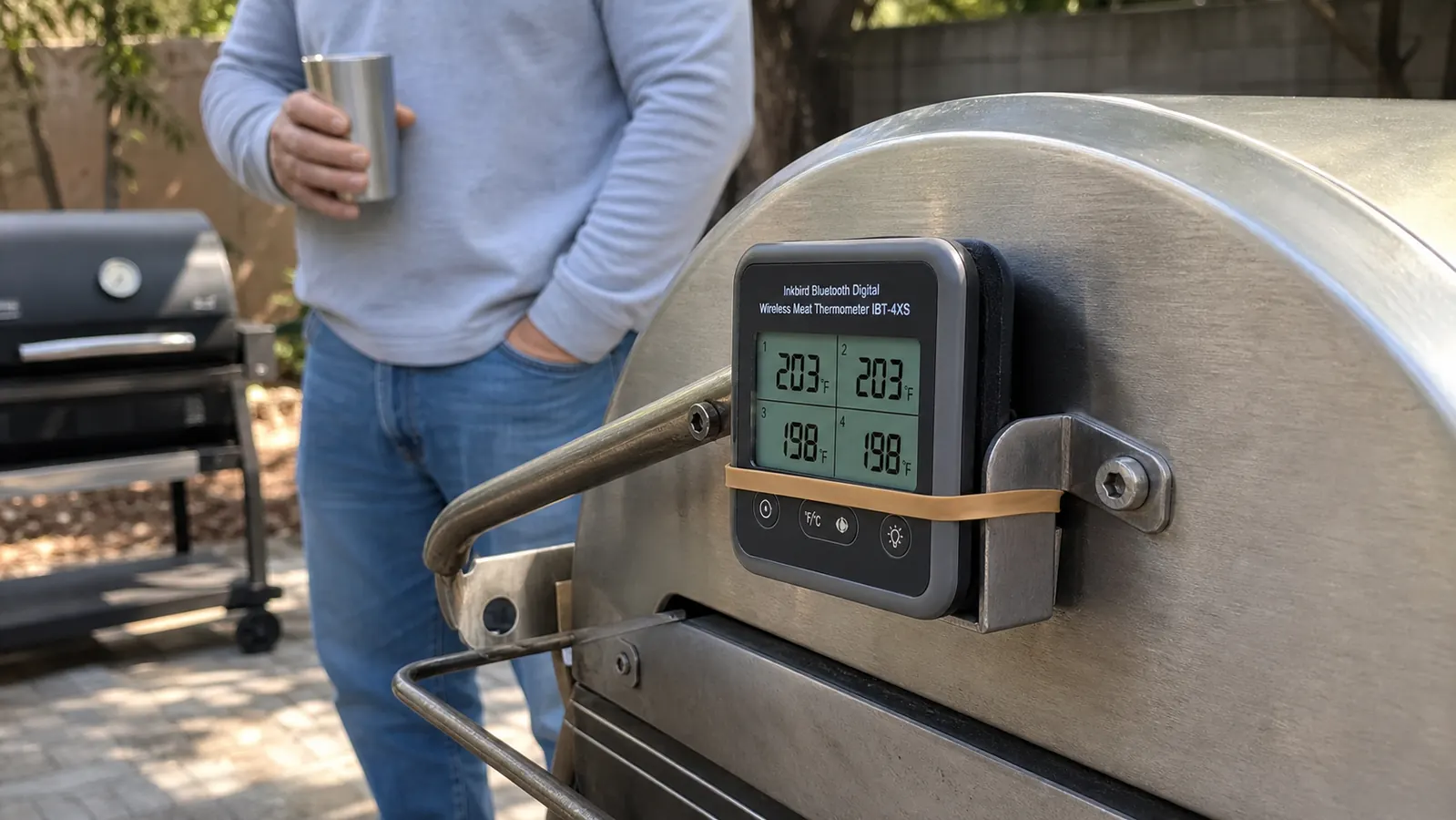
My neighbor Ray borrowed my unit for a Labor Day cookout in 2025 before he bought his own, and the magnet base wouldn't hold on his pellet smoker's hood at all. His unit has a brushed aluminum lid, not painted steel like my kettle, and aluminum isn't magnetic no matter how strong the mount is. Ray ended up looping a rubber band around the hinge to hold the base station in place for the afternoon, which worked fine but wasn't exactly the clean setup the product photos show.
It's a basic bit of physics, not a flaw in the thermometer itself, but nothing in Inkbird's marketing mentions checking your grill's material before you count on the magnet mount holding. If your smoker or grill has an aluminum lid or a stainless panel where you'd want to stick the base station, plan on a zip tie, a rubber band, or just setting it on a nearby table instead.
The Cheaper Two-Probe Model I Almost Bought Instead
Before I settled on the IBT-4XS, I spent a night comparing it against Inkbird's own cheaper two-probe model, which runs about fifteen to twenty dollars less as of this writing. On paper the math is simple: pay more, get two extra probes. Given what I found sorting my cook log by how many probes actually got used, one on weeknights, two on a normal weekend cook, that two-probe model would have covered close to ninety percent of my real cooking without me spending a dime more.
I still ended up glad I paid for the four-probe version, because the cooks where it mattered, Thanksgiving, the Super Bowl spread, a graduation party for my niece in May of 2026 where I had a brisket, a griddle full of smash burgers, and a pot of beans all going at once, are the cooks I actually plan my year around. But if you're buying this thermometer for a household that grills a steak or a chicken breast on a normal Tuesday and rarely hosts a crowd, the cheaper two-probe Inkbird will do the same job for less, and nothing about the marketing tells you that up front.
I Tried It on Something the Marketing Never Mentions: Frying Oil
Last winter I used the meat probe to track oil temperature while frying a batch of chile rellenos, mostly out of curiosity about whether it could double as a candy or frying thermometer instead of buying a separate one. It held steady readings through a full pot of oil at 365 to 375 degrees without any trouble, and the alarm feature was genuinely handy for catching the moment the oil dipped after I dropped in a cold batch of battered peppers.
What nobody mentions is the cleanup. Oil residue clings to the silicone boot and the first few inches of cable in a way brisket drippings never did, and it took a real scrub with dish soap to get the cable feeling clean again instead of slightly greasy. It's not marketed as a frying thermometer, and after that batch I understood why. It'll do the job in a pinch, but I wouldn't make it a habit without a plan for getting the cable properly clean afterward.
What I Liked
- Alarm was loud enough to hear from inside the house through a closed window, something I hadn't expected given how spotty the Bluetooth range gets past a couple of walls
- Testing each of the four probes individually caught a real 3-degree-low reading on one probe before it ever touched a Thanksgiving turkey
- Held up fine through eighteen months of regular use aside from one boot that discolored after direct coal exposure
- Genuinely earns its four-probe price tag on holiday cooks with multiple dishes going at once
- Setup, once past the account creation step, took under five minutes
Where It Falls Short
- The app requires an account and push notification permissions before it'll pair, which isn't disclosed anywhere in the listing
- One probe read about 3 degrees off straight out of the box, a detail buyers won't catch unless they test every probe individually
- The magnet base mount only works on painted steel, not aluminum or stainless grill lids
- Silicone probe boots can discolor and go tacky if they sit too close to direct coals during a hard sear
- Most home cooks will only regularly use one or two of the four probes, paying for capacity that sits idle most of the year
Nobody puts 'requires an email address before it'll pair' or 'test all four probes, not just your favorite' on the box. Those are the two things that would've saved my cousin Danny and my neighbor Ray a genuinely annoying first afternoon with this thing.
Who This Is For
This is for anyone who regularly cooks for more than two or three people at once, holiday spreads, a food truck like Danny's, a backyard full of neighbors on a Saturday, where four separate probes actually earn their keep instead of sitting in a drawer. It's also for anyone willing to spend five minutes ice-testing each probe individually before trusting it with something that matters, rather than assuming the whole set is calibrated exactly alike out of the box. And it's a good fit if your grill or smoker has a painted steel body the magnet can actually grab onto.
Who Should Skip It
If you almost always cook one thing at a time and rarely feed more than your own household, a cheaper single or dual-probe thermometer will do the same job without the extra cost of two probes you'll barely touch. Skip it too if you don't want to hand over an email address just to pair a kitchen thermometer, or if your grill has an aluminum or stainless lid where the magnet mount won't hold without a workaround. And if you sear hard and often with the ambient probe anywhere near open coals, know going in that the silicone boots aren't built for that kind of direct heat.
The Honest Rundown Before You Buy One
That's everything I'd tell a cousin or a neighbor before they spend money on this thermometer, the good and the parts nobody puts on the box. If four probes actually fits how you cook, it's still the one I'd point you toward.
Amazon Check Today's Price on Amazon →