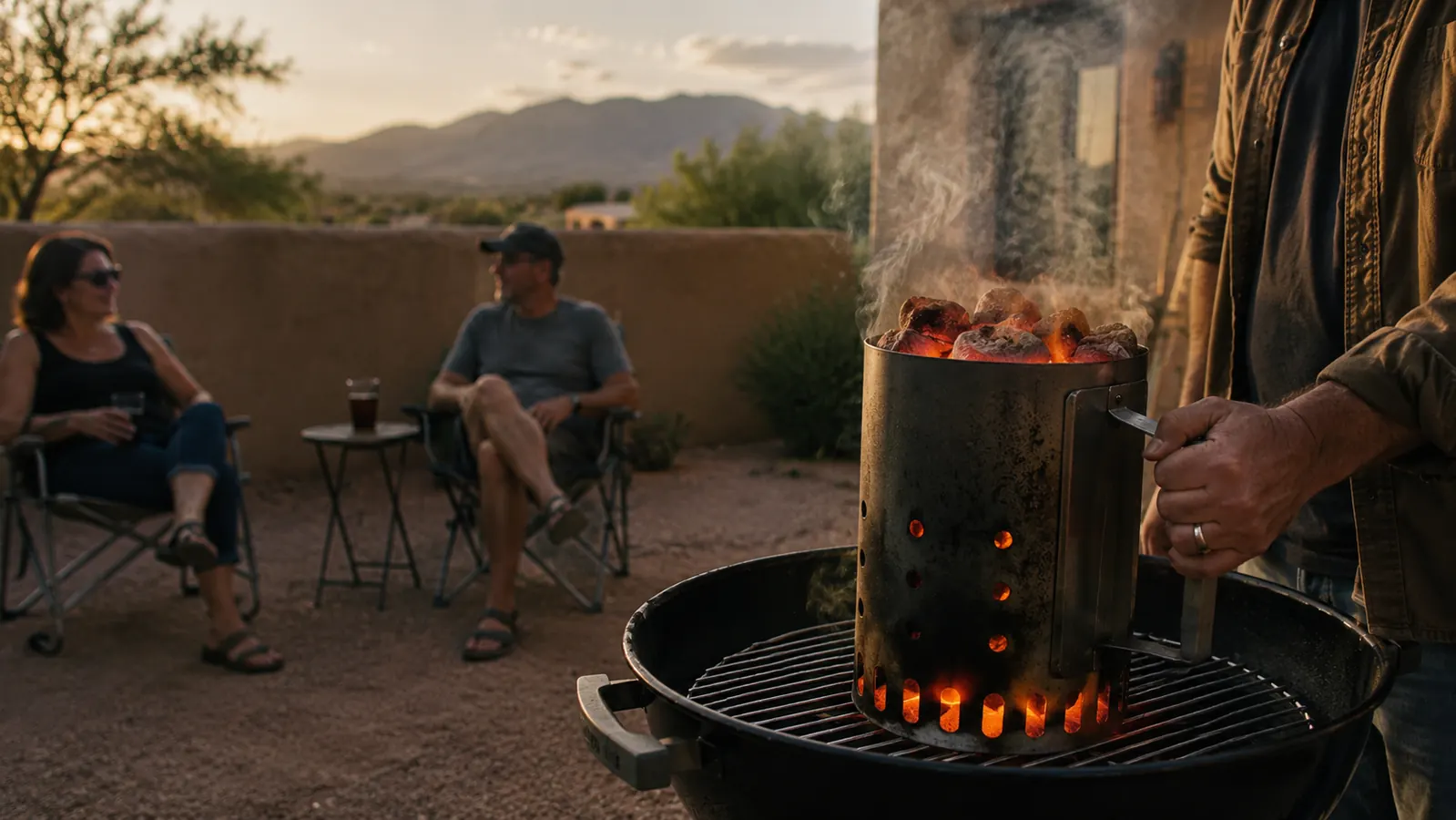
Ray Delgado's driveway, Fourth of July, a few summers back. He'd loaded his kettle with two-thirds of a bag of charcoal, doused it straight from a can of lighter fluid, and touched a match to it while I stood four feet away holding a plate of chicken thighs. The whoosh singed the hair clean off my left forearm and took most of an eyebrow with it. Ray laughed it off. I did not laugh. Forty minutes later we were still waiting on coals that had burned hot on the outside and gone gray and useless in the middle, and once the chicken finally hit the grate it carried that thin chemical taste lighter fluid leaves behind no matter how long you let it burn off first. That flare-up is the whole reason I own a Weber Rapidfire Chimney Starter today.
The next Saturday my neighbor Cliff Renfro saw me hauling my own kettle out to the patio and walked over holding what looked like an oversized coffee can with a wooden handle bolted to the side. It was a Weber Rapidfire Chimney Starter, the kind with two rows of vent holes stamped around the bottom. Cliff had been running one for years and couldn't believe I was still flinging fluid at charcoal like it was 1975. He balled up two sheets of newspaper, dropped them in the bottom chamber, filled the top with briquettes, and set the whole thing on my kettle's charcoal grate with a single match. About twelve minutes later every coal on top was glowing orange at the edges.
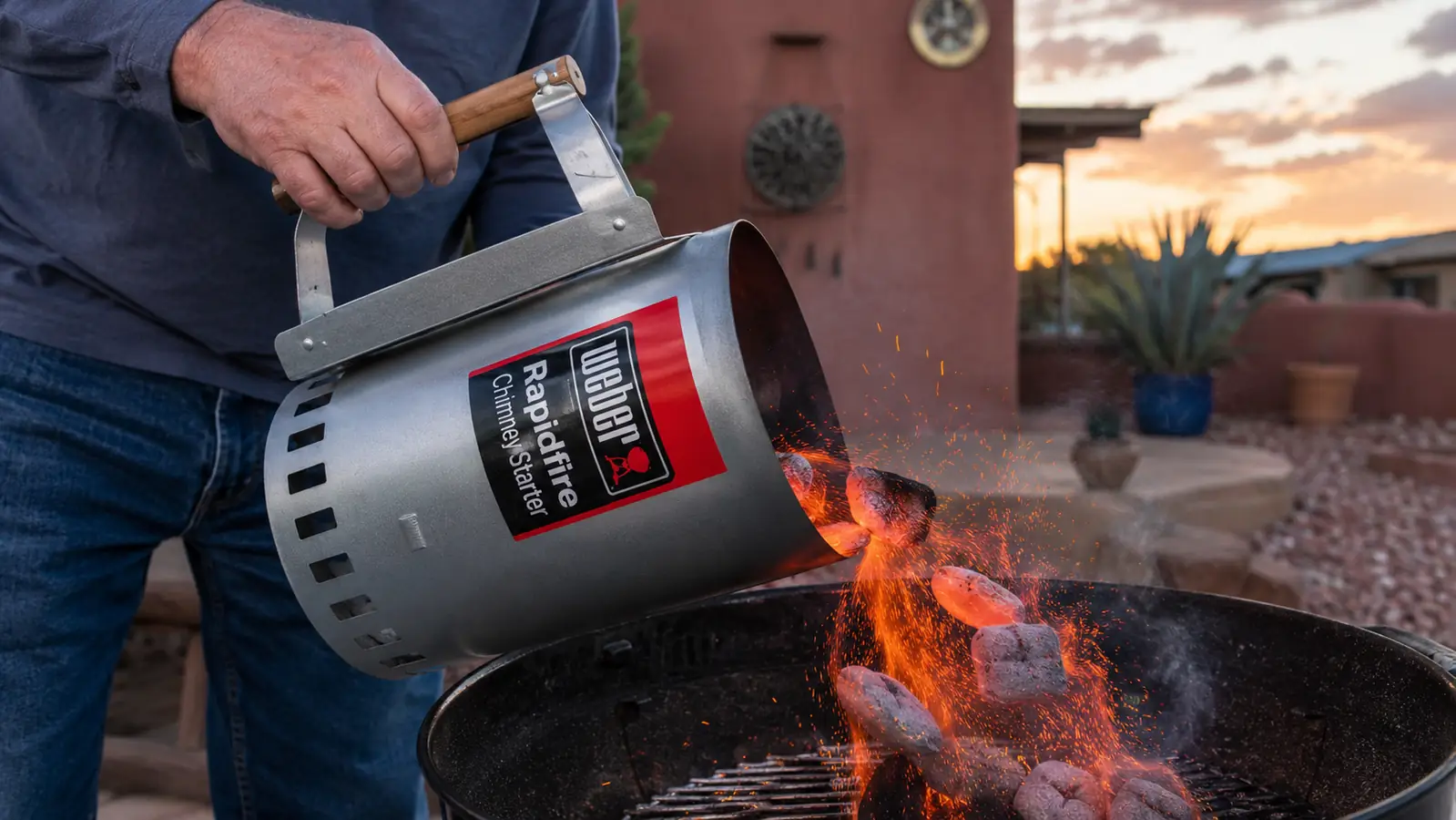
I drove to the hardware store on Menaul the next morning and bought my own Weber Rapidfire for a price that felt almost too small for what it fixed. No lighter fluid smell drifting across the patio. No forty-minute wait staring at gray ash wondering if the coals were ready or just pretending. No singed eyebrows. Just newspaper, briquettes, a match, and twelve to fifteen minutes at our altitude before the whole load was ready to dump.
That Weber chimney has lit every fire I've built since, whether it's a quick weeknight batch of mesquite lump for green chile cheeseburgers or a full load of briquettes under a brisket that's going to run past midnight. The handle stays cool enough to grab bare-handed for the first minute or two, though I still reach for a glove after that, because the steel body holds heat a long time once it's packed with lit coals.
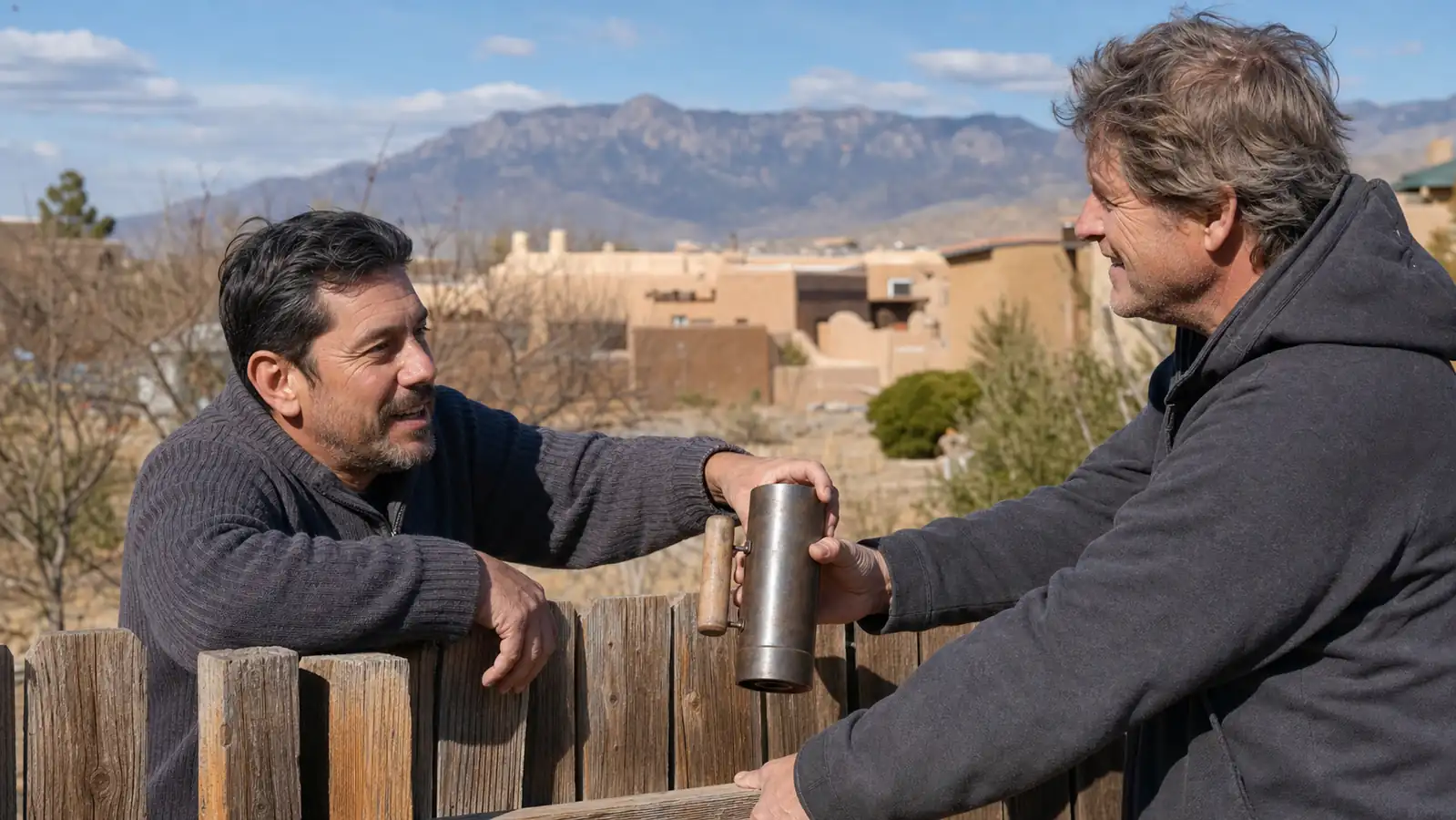
My sister Denise borrowed it last spring for her son's graduation party because she'd heard the flare-up story secondhand and didn't want a repeat performance in front of a dozen guests. She used it once and bought her own within the week. That's the thing about a plain steel cylinder that just works. Once people see it, they stop trying to talk themselves into lighter fluid being fine.
A chimney starter doesn't ask you to trust a can of fluid and a lighter. It asks you to wait twelve minutes and shows you exactly when the coals are ready.
Tired of Flare-Ups and Forty-Minute Waits on Charcoal?
The Weber Rapidfire Chimney Starter is the same tool a fence-side favor turned into a permanent habit at my house. No fluid, no flare-up, coals ready in about twelve minutes even up here at altitude.
Amazon Check Today's Price on Amazon →Mine is about two years old now and it's picked up some scorching on the outside, the dark bluish kind that comes from repeated direct flame, plus a little surface rust where the monsoon rain gets at it under the patio cover in August. The inside has held up better, I dump the coals out and knock it against the kettle's rim before I set it down, so it never sits wet with old ash. The bottom vents haven't clogged once. The rivets holding the handle haven't loosened.
At five thousand feet the air is thin enough that charcoal catches faster and burns hotter than it does at sea level, which used to mean lighter fluid cooks ran even more unpredictably up here, too much flame too fast, then a crash halfway through. The chimney starter doesn't care about elevation the same way. Newspaper and airflow do the same job in Albuquerque that they do anywhere else. That predictability is worth more to me than almost anything else in my whole grill setup.
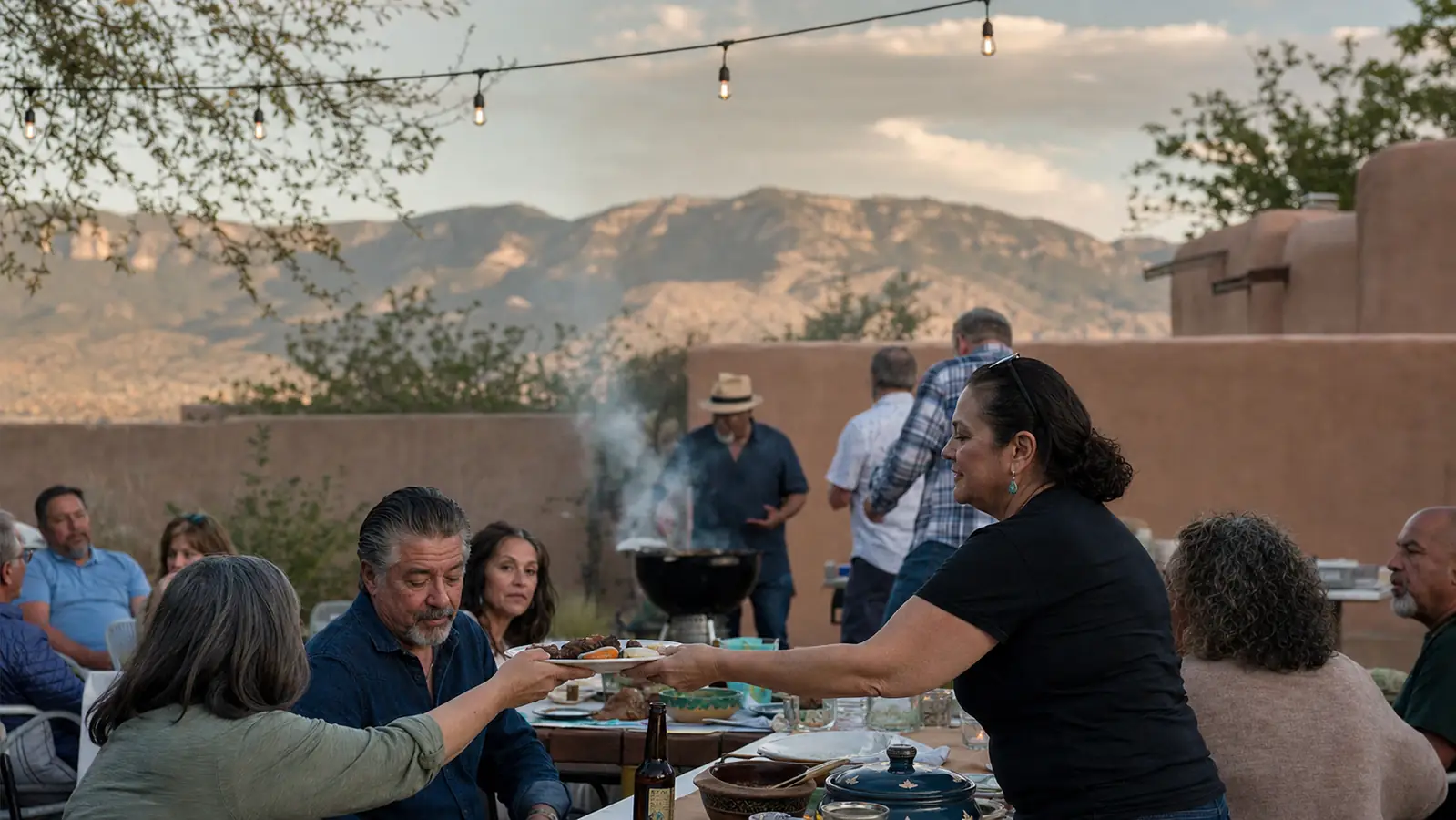
The late-dinner problem disappeared too. I know almost exactly how long a full chimney takes on a summer evening versus a cold January afternoon, so I can tell my wife Marisol when to start the sides without guessing out loud in front of company. Guests don't stand around a smoking kettle anymore wondering if the chicken's going to make it onto the grate before kickoff.
Ray still cooks with lighter fluid, for what it's worth. I've offered him mine more than once. He says he likes the smell, which tells you everything about why that argument was never going to work. I've stopped pushing it, everybody gets to run their own grill, but I notice he's still the one standing closest to the kettle with the hose ready, just in case.
What I'd Tell You If We Were Sitting at My Kitchen Table
If you're still lighting charcoal with fluid, get a chimney starter before you buy anything else for that grill, before a fancier thermometer, before new grates, before any of it. Mine's the Weber Rapidfire, and going on two years of near-daily use is the only sales pitch I've got left. It costs less than a decent steak dinner, it starts every fire the same way every time, and it took the worst part of grilling, standing around hoping the fire cooperates, and made it boring in the best possible sense. That's the whole recommendation. Nothing fancier than that.
The Tool That Ended the Lighter Fluid Habit for Good
If flare-ups, chemical aftertaste, or a forty-minute wait are still part of your cookout, the Weber Rapidfire Chimney Starter is the fix. Same one that's lit every fire at my house for two years running.
Amazon Check Today's Price on Amazon →