I bought a Weber Rapidfire chimney starter in April 2024, mostly because my neighbor got tired of watching me squirt lighter fluid over a pyramid of briquettes and then jump back like it was going to bite me. It did, more than once. Two grilling seasons later, that squeeze bottle is gone from my garage shelf, and I have not missed it for a single cook.
This isn't a hit piece on anyone who still uses fluid. It works, technically. But once I started lighting charcoal with the Weber chimney instead, I noticed a dozen small things that add up to a genuinely better cook, not just a cleaner conscience. Here are ten specific reasons, from two years of near-daily use at 5,000 feet in Albuquerque, where thin air already changes how charcoal burns before you even get to the fuel question.
Still Lighting Charcoal With a Bottle and a Match?
The Weber Rapidfire Chimney Starter is the one I've used close to 300 times since 2024. No fluid, no fumes, coals ready to dump in about 15 minutes.
Amazon Check Today's Price on Amazon →No More Petroleum Taste in the Smoke
Lighter fluid needs time to burn off completely before food goes anywhere near the grate, and if you rush it, you taste it. I ruined a batch of green chile cheeseburgers back in 2022 by dropping patties on too soon, and every bite had that faint chemical edge. Since I switched to the Weber chimney, that flavor is gone entirely, because there's no fluid in the loop to burn off in the first place. Just charcoal, paper, and air.
Coals Are Ready in the Same 15 Minutes, Every Time
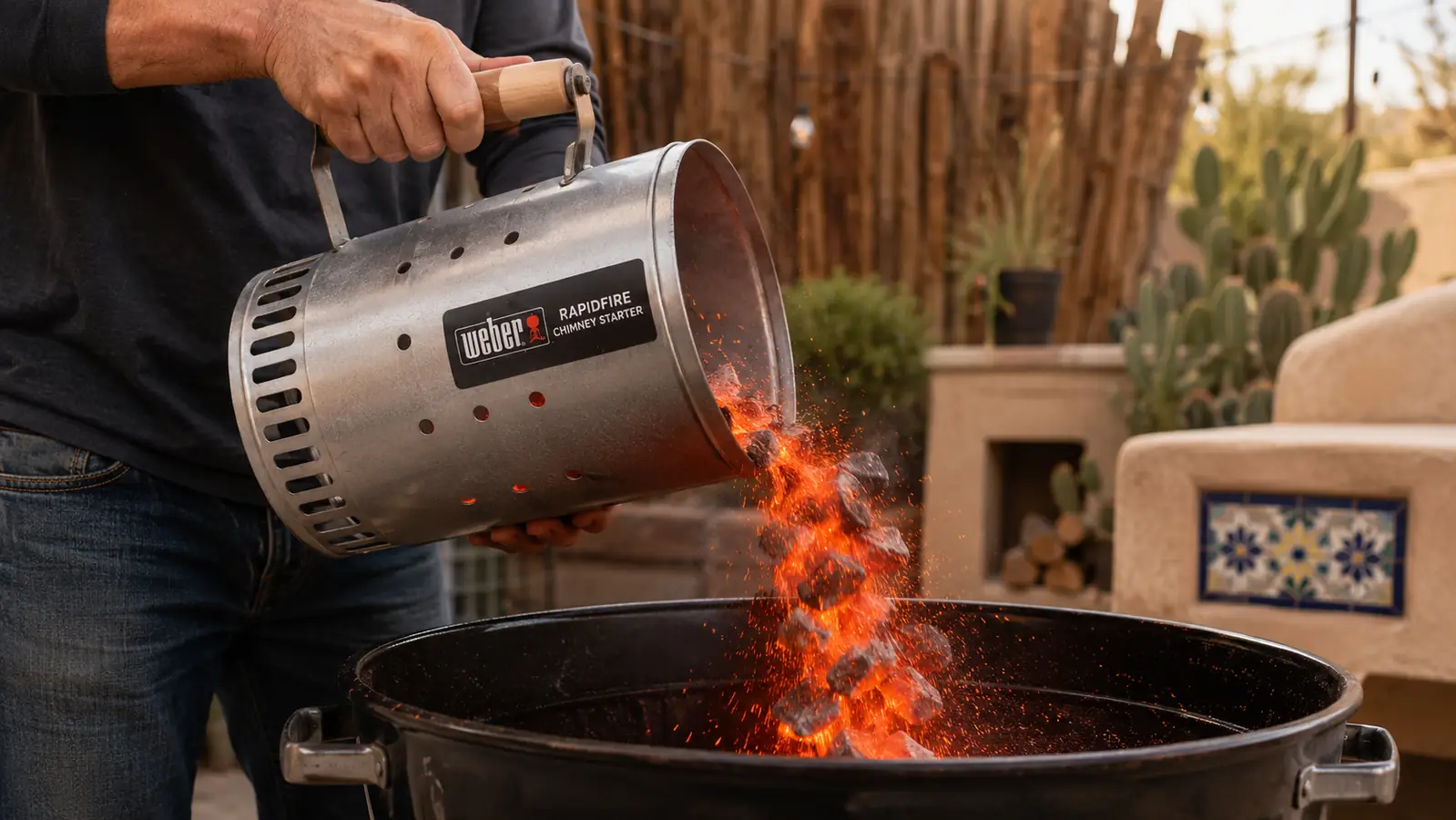
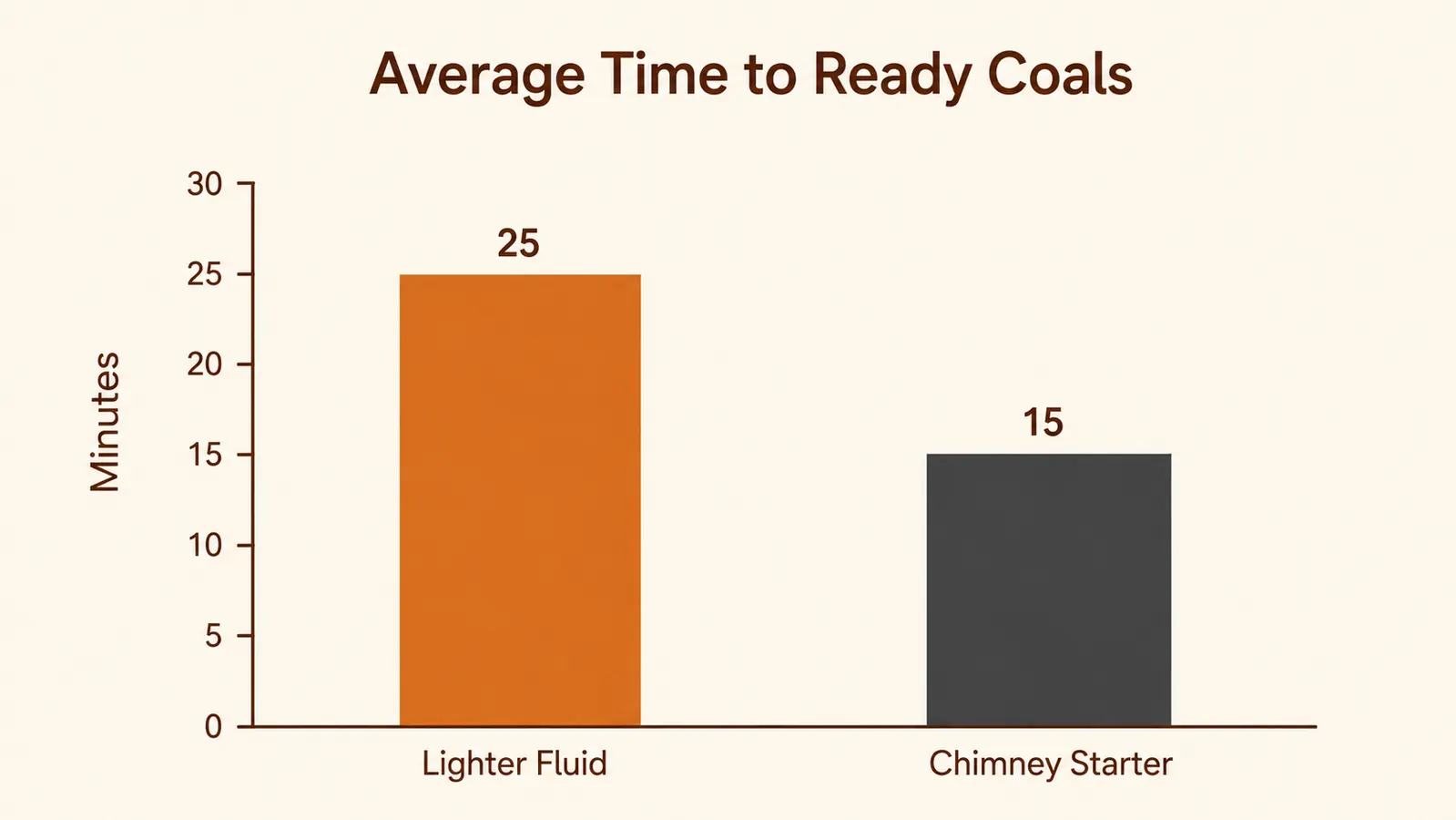
With fluid, my ready time used to swing anywhere from 20 to 35 minutes depending on how heavy-handed I was with the bottle and how much wind was cutting across the patio. The Weber chimney has cut that variance out almost completely. One sheet of crumpled newspaper under a full load, and I'm consistently dumping bright orange, ash-rimmed coals into the kettle around the 15 minute mark, whether it's July or January.
No More Flare-Up Startle
Lighting a fluid-soaked pile always came with that half-second where the flame jumps higher than you expect and you flinch, glove or no glove. I singed the hair off my forearm twice before I gave it up for good. A chimney starter builds heat gradually from the bottom grate up through the charcoal stack. There's no fuel vapor sitting on top waiting to ignite all at once, so lighting the Weber has never once startled me or anyone standing near the grill.
Every Briquette Lights, Not Just the Top Layer
Pour fluid over a charcoal pyramid and you're mostly soaking the outside. The coals buried in the middle often stay half-gray and never fully catch, which is why fluid-lit fires used to burn uneven on me, hot on one side and sluggish on the other. Stacked inside the Weber chimney, every briquette sits directly over rising heat and flame, so the whole load lights front to back. I don't get cold spots in the kettle anymore because I'm not starting with a partially lit batch.
One Sheet of Newspaper Does What a Whole Bottle Used To
I used to go through a bottle of lighter fluid every three or four cookouts, which meant a standing trip to the hardware store. Now I light the Weber chimney with a single sheet of newspaper from the recycling bin, sometimes two if it's damp out. My fuel cost for lighting charcoal has dropped to essentially nothing, and I haven't bought a bottle of fluid since the spring I switched.
It Pays for Itself Fast
At today's price, the Weber Rapidfire runs somewhere around the cost of two or three bottles of lighter fluid. I stopped buying fluid the day I got it, so within a single grilling season the chimney had already saved me more than it cost. Two years and roughly 300 lights in, the math isn't close. It's the cheapest upgrade I've made to my setup, cheaper by far than a new grate or a better thermometer.
Amazon See the one-time buy that replaced a recurring cost →
Two Handles Mean I'm Never Holding It One-Handed Over an Open Fire
The Weber chimney has a wooden side handle for carrying it and a separate top handle for tipping it to dump the coals. That sounds minor until you've tried pouring a fluid-lit pile of loose briquettes out of a coffee can with one hand while holding a lighter in the other, which is how I did it for years before I owned real gear. With the Weber I get both hands on solid wood, full control of the tip, and the coals land exactly where I aim them in the kettle.
Amazon See the two-handle design built for a controlled dump →
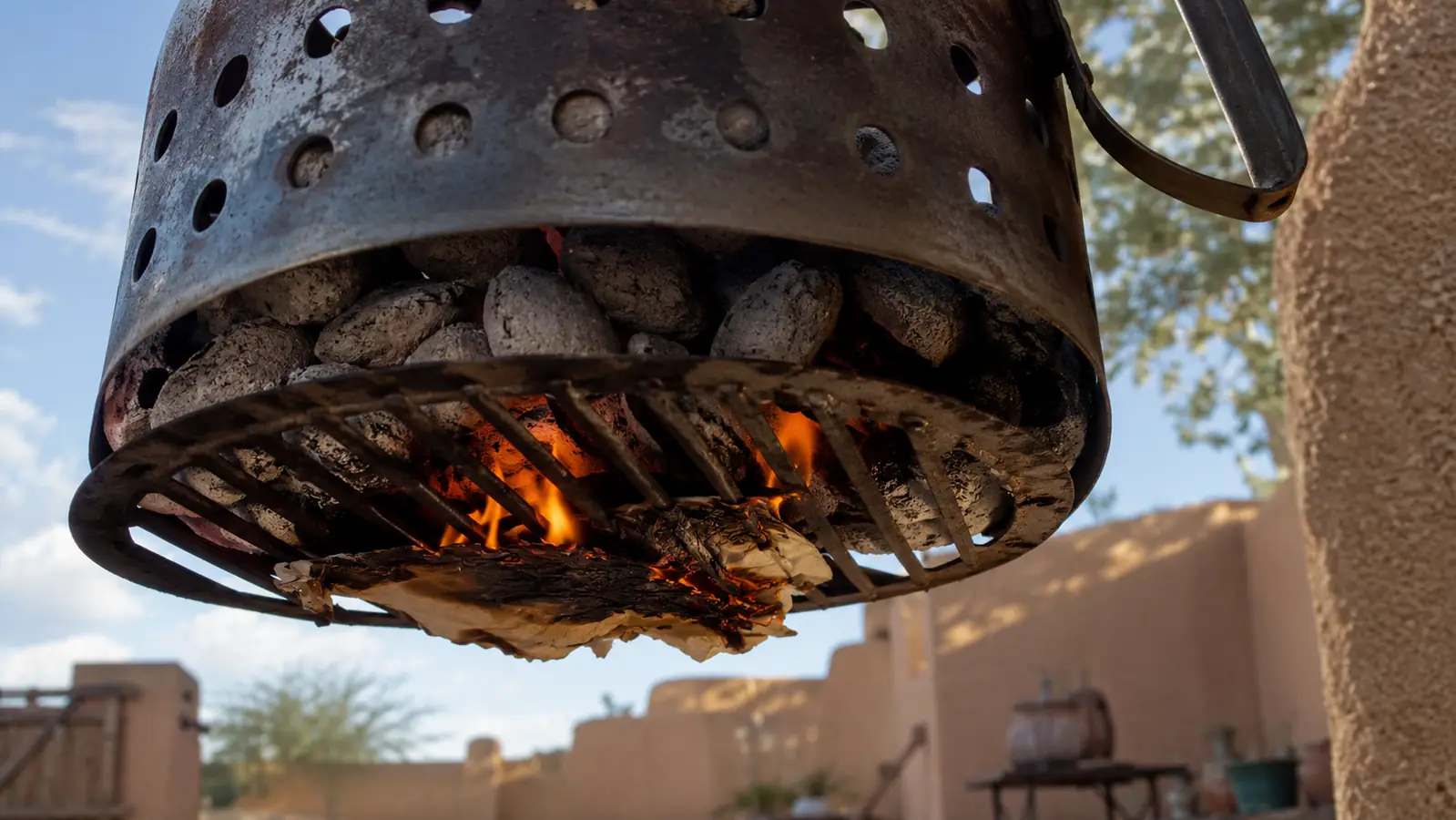
The Metal Has Held Up Through Two Full Seasons Outdoors
My Weber chimney lives on an open shelf next to the kettle, exposed to Albuquerque sun and the occasional dust storm, and it has not rusted through or warped after two years of that treatment. The galvanized steel has a dull patina from heat cycling but no holes, no flaking paint, nothing structurally different from the day I bought it. A cheap coffee-can version I tried before this one had rust spots inside the first summer.
Same Result With Lump or Briquettes
I switch between briquettes for long low cooks and lump charcoal for a fast weeknight sear, and the Weber chimney lights both the same way, full load, one sheet of newspaper, about 15 minutes to ready coals either way. Fluid never behaved that consistently for me across charcoal types. Lump especially used to catch unevenly with fluid because of its irregular chunk sizes. The chimney doesn't care what shape the charcoal is, it just needs airflow, and it gets plenty through that bottom grate.
Amazon See the starter that treats lump and briquettes the same →
It's the One Piece of Gear I Trust to Teach My Grandson On
My grandson is nine and wants to help with everything at the grill. I would never have handed him a bottle of lighter fluid and a lighter. With the Weber chimney, he stuffs the newspaper in the bottom under supervision, I light it, and he watches the coals build through the side vents from a safe distance. There's no fuel to spill on his hands, no fumes to breathe in leaning over the kettle. It's turned lighting the fire into something we actually do together instead of something I handle alone before he's allowed near the grill.
What I'd Skip
I'd skip the jumbo extra-large chimney models unless you're regularly feeding a crowd of 30 or more. I own the standard-size Weber, and it holds enough charcoal for a full kettle load on any normal weeknight or weekend cook. I'd also skip the electric charcoal starter wands some folks swap in instead of a chimney. They work, but you're stuck near an outlet with a cord running across the patio, and I've had one burn out on me mid-light. And skip the branded fire-starter cube multi-packs marketed as essential. A single sheet of newspaper does the same job for free.
I haven't bought a bottle of lighter fluid since the spring of 2024, and my food has tasted better for it.
Ready to Retire the Lighter Fluid Bottle for Good?
The Weber Rapidfire has lit close to 300 fires on my patio without a single flare-up scare or off-flavor. It's the cheapest, lowest-drama upgrade I've made to my setup.
Amazon Check Today's Price on Amazon →