
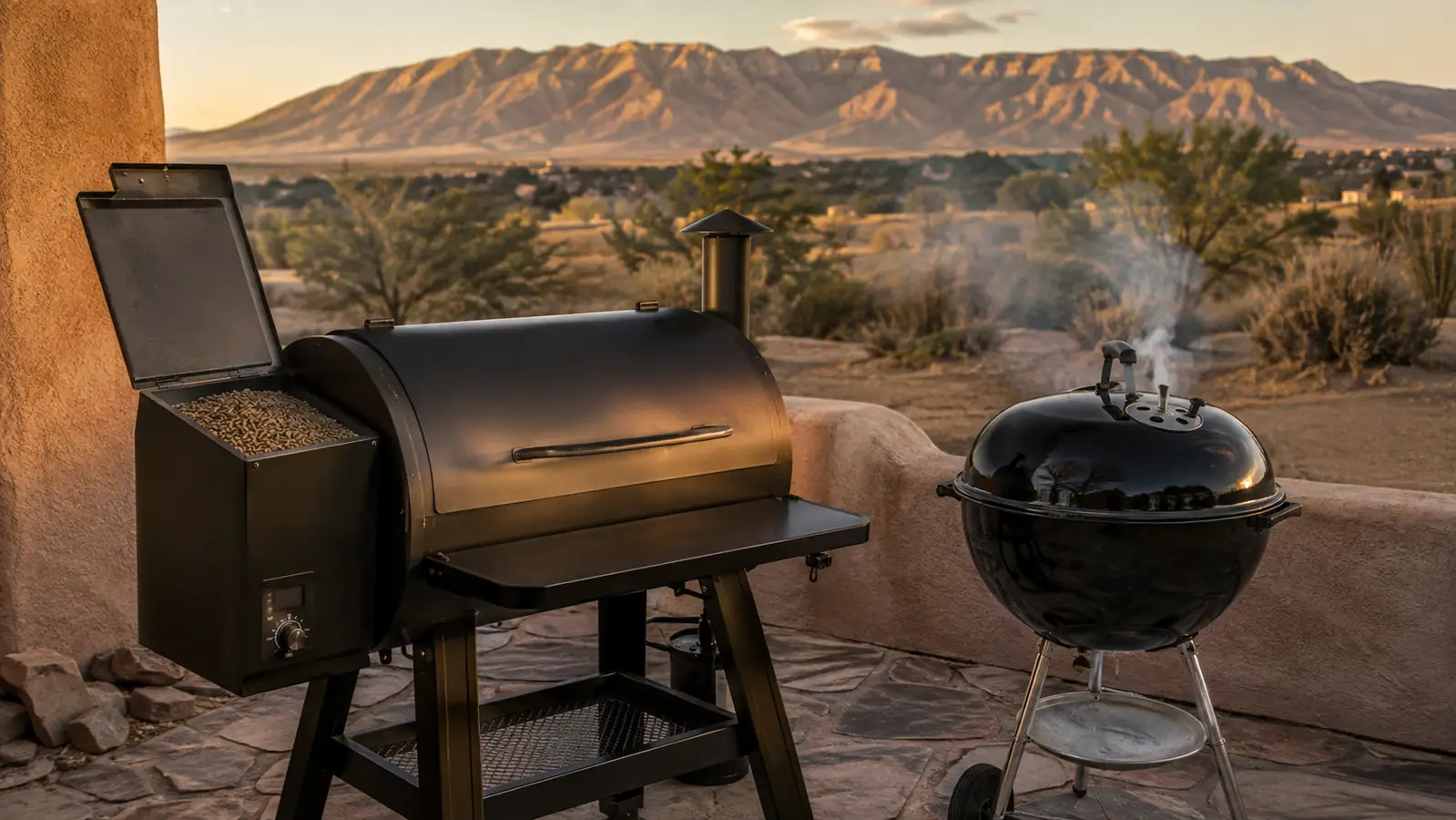
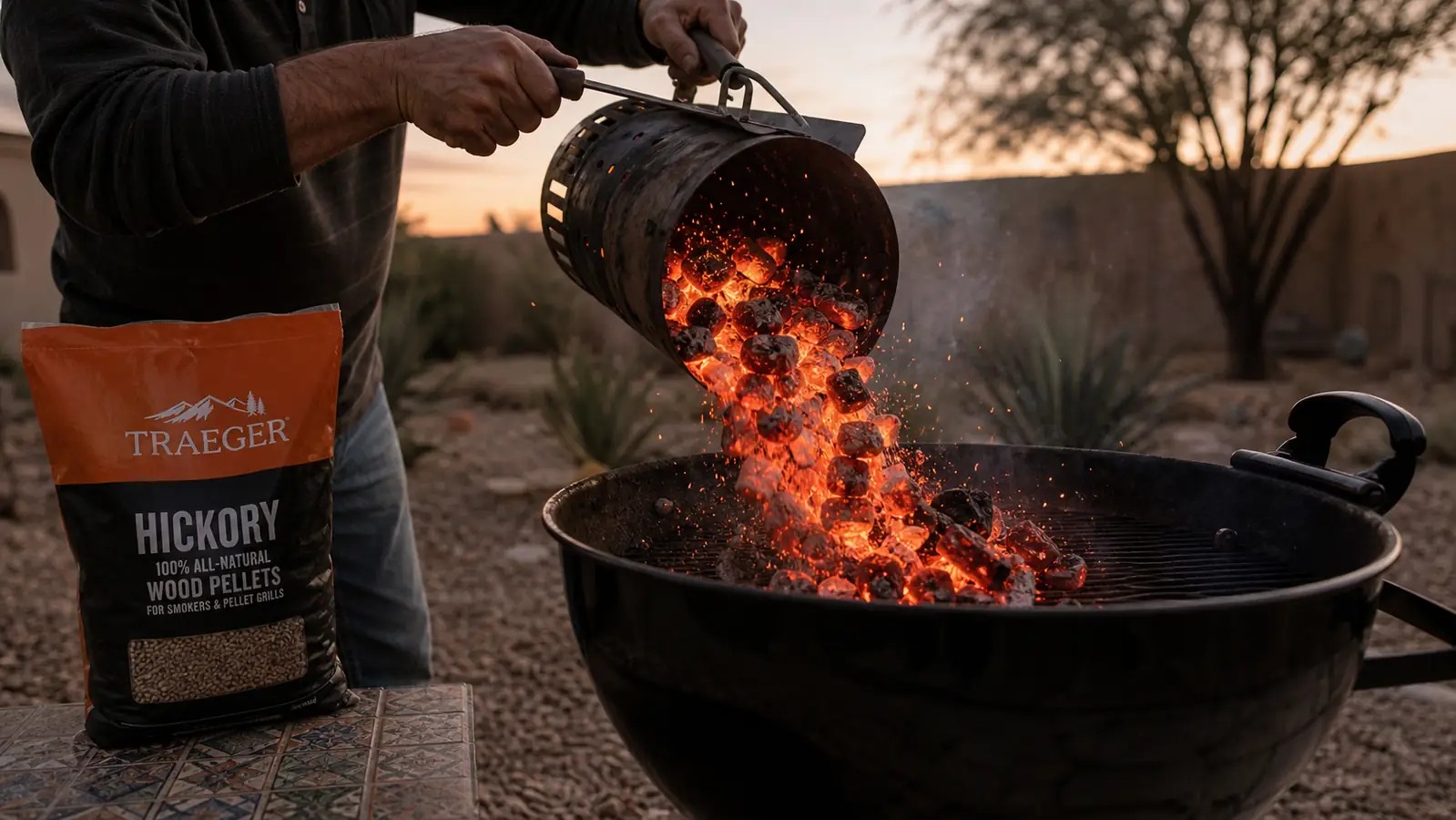
I switched my pellet smoker over to Traeger's own Hickory pellets back in March, mostly because the bag was sitting on the shelf next to the register at the hardware store on Menaul and I was out of options that day. Twenty years of cooking over charcoal in my kettle didn't really prepare me for how different a bag of compressed hardwood sawdust smells and burns compared to lump. The question I get most from neighbors who see both cookers sitting on my patio is a simple one: do wood pellets actually beat charcoal, or is it just a different flavor of the same fire? After about eight months running Traeger Hickory pellets against lump charcoal and briquettes in my Weber kettle, side by side on the same cuts of meat, I've got real numbers to answer that, not just an opinion.
The short answer: if you want a fire you can walk away from for six or eight hours at 5,000 feet, pellets win outright. If you want the highest heat you can get for searing a ribeye, or you're trying to keep the cost per cook down on a quick weeknight grill session, charcoal still wins those fights. Neither one replaces the other completely on my patio. They do different jobs, and the table below breaks down exactly where each fuel earns its keep and where it falls short.
| Spec | Traeger Hickory Pellets | Lump Charcoal |
|---|---|---|
| Peak Temperature | Around 500F at the grate on a pellet grill's boost setting | 700F or higher with a full chimney and vents wide open |
| Smoke Flavor Profile | Clean, consistent, mildly sweet hickory smoke, similar bag to bag | Deeper, more variable smoke, especially once wood chunks are added |
| Burn Time Per Load | 18 to 20 hours from a 20 pound bag at 225F | 6 to 8 hours banked low in a kettle, 1 to 1.5 hours wide open for high heat |
| Temperature Stability | Holds within about 5F of the set point for hours at a stretch | Can drift 20 to 25F either direction once the wind picks up off the mesa |
| Ash Produced | About 1 cup of fine ash per 20 pound bag | 2 to 3 cups of ash and spent chunks per full kettle load |
| Ease of Unattended Long Cooks | Excellent, the auger feeds itself for hours with no vent checks | Requires babysitting vents roughly every 45 to 60 minutes |
| Cost Per Hour of Fuel | Very economical hourly operating cost at low-and-slow temperatures | Modest hourly cost when running wide open for a hot sear |
| Best Use Case | Overnight brisket, pork shoulder, and other long unattended smokes | Quick weeknight searing and high-heat grilling on a budget |
Where Traeger Hickory Pellets Win
The biggest win is unattended time. I loaded the hopper with a full 20 pound bag of Traeger Hickory pellets on a Saturday morning in June, set it to 225F, and put a 13 pound brisket on at 6am. I didn't touch a vent or a damper once. At sea level that cook might run 12 hours. At my altitude, with thinner air and a lower boiling point, it stretched closer to 14, and the pellet grill just kept feeding itself the entire time. Try that with a charcoal kettle and you're up at 2am adding fuel, or the fire's dead by breakfast. That's the actual trade I'm making when I reach for pellets instead of lighting a chimney: my Saturday back instead of a slightly hotter fire.
Temperature stability is the second win, and it matters more here than it would at sea level. Thin, dry Albuquerque air lets a charcoal fire breathe harder and run hotter than the same load would nearer the coast, which means bigger swings if I'm not watching the vents closely. The pellet grill's auger and fan hold the readout temperature within about 5 degrees of the set point, cook after cook. I've logged it with an Inkbird probe sitting on the second grate and watched it hold 225F to 230F for hours at a stretch. My kettle, even with the vents dialed in carefully, will drift 20 to 25 degrees either direction once the wind picks up off the mesa, which it does most afternoons.
Bag quality has held up better than I expected too. Traeger markets these as 100 percent hardwood with no filler, and when I ran a magnet test out of curiosity, a trick I picked up from a forum, I didn't turn up any metal shavings or binder residue the way you sometimes hear about with cheaper pellet brands. The bag also fed evenly through the auger all season, no jams, no swelling from humidity even when I left half a bag in the garage through a rare wet week in August. That reliability matters more than flavor most days, because a jammed auger at 2am on an overnight cook is a far bigger problem than smoke that's slightly milder than I'd like.
Where Lump Charcoal Wins
Peak heat is where charcoal wins, and it isn't close. A full chimney of lump charcoal dumped into my kettle with the vents wide open will push past 700F at the grate, hot enough to get a real crust on a ribeye in about 90 seconds a side. The pellet grill tops out around 500F on its boost mode, and even that takes longer to climb than a chimney takes to catch. When I want a smash burger or a quick seared steak on a Tuesday night, I'm lighting the kettle, not waiting on a pellet hopper to preheat. Fifteen minutes from match to seared meat is a real advantage charcoal has that no amount of pellet-grill engineering has closed.
Cost per hour is the other one, and I've actually done the math on my own receipts. A 20 pound bag of Traeger Hickory pellets runs close to today's price and burns roughly a pound an hour at 225F, so a long overnight smoke costs somewhere around a dollar an hour in fuel. Lump charcoal burns faster, especially wide open for searing, so a high heat cook can run $5 to $7 an hour in fuel alone. But for a quick 20 minute weeknight grill session, that's still cheaper in total dollars spent than firing up the pellet hopper for something that fast. Short, hot cooks favor charcoal on cost. Long, low cooks favor pellets.
Charcoal also doesn't need power. My kettle works during a windstorm power outage, works at a campsite with no outlet in sight, works exactly the same whether the auger motor and control board on a pellet grill are having a good day or not. I had a pellet grill's fan controller hiccup once in July, the temperature dropped 40 degrees for twenty minutes before the alarm even caught it, and I lost some bark on a pork shoulder because of it. A kettle full of lit charcoal doesn't have firmware. That simplicity is worth something when you're two hours into a cook and don't want to troubleshoot electronics.
Tired of Babysitting a Fire at 2am?
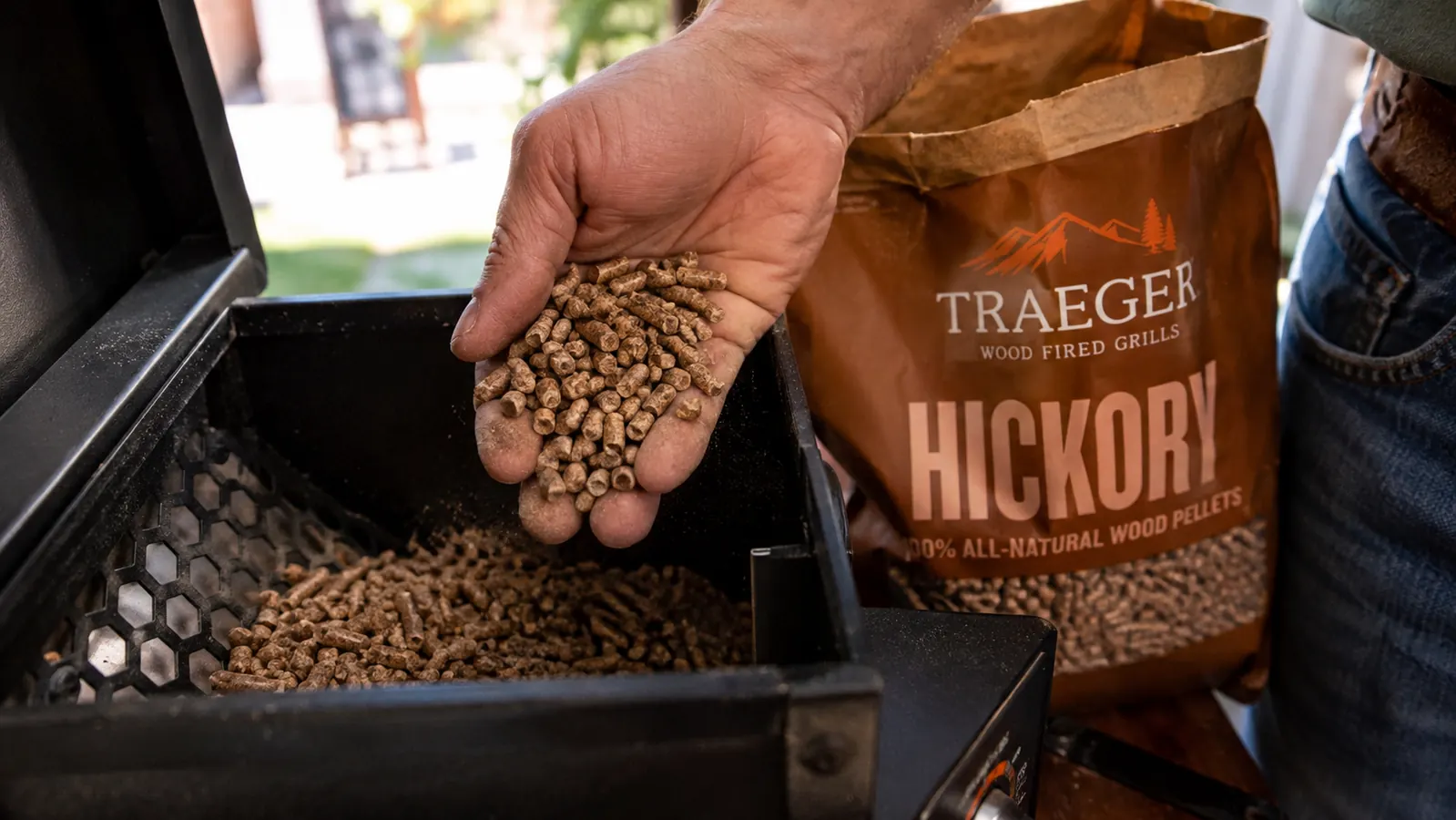
This is the exact 20 pound bag of Traeger Hickory pellets I've been feeding through my smoker since March, the one that let a 13 pound brisket run overnight without a single vent check. Check today's price on Amazon and see if there's a multi-bag deal running before your next long weekend.
Amazon Check Today's Price on Amazon →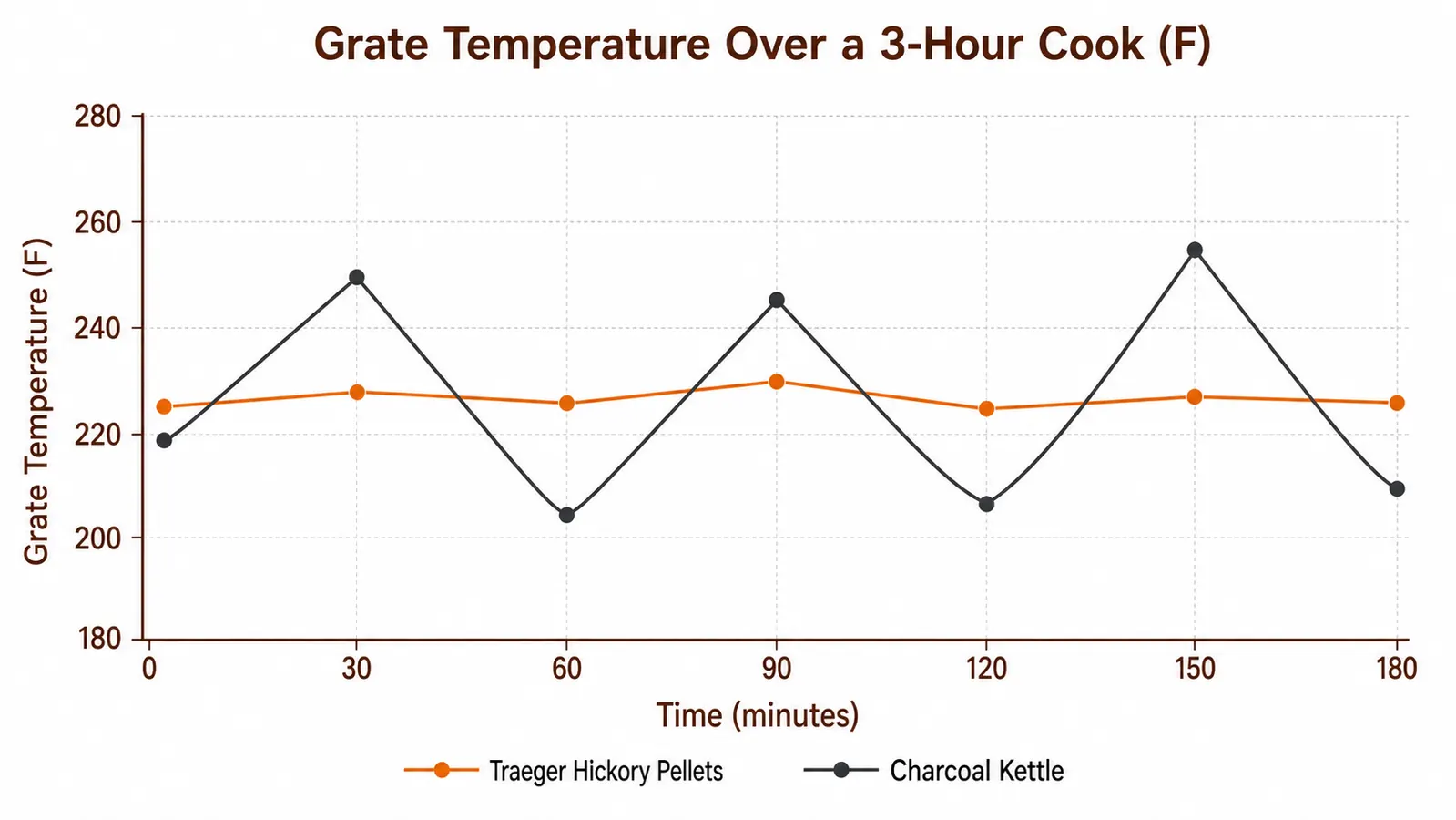
What Actually Changes at 5,000 Feet
Altitude changes both fires more than most reviews admit. Water boils around 202F here instead of 212F, so anything relying on evaporative cooling, like a brisket stalling out in the 150s, behaves a little differently than what you'll read in a guide written closer to sea level. Charcoal burns hotter and faster in thin air because there's less oxygen resistance and the fire pulls harder through the vents. I've had a full chimney catch in under 12 minutes on a dry August afternoon, faster than the instructions on the can suggest. Pellets don't care about any of this in the same way, the auger feeds a fixed amount of fuel on a timer regardless of what the air is doing, which is part of why they hold temperature so much more consistently up here.
Smoke flavor is where people expect pellets to lose, and they mostly do, just not by as much as I thought going in. Traeger's hickory blend gives a clean, slightly sweet smoke that's noticeably milder than what comes off a charcoal fire with a couple of hickory chunks thrown in. It's consistent bag to bag, which charcoal can't always claim since lump pieces vary in size and species mix even within the same bag. But charcoal smoke has more range, more depth, especially once I start layering in mesquite or pecan the way I usually do. If I'm chasing a specific, bold smoke profile for a competition-style rack of ribs, I still reach for the kettle and a chunk of pecan over the pellet hopper.
Neither fire is smarter than the other. They're just built for different Saturdays.
Ash, Cleanup, and the Sunday Morning Test
Ash volume is a smaller thing but it adds up over a season. A 20 pound bag of Traeger pellets leaves about a cup of fine ash in the bottom of the hopper, easy to vacuum out with a shop vac once a month. A full kettle load of lump charcoal leaves closer to two or three cups of ash and spent chunks, and I'm knocking the kettle out after almost every long cook or the airflow gets choked and the next fire runs cooler than it should. On a Sunday morning after a Saturday night brisket, cleaning the pellet grill's fire pot takes about five minutes. Cleaning the kettle after a comparable cook takes closer to twenty, plus a trip to dump the ash can.
Neither cooker is dramatically harder to maintain long term, but the pellet side wins the day-to-day chore math, and that matters more than people admit when they're deciding what they'll actually use on a random Tuesday instead of what sounds impressive on a Saturday. I've had both cookers running side by side since March, and the kettle is the one that occasionally sits unused for two weeks at a stretch, not because it cooks worse, but because lighting it and cleaning it afterward takes real effort every single time.
Who Should Buy Which
If most of your cooking is low and slow, brisket, pulled pork, ribs on a schedule, and you want to set a fire and go to your kid's soccer game without checking on it, get the Traeger Hickory pellets and run them in a pellet smoker. That's most of what I use mine for now, and the consistency at altitude alone is worth the switch for anyone doing overnight cooks. If most of your cooking is quick weeknight grilling, steaks, burgers, chicken thighs, and you want the highest heat you can get for the least money per cook, stick with lump charcoal and a good chimney starter. I still keep both fires going for exactly that reason, and I'd tell any neighbor asking over the fence to do the same instead of picking one and swearing off the other.
The honest middle ground is what I actually do most weekends: pellets for the overnight brisket, charcoal for the Sunday afternoon burgers once everyone's hungry and the brisket's already resting. If you can only add one fuel to your setup right now, let your calendar decide. Count how many cooks you actually babysit versus walk away from over a normal month, and buy for the fire you need more often, not the one that sounds better on paper.
Ready to Stop Setting an Alarm for Vent Checks?
If most of your cooks are the overnight kind, brisket, pork shoulder, a rack of ribs while you're at your kid's game, grab a bag of Traeger Hickory pellets and let the auger do the babysitting. Check today's price on Amazon before your next weekend smoke.
Amazon Check Today's Price on Amazon →