
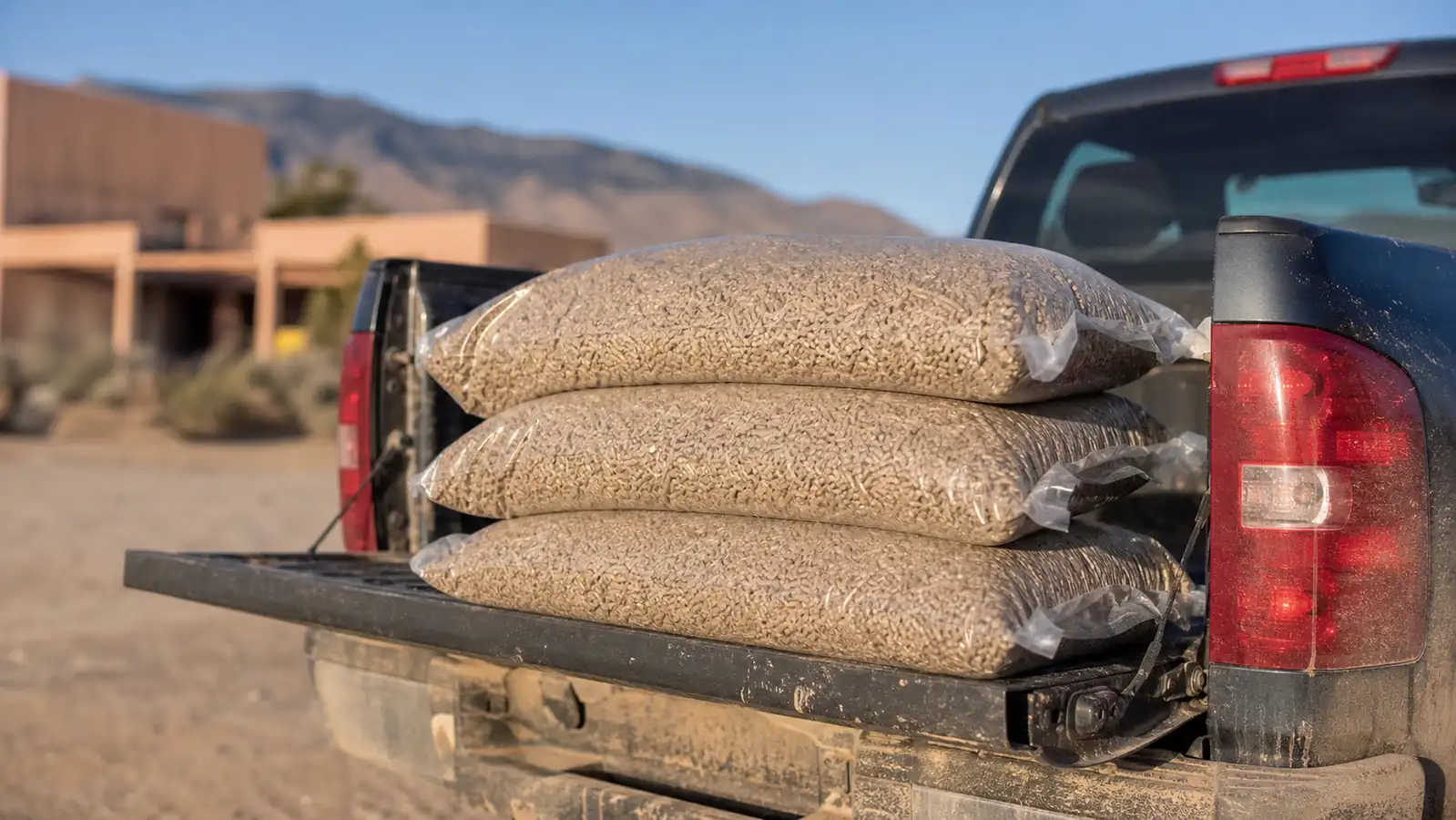
My neighbor Pete, three houses down on Camino de la Sierra, called me in June holding a brand new pellet grill and reading me a line straight off the owner's manual. Use Traeger pellets only, it said. He wanted to know if that was an actual requirement or a marketing move, because if it was the second one he did not want to pay Traeger prices for the rest of his grilling life. That question is the reason I am writing a second review of Traeger Hickory instead of leaving the first one to stand on its own. The long version I wrote after eight months and nine bags covers how the pellets perform cook after cook. This one is about the questions people actually ask me at the feed store on Menaul, the claims printed on the bag that hold up under a closer look, and the ones that do not.
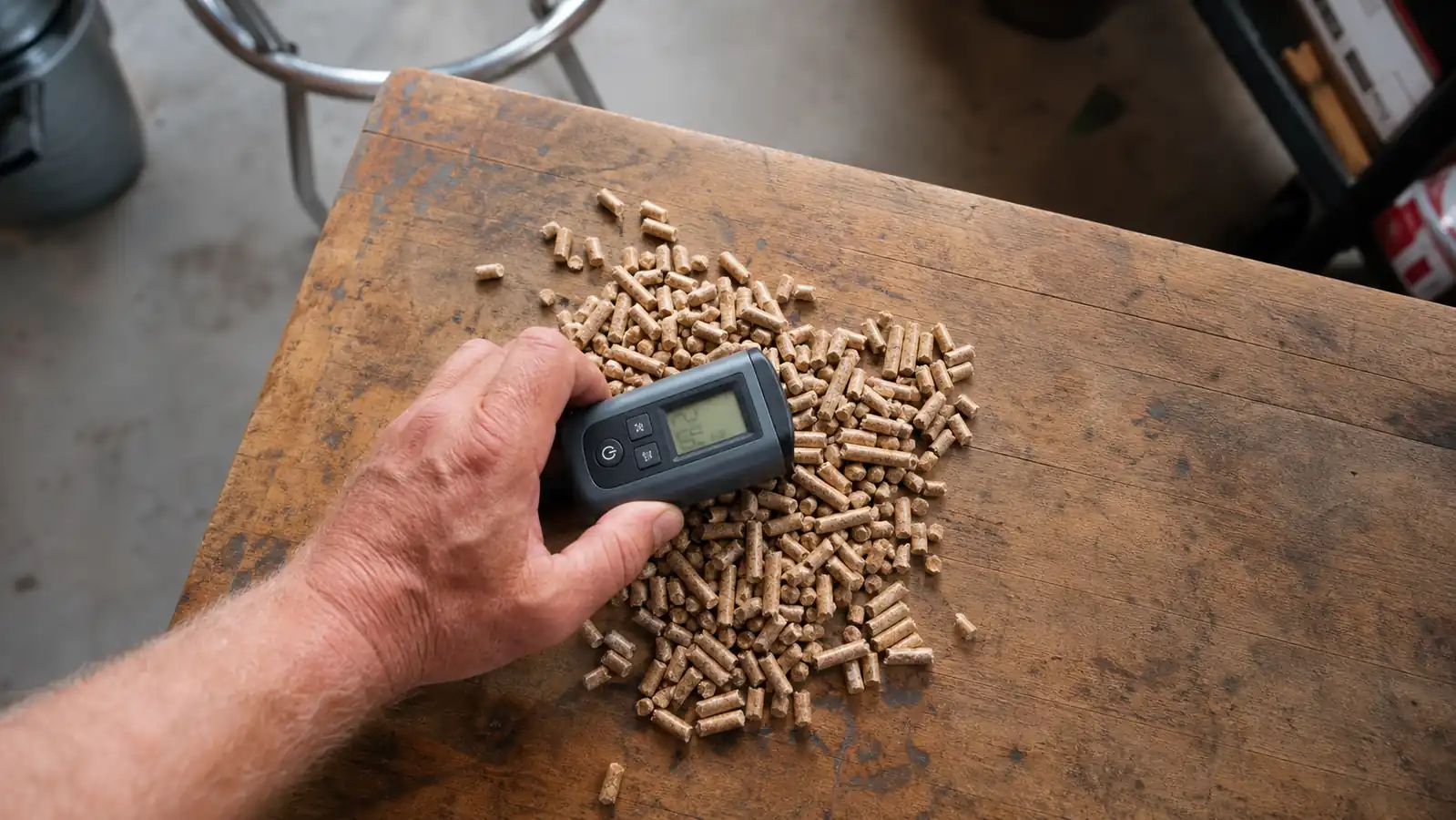
So for this review I did something different. I bought three bags of Traeger Hickory from three different places on three different dates, one from the feed store, one from a big box hardware chain, and one ordered straight off Amazon, to see whether the product behind the name is actually consistent no matter where it comes from. I also pulled out the pinless moisture meter I normally use to check firewood splits before they go in the kettle, because moisture, not brand, turned out to be the thing that mattered most once I started digging into why some bags burn clean and others do not.
The Quick Verdict
Traeger Hickory holds up to scrutiny better than most of the marketing claims around it, but the brand loyalty pitch on newer pellet grills is mostly a suggestion, not a rule, and the real differentiator is moisture control, which any well-stored quality pellet can match.
Amazon Check Today's Price →Before You Pay Extra for the Name on the Bag, Read This
Traeger Hickory earns its price on moisture consistency and clean burn, not on brand loyalty. Here's what actually held up when I tested it against the marketing claims.
Amazon Check Today's Price on Amazon →How I Actually Tested This, Beyond My Own Hopper
The three-bag, three-source experiment ran over about five weeks in July and August, which is the worst possible stretch to test pellets in Albuquerque because our monsoon humidity shows up unevenly, some days bone dry, some days heavy enough to smell the creosote bush in the arroyo. I weighed each bag unopened, then again after opening, then took a moisture reading with the meter pressed into a loose handful before any pellets went near the hopper. I ran identical cooks off each bag, a 4-pound pork butt held at 250 degrees for roughly 6 hours, timed the minutes to clean blue smoke at startup, and logged ash after each cook.
All three bags of Traeger Hickory read within half a percentage point of each other on moisture straight out of the packaging, somewhere around 5 to 6 percent, which is right where kiln-dried hardwood pellets should sit. Startup smoke cleared in roughly the same window across all three, and ash after each cook landed in a tight enough range that I would call the batches functionally identical. That answered one question for me before I got to any of the marketing language. Whatever plant is stamping out this particular bag, it is not cutting corners depending on which retailer carries it.
Where it got interesting was when I stopped controlling storage and let one of the three bags sit open on a shelf through a genuinely humid week in early August, the kind where the swamp cooler cannot keep up and every wood surface in the garage feels faintly damp. That bag is where the real story of this review lives, and I will get into the numbers in a minute.
The '100 Percent Hardwood' Label Doesn't Mean What Most People Assume
Here is something nobody tells you when you are standing in the aisle comparing bags. There is no single federal standard that defines what a wood pellet company can print on the front of a bag. Terms like all-natural and 100 percent hardwood are not regulated the way food labels are, so two companies can use identical language while running very different processes behind it. Some manufacturers pad their pellet mix with a percentage of softwood or off-species scrap to stretch a batch, and because enforcement is essentially nonexistent, the only real check a customer has is testing the product itself, not trusting the front of the bag.
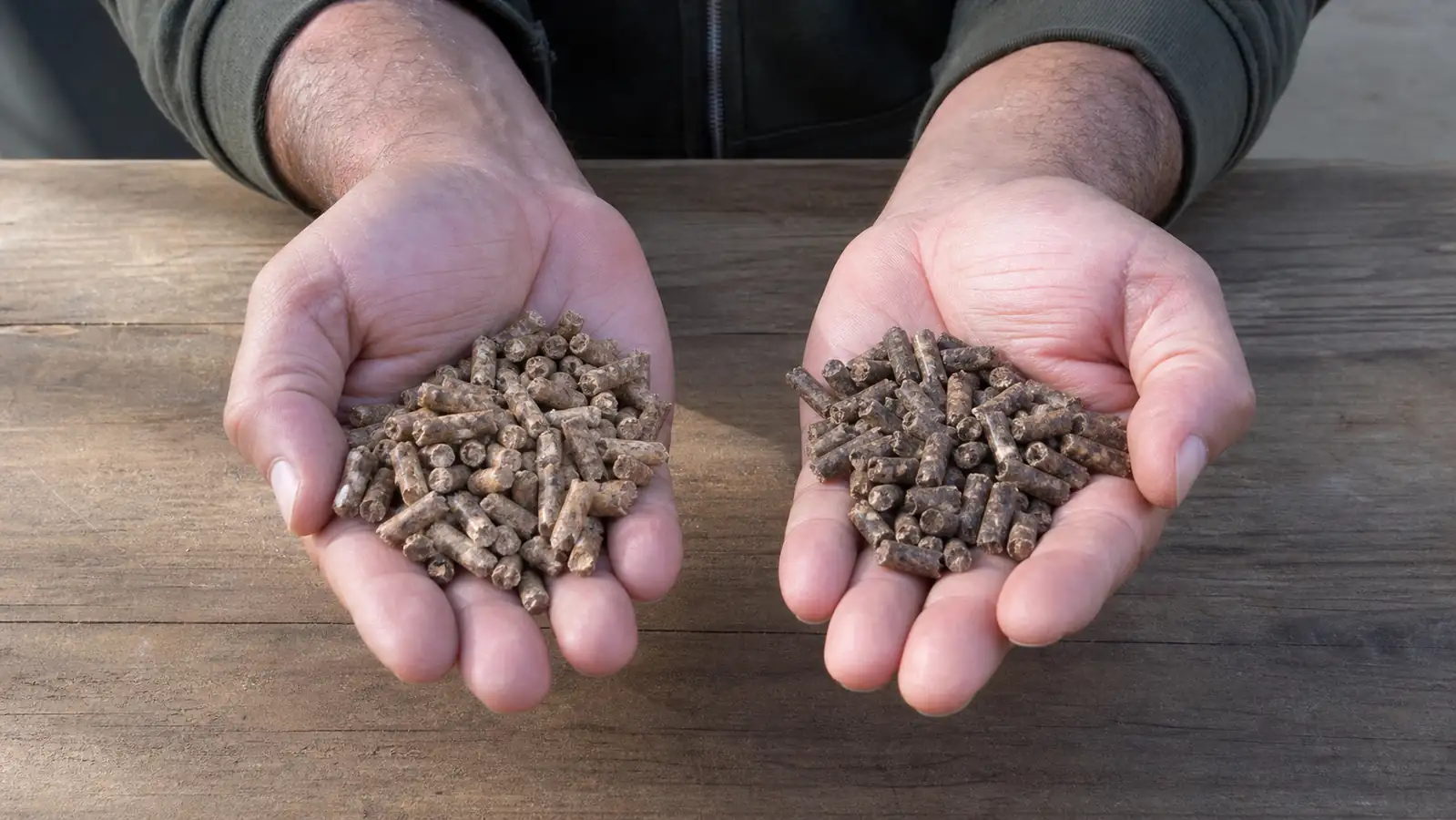
What I can tell you after running Traeger Hickory through the moisture meter and comparing burn characteristics against two other brands I keep around is that this particular claim checks out reasonably well. The pellets are a consistent light tan, they hold together under light pressure rather than crumbling into dust, and I did not find the darker, oddly grained pellets mixed in that I have seen in cheaper bags where a filler species got blended in. That does not mean I can certify a lab-grade breakdown from my garage. It means the physical evidence lines up with what the label claims, which is more than I can say for every bag on that shelf.
The binder question is a separate piece of this that gets misunderstood constantly. Quality hardwood pellets do not need glue or additives to hold their shape, the natural lignin already present in wood softens under the heat and pressure of the pelletizing process and re-hardens as a binder on its own. When a company advertises no fillers or binders added, that is describing standard practice for a well-made pellet, not some special process unique to one brand. Traeger is being accurate here, but so would most of its serious competitors if they used the same language, which tells you the claim is worth less as a differentiator than the marketing wants you to think.
Moisture Is the Real Villain, Not Which Logo Is on the Bag
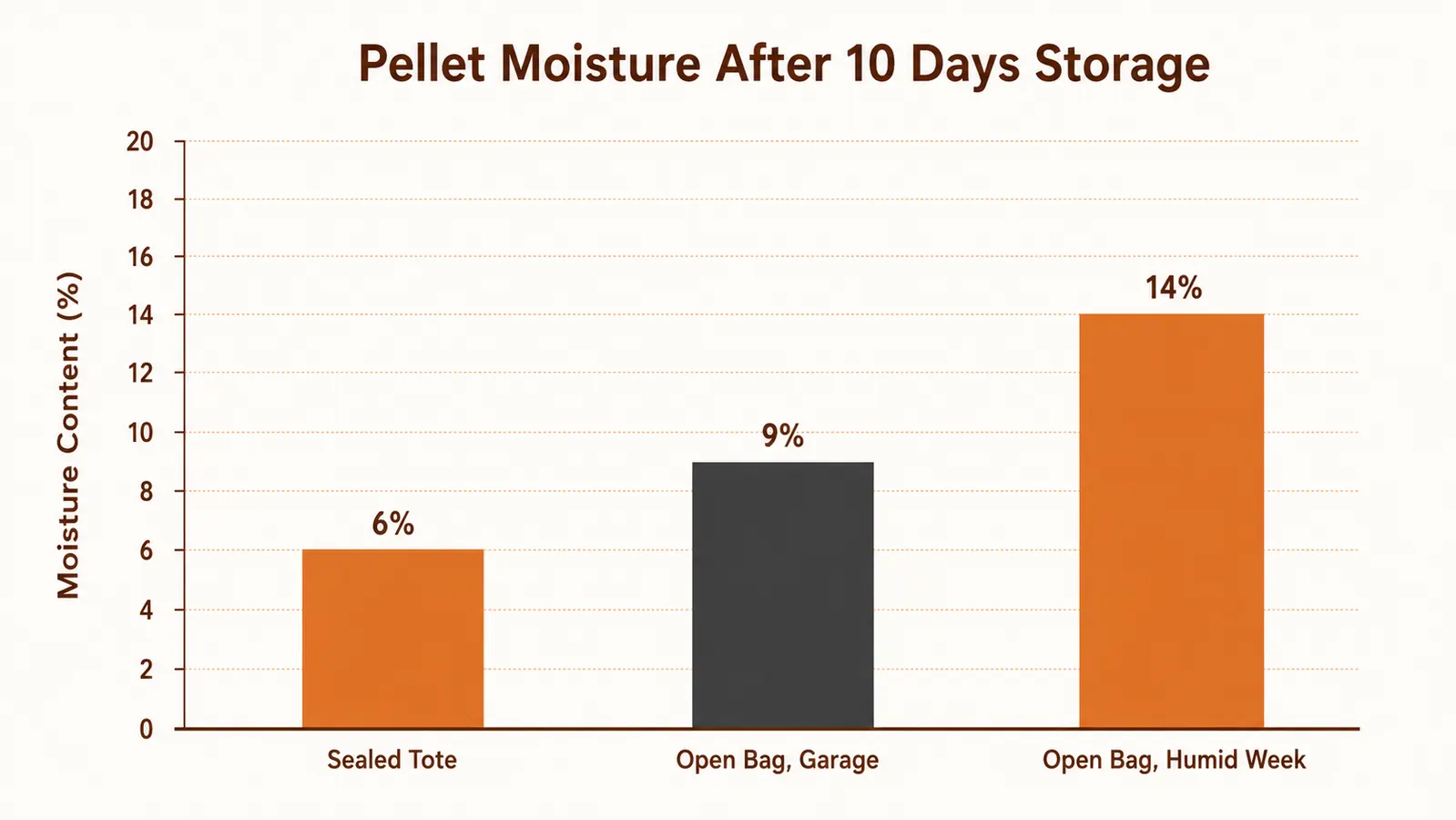
This is the part of the review that actually changed how I shop. The bag I left open through that humid August week climbed from a 6 percent moisture reading to just over 14 percent in ten days, measured with the same meter, same technique, same spot in the garage each time. A sealed tote holding an identical bag from the same batch stayed at 6 percent the entire time. Fourteen percent moisture is high enough to matter on the grill. That bag took nearly twice as long to clear to thin blue smoke on startup, roughly 11 minutes against the usual 5, and it produced visibly thicker white smoke mid-cook whenever the auger fed a fresh clump.
That single test told me more about pellet performance than any amount of brand comparison. A Traeger bag with 14 percent moisture in it burns worse than a generic bulk bag stored properly at 6 percent. The wood species and the name on the label matter far less than most buyers assume once moisture gets involved, because wet wood simply does not combust the same way regardless of who grew the tree or bagged the pellet. If you take one thing from this review, take this, buy a cheap pinless moisture meter for about 25 dollars and check any bag before it goes in your hopper. It will tell you more than reading the front label ever will.
Who Gets Talked Into the Name and Regrets It
Pete is a good example of exactly who overpays here. He bought a pellet grill from a different manufacturer entirely, and the manual's suggestion to use Traeger pellets only is boilerplate caution language, not a hardware requirement. Any well-made hardwood pellet burns fine in almost any pellet grill's auger system, they are all built around a roughly quarter-inch diameter pellet as an industry standard. What actually happens when someone reads that line literally is they end up buying the most expensive bag on the shelf out of a fear that using anything else will void a warranty or damage their new grill, when in most cases the manual is just covering the company legally rather than describing a real mechanical limitation.
The other group I see get talked into overpaying is the reorder-on-autopilot crowd, the folks who bought Traeger Hickory once, liked it, and now grab it off the shelf every single time without ever pricing the 40-pound bulk sacks the barbecue supply stores around town carry. I understand the instinct, a brand you trust is a brand you do not have to think about, but if you are cooking three or four times a week, that habit costs real money over a year that a five-minute price comparison would have caught.
Where the Brand Genuinely Earns Its Price
I do not want this to read like I am talking anyone out of buying Traeger Hickory, because after the three-bag test I would still put it in my own hopper. The batch-to-batch consistency out of the package was real, the moisture readings were tight, and I never once had a bag arrive already compromised the way I have with a couple of off-brand pellets I tried a few winters back. That consistency is worth something, especially if you are running an overnight brisket or shoulder where a bag that burns unpredictably four hours into a fourteen-hour cook is a genuinely expensive mistake in ruined meat and wasted time.
Where the brand matters least is on short, high-heat cooks. A weeknight cook of chicken thighs at 350 degrees for 35 minutes is forgiving of small differences in pellet quality in a way a 14-hour overnight smoke simply is not. If you are mostly doing quick weeknight cooks, spending extra for any premium single-species pellet, Traeger or otherwise, buys you very little you would actually taste. Save the premium bag for the cooks where a fire that drifts or a smoke that turns acrid actually costs you something.
What I Liked
- Moisture readings were tight and consistent across three separately purchased bags from three different retailers
- The 100 percent hardwood claim held up under a physical inspection rather than falling apart on scrutiny
- No binder additives needed, and none found, consistent with how quality hardwood pellets are supposed to work
- Burns clean and predictable when stored properly, which matters most on long overnight cooks
- Widely available locally in Albuquerque, so I never had to plan a cook around a shipping delay
Where It Falls Short
- The 'use only this brand' language on some pellet grill manuals is not a real technical requirement, and buying into it costs money unnecessarily
- Costs noticeably more per pound than bulk 40-pound sacks that test at similar moisture levels when stored correctly
- One bag left open for ten days during a humid week climbed to 14 percent moisture and burned noticeably worse
- The front-of-bag marketing language is standard industry practice dressed up as a differentiator
- No resealable strip on the bag, so anyone without a spare tote is exposed to the same humidity problem I tested
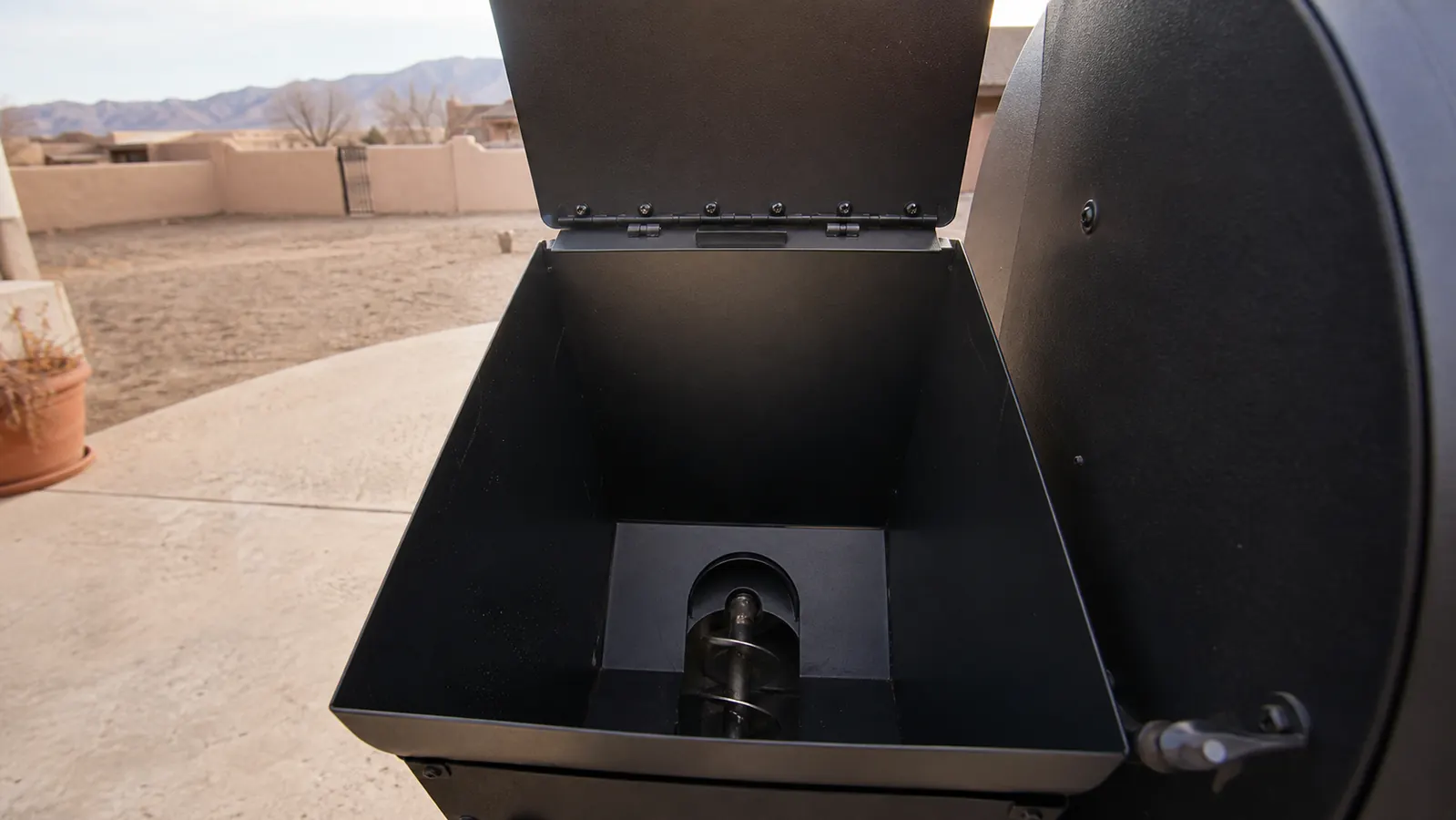
A Traeger bag left open through a humid week burns worse than a generic bag stored right. The name on the front never controlled that number. The moisture meter did.
Who This Is For
This is for the cook who wants one less variable to worry about on a long, expensive cook, someone running overnight briskets or shoulders often enough that a bag that performs the same in December as it does in July is worth paying a bit more for. It is also a reasonable pick for anyone who does not want to bother with a moisture meter or a bulk sack from a barbecue supply store and would rather trust a name that has, in my testing at least, backed up its own claims.
It is also fine, honestly, for anyone who just wants to stop overthinking pellets entirely. Not every buying decision needs to be optimized down to the percentage point, and if grabbing the familiar bag off the shelf means you actually get out to the grill more often instead of agonizing over spreadsheets, that has its own value I am not going to talk you out of.
Who Should Skip It
Skip the brand premium if you own a pellet grill made by a different company and the manual's brand suggestion is the only thing keeping you from trying a cheaper bulk option, because that language is almost never a real mechanical requirement. Skip it too if you are cooking mostly short, high-heat weeknight meals where pellet quality differences are hardest to taste, a mid-tier bulk pellet will serve you just as well there. And skip reordering on autopilot if you have never actually priced the 40-pound sacks locally, because for anyone cooking several times a week, that price gap adds up to real money over a season, regardless of how good this particular pellet tested out.
Now You Know What the Bag Isn't Telling You
Traeger Hickory tested consistent across three separate bags and held its moisture claims where it counted. If you want a pellet that performs the same on cook 30 as it did on cook one, this is still the one I would point you toward.
Amazon Check Today's Price on Amazon →