
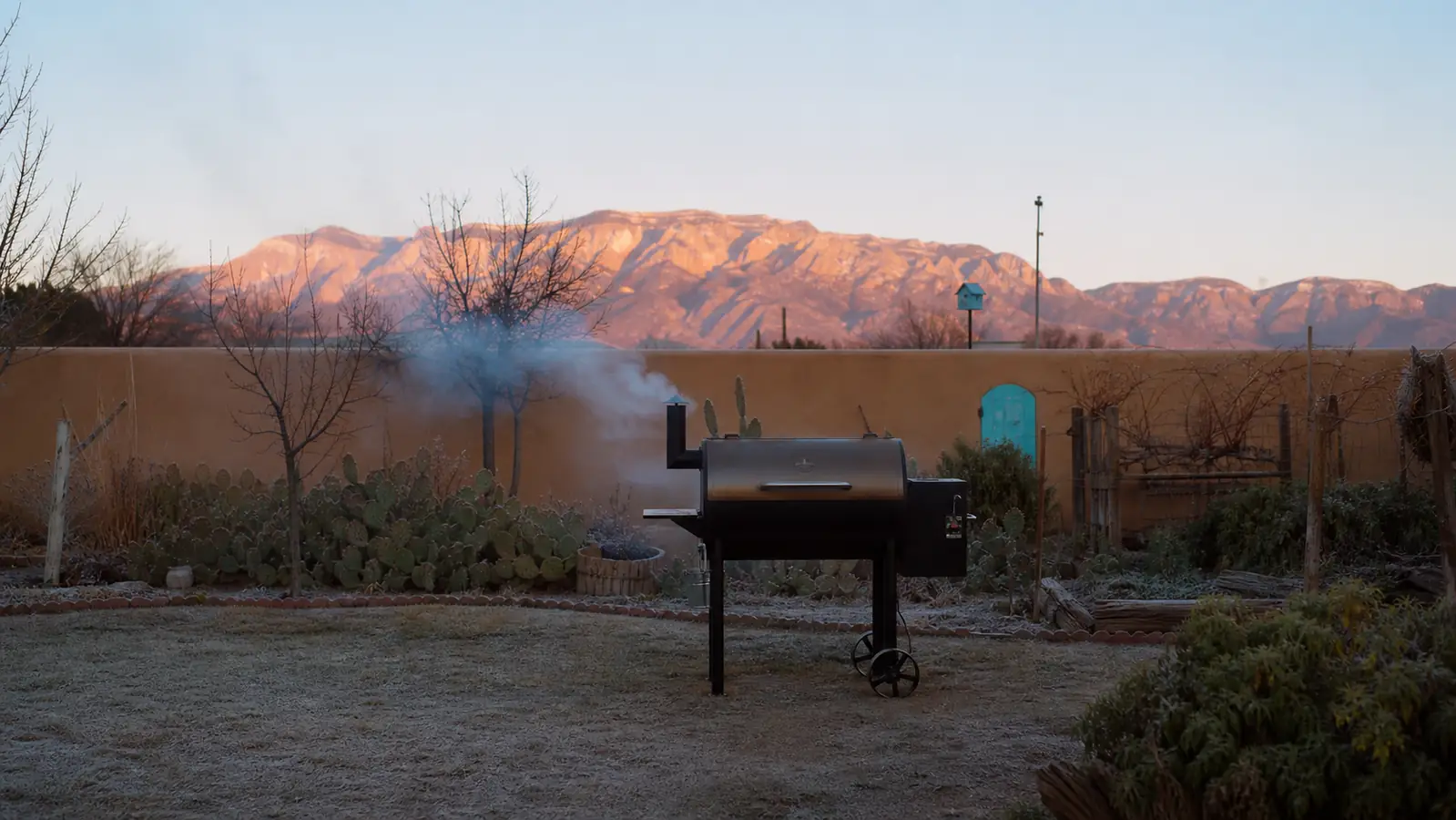
Every summer I get a text from somebody who just watched a barbecue competition on TV and wants to know why their brisket off the Traeger came out gray all the way through while the pitmaster's had that half inch of pink under the bark. I get it. The smoke ring looks like proof you did something right, and when it's missing, it feels like you failed even when the meat tasted fine. Here's the truth I wish somebody had told me back when I was running my first pellet grill on the patio in Albuquerque: the ring isn't flavor, it's chemistry, and pellet grills make it harder to pull off than a stick burner or a charcoal kettle, not because the wood is worse, but because pellet grills burn cleaner and hotter by design.
That doesn't mean you can't get a real ring, a true one, not the fake pink you get from curing salt or paprika bleeding into the meat. I've pulled pork shoulders off my Traeger with a ring you could see from across the cutting board, and I've also pulled off gray ones from the exact same grill because I skipped a step. The difference comes down to five things you control before the bark ever sets: how cold and wet the meat is going in, how low you run the first couple hours, what pellets you're burning, when you wrap, and what you're actually checking for when you slice. Walk through all five and the ring takes care of itself.
Start With Pellets That Actually Combust Clean
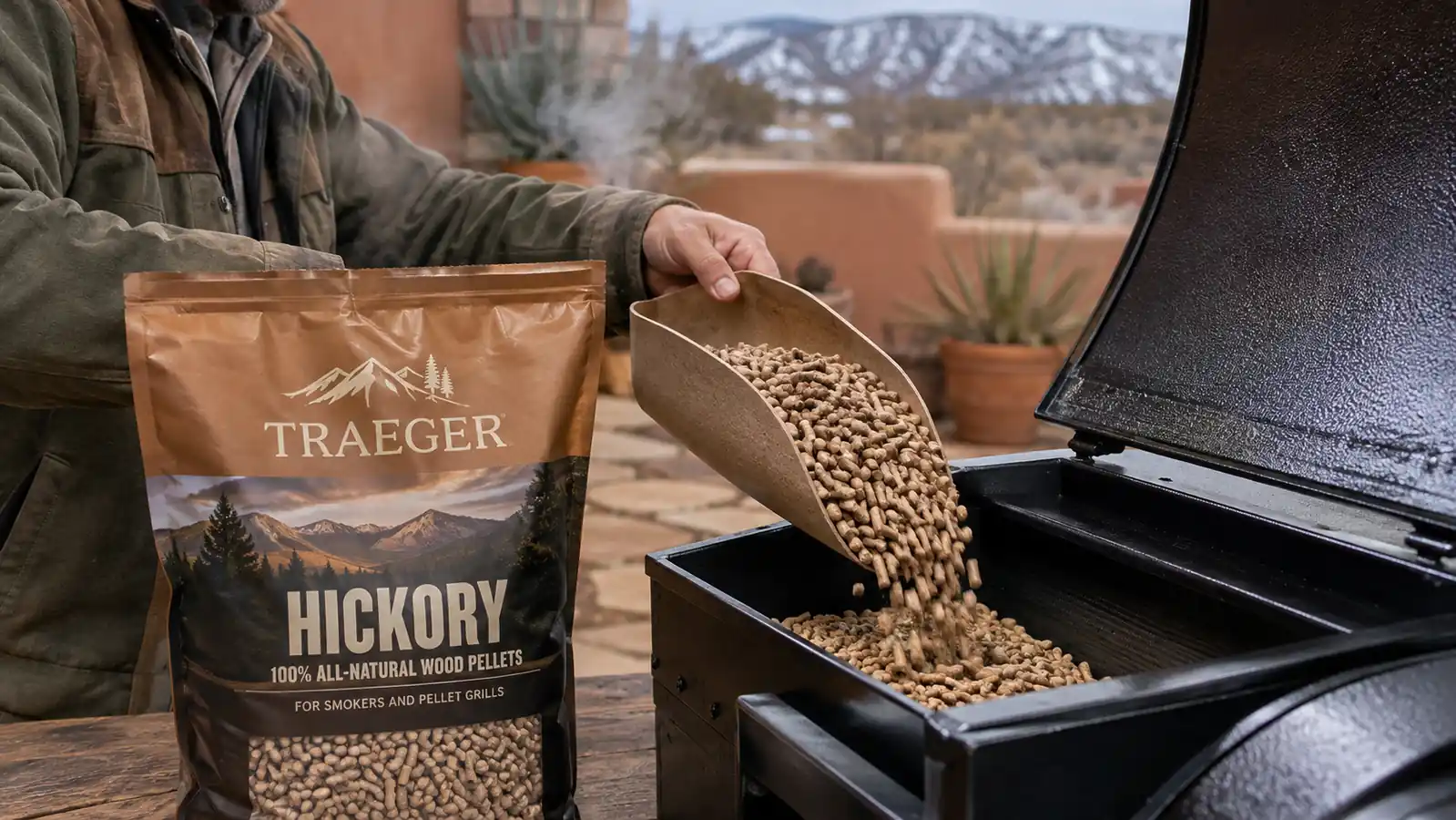
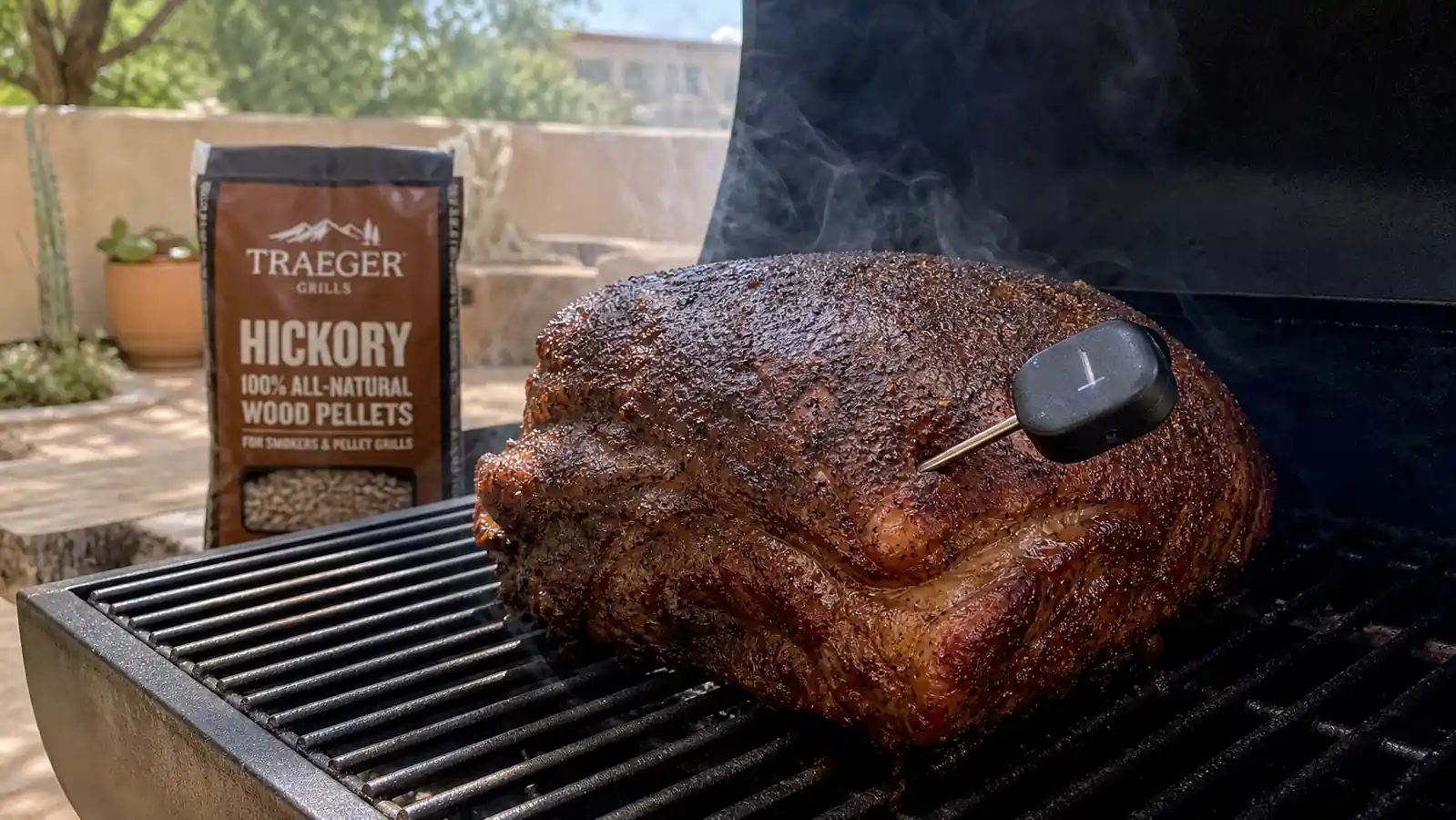
A steady, hot-burning hardwood pellet gives you the consistent smoke chemistry a real ring depends on. I run Traeger's 100% hardwood hickory pellets whenever I need a ring to show up, no filler, no binder smoldering things down.
Amazon Check Today's Price on Amazon →Step 1: Start With Cold, Wet Meat and Skip the Trim-and-Wait
The smoke ring forms when nitric oxide and carbon monoxide from the burning wood dissolve into the moisture on the surface of the meat and bind to myoglobin, the protein that holds oxygen in muscle tissue. That reaction only happens while the meat is cold and damp enough for the gas to actually dissolve into it. Once the surface dries out or the meat warms past a certain point, the window closes. So the first move is boring but it matters: pull your pork butt or brisket straight from the fridge, pat it dry so the rub sticks, then apply a thin layer of yellow mustard, or just water if you want pellet smoke hitting bare meat. Do not let it sit on the counter for an hour to take the chill off. That chill is doing you a favor.
I made this mistake for two years running spare ribs on my old Weber kettle before I ever owned the Traeger. I'd trim, season, then walk inside for coffee and let the ribs sit at room temperature for 45 minutes while I got the fire going. By the time they hit the grate they'd already lost surface moisture and warmed up 15 or 20 degrees. The ring I got was thin, maybe an eighth of an inch, patchy in spots. Once I started going straight from the fridge to the grate, cold and a little wet from the mustard, the ring showed up consistently at a quarter inch, sometimes more on a bigger cut.
One local wrinkle if you're cooking up here in Albuquerque or anywhere above 4,500 feet: our air is thin and dry, so an exposed meat surface loses moisture faster than it would at sea level. I've watched a brisket surface go from tacky to dry to the touch in under 20 minutes on a windy day. If you're at altitude, get the meat on the grate as soon as it's rubbed. Don't stage it on the counter while you check the hopper.
Step 2: Run Low and Slow for the First Two to Three Hours, Not the Whole Cook
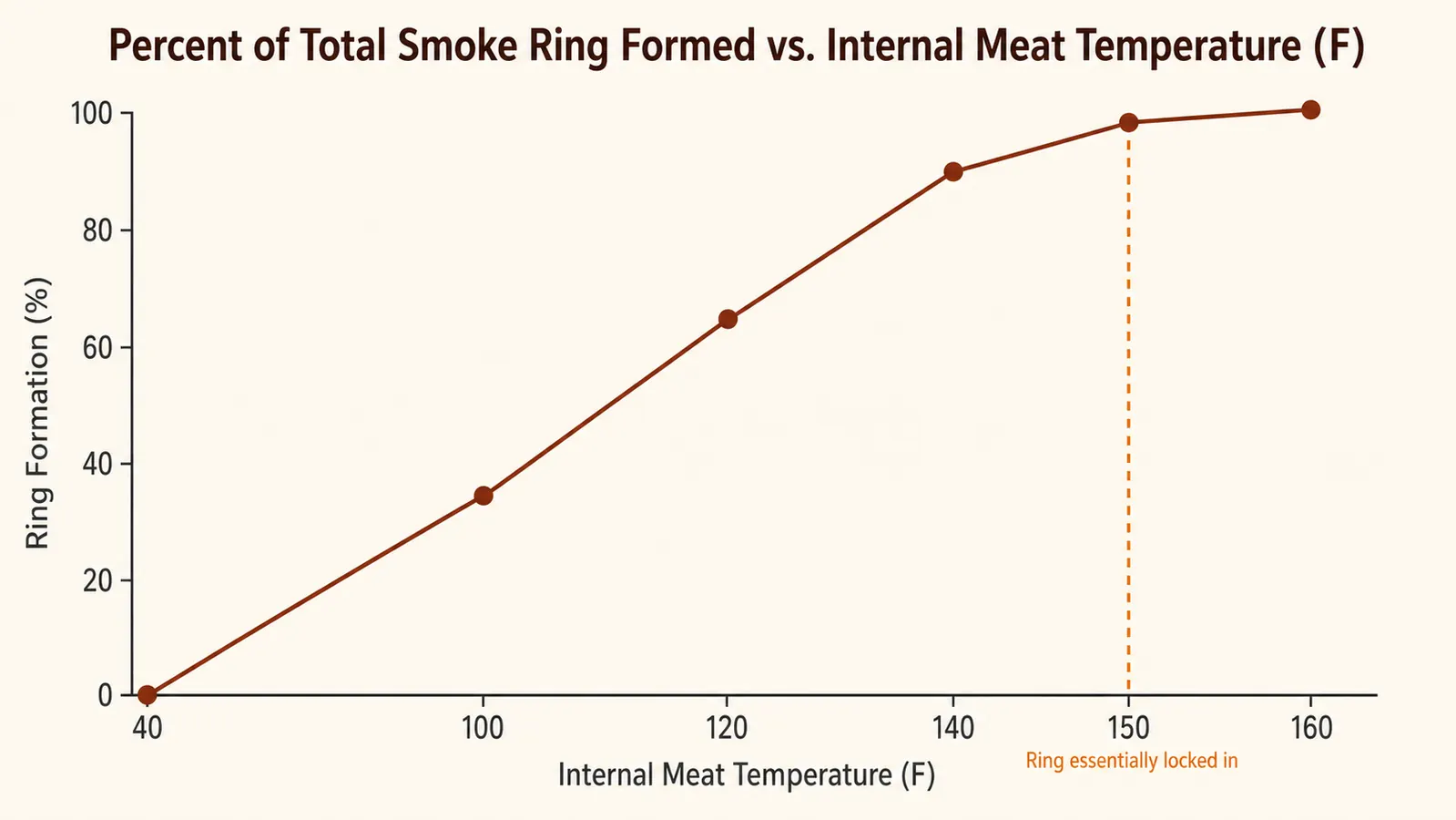
The smoke ring only forms while the meat is under roughly 140 degrees internal. After that the myoglobin denatures and stops binding with the gas, and no amount of extra smoke time is going to add to a ring that already stopped growing. That means the first two to three hours of your cook do almost all the work. On my Traeger I set it to 180 degrees for the first two hours on a pork shoulder, sometimes down on the Smoke setting if the controller has one, before bumping up to 225 or 250 to finish the cook in a reasonable time. That early low stretch is where the ring gets built. Everything after is just about tenderness and bark.
I've tracked this on a handful of cooks with a leave-in probe. On an 8 pound pork butt, internal temp sat under 140 for close to two and a half hours running the Traeger at 180. By the time it crossed 150, the ring was fully formed, I could tell because I pulled a small taste-test wedge off the flat edge and it already showed that quarter inch band. Anything I smoked after that point, another six or seven hours to get to 203 for pulling, added flavor and bark but zero extra ring.
Altitude changes this math a little. Water boils around 202 degrees here instead of 212, and thinner air means my Traeger's fan has to work harder to hold a steady 180, especially on a cold morning. I've had the temp drift down into the 160s on windy days before the controller catches up. That's not a disaster for the ring, colder is actually fine during that early stretch, but it will add 20 to 30 minutes onto how long it takes to get through the smoke-absorbing window, so budget for it.
Step 3: Burn Pellets That Actually Combust Clean, and Keep the Hopper Full
Not all pellets produce the same amount of nitric oxide and carbon monoxide, and that's really the whole game here. I switched to Traeger's 100% hardwood hickory pellets a few years back after running a cheaper blend cut with oak filler and some kind of binder, and the difference in ring formation was noticeable, not just in smell or bark color. The hickory pellets from Traeger burn hot and consistent, which sounds like it would work against you, but a clean, steady burn actually produces the combustion byproducts you need more reliably than a fire that's smoldering and choking on itself. A dirty, cool smolder makes more visible white smoke, but it isn't the same chemistry as the reaction that builds a ring.
Where people go wrong on any pellet grill, Traeger or otherwise, is letting the hopper run low mid-cook. When the auger starts feeding air instead of pellets, or when you get a flame-out and the controller has to re-light, you lose steady combustion for 10 or 15 minutes at exactly the window that matters most, the first two hours. I keep my hopper topped off before I start any cook that needs a ring, brisket, pork butt, anything over four hours. A 20 pound bag of the hickory pellets runs most of a full cook on its own, so there's no excuse to start low.
Storage matters more than people think, too. Pellets pull moisture out of the air fast, and a bag left open in a humid garage or a hopper that sits half full through a rainy week will start to swell and crumble before you ever load the auger. Damp pellets don't feed evenly and they smolder instead of burning clean, which drags you right back into that dirty-smoke problem. I keep my hickory pellets in a sealed bin in the garage, not the paper bag they ship in, and I only fill the hopper the morning of a cook. Out here the air is usually dry enough that this isn't a huge issue, but after a wet spring week I've had a bag go soft enough to notice, and the next cook's ring showed it.
Step 4: Hold Off on the Foil Until the Ring Has Already Set
Wrapping in foil or butcher paper, the Texas crutch, is a great tool for pushing through a stall and keeping bark from over-drying, but it does nothing to your ring if you do it right. Since the ring is basically locked in by the time internal temp crosses somewhere around 145 to 150 degrees, wrapping at 165 or 170 to fight the stall isn't going to undo a ring that already formed. What will hurt you is wrapping too early, at 120 or 130 degrees, before the reaction had time to finish. I've done that out of impatience on a weeknight cook and ended up with a ring maybe a sixteenth of an inch deep instead of the quarter inch I usually get.
My rule now is simple: no foil, no butcher paper, nothing touching the surface of the meat until it's past 150 degrees internal. After that I wrap freely if I'm racing the clock or the bark is getting close to burnt. On a recent 9 pound brisket flat I ran naked on the Traeger until 152, then wrapped in peach paper to finish, and the ring held at a solid quarter inch clean through to the flat's thin end.
Step 5: Judge It Honestly When You Slice, and Don't Chase It With a Rub
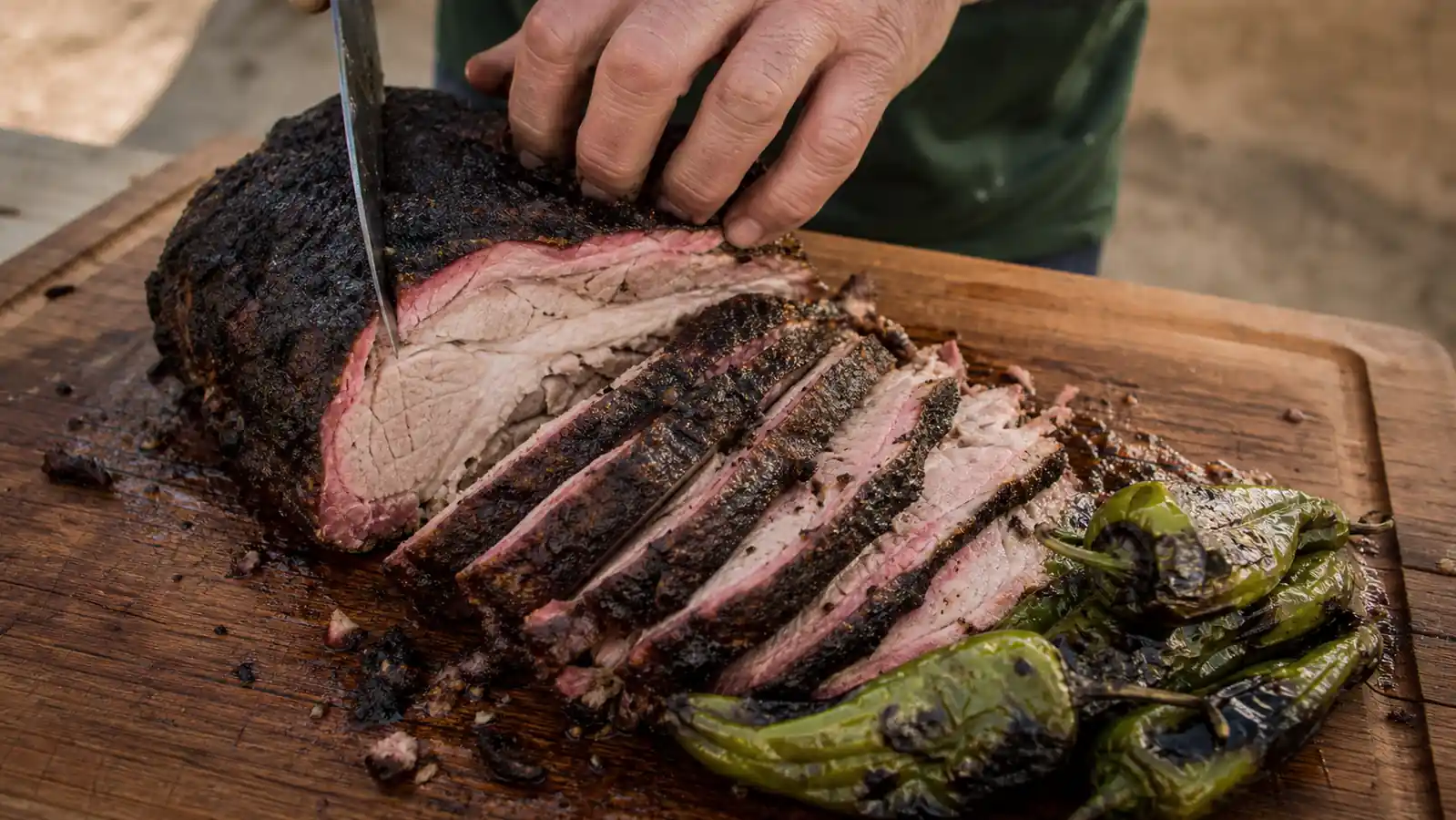
When you finally slice, look for a distinct pink to reddish band right under the bark, usually somewhere between an eighth and a half inch depending on the cut and how long that early window ran. That band should look slightly different in color from the rest of the meat, not just a blush. If what you're seeing is uniform pink all the way through, or a color that showed up the moment you seasoned the meat, that's curing salt or paprika, not smoke. Cure-based pink doesn't fade at the edges the way a real smoke ring does, and it shows up even on meat cooked in an oven with zero smoke exposure.
I'll say this plainly because too many videos oversell it: the smoke ring is cosmetic. It doesn't add flavor, it doesn't mean the meat is more smoky, and a perfect ring on a dry, over-cooked brisket is still a dry, over-cooked brisket. I care about it because it's a nice thing to see when I flip a rack of ribs for a photo, not because it changes how the meat eats. If your ring came out thin one week and thick the next off the same Traeger, same pellets, don't panic, that's normal variation from ambient temperature, wind, and how cold your meat was going in.
What Else Helps
A couple smaller things move the needle without being a full step on their own. A water pan set near the meat adds humidity to the cook chamber, which keeps the surface tacky longer and extends that reaction window a little. I run one on windy days here where the dry air works against me. Grate position on your pellet grill matters too, closer to the firepot usually means more direct exposure to combustion smoke before it dilutes through the chamber, so if your grill has an upper and lower rack, the lower rack tends to ring up a little better on the same cook. None of this replaces the five steps above, but stacked together they're the difference between an average ring and one that makes people ask what wood you used.
Wind is the other variable I can't control and you probably can't either. A steady crosswind pulls smoke through the chamber faster than the grill's fan intended, which cuts down on how long combustion gas has to sit against the meat's surface. On gusty afternoons here, and Albuquerque gets plenty of them in spring, I'll angle a couple of concrete blocks or a spare sheet of plywood upwind of the grill just to break the worst of it. It's not elegant, but it's kept more than one brisket from coming out with a ring on one side and almost nothing on the other.
The ring is chemistry, not seasoning. Cold meat, low heat, clean pellets, patience before the foil. Skip any one of those and you get color instead of a real ring.
Give Your Fire the Clean Smoke It Needs
Every step above assumes a steady, hot-burning fire feeding the chamber. Traeger's hickory pellets are what I keep in the hopper for cooks where the ring actually matters to me.
Amazon Check Today's Price on Amazon →