
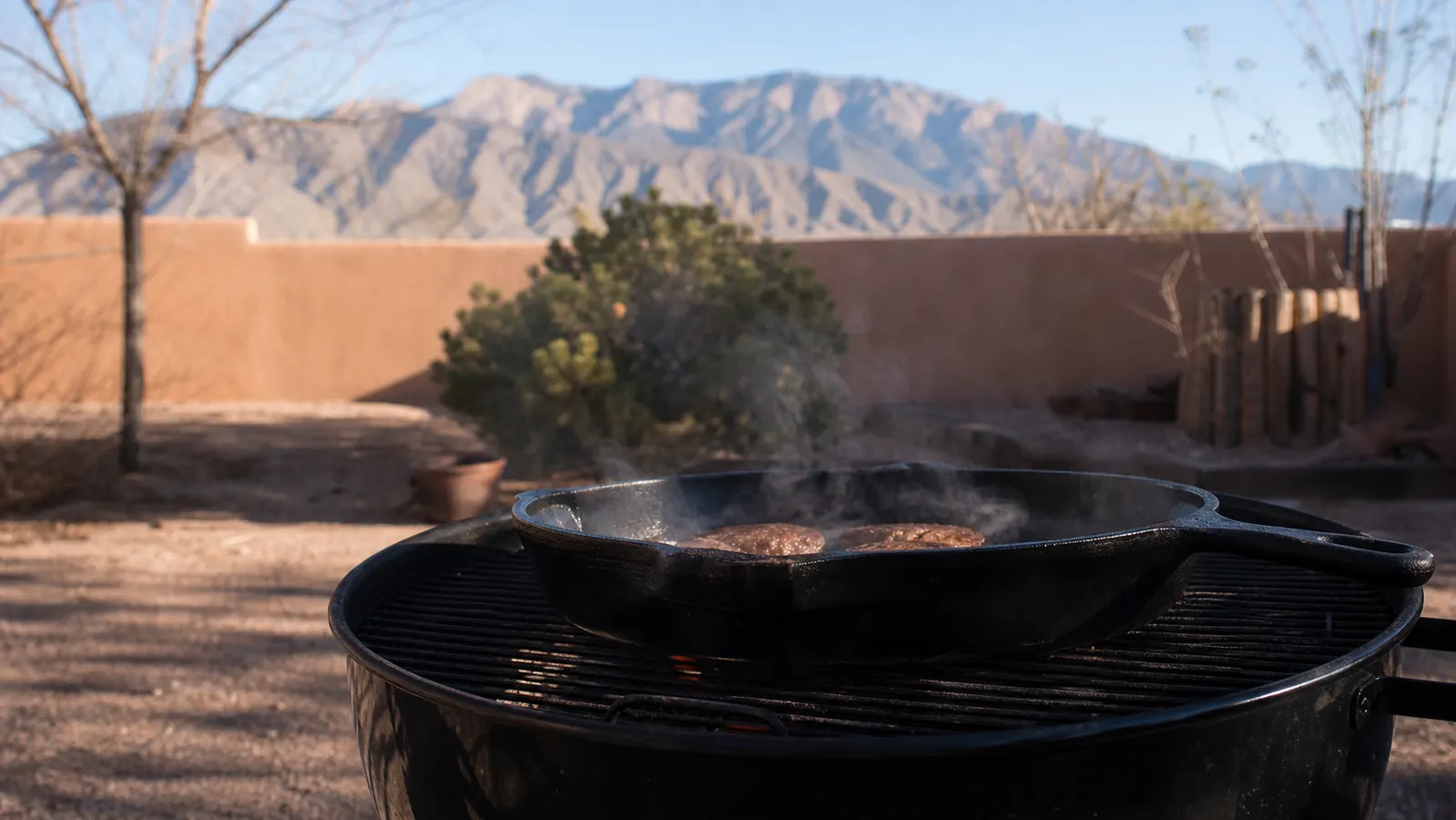
I've got a cast iron griddle that lives on a hook by my back door, and it goes on top of my kettle grill more mornings than not. It's the Lodge Reversible Cast Iron Grill/Griddle Pan, sixteen and three quarter inches by nine and a half, and it's been sitting over real coals since March of 2024. If you cook outside in Albuquerque long enough, at five thousand feet where the fire burns hotter and faster than it does anywhere near sea level, you start asking why breakfast ever needed a stove at all.
This isn't a full review of the Lodge pan, I've written that one separately. This is the short list of reasons a cast iron griddle earns a permanent spot on a charcoal grill instead of staying folded up in a cabinet. Ten reasons, no filler, based on actual cooks over actual coals, where a flat cooking surface solves problems that open grates just can't.
One Pan, a Dozen Uses You're Not Getting From Bare Grates
Before the list, here's the short version: the Lodge Reversible Cast Iron Grill/Griddle Pan turns any charcoal grill into a flat-top for smash burgers, breakfast, and anything too delicate for open bars.
Amazon Check Today's Price on Amazon →It Gives You Two Cooking Surfaces On One Grill
The Lodge Reversible Cast Iron Grill/Griddle Pan does exactly what the name says, flip it and you get a ridged side for steaks and a smooth side for everything else. I run the ridged side for skirt steak and green chile sausage when I want grill marks and a little char, then flip it smooth for the next round of quesadillas or hash browns without changing pans or hauling anything inside. On a 22 inch kettle, that's one accessory replacing what would otherwise be a separate griddle attachment and a set of grates I don't have room to store.
It Buffers the Wild Heat Swings of High-Altitude Charcoal
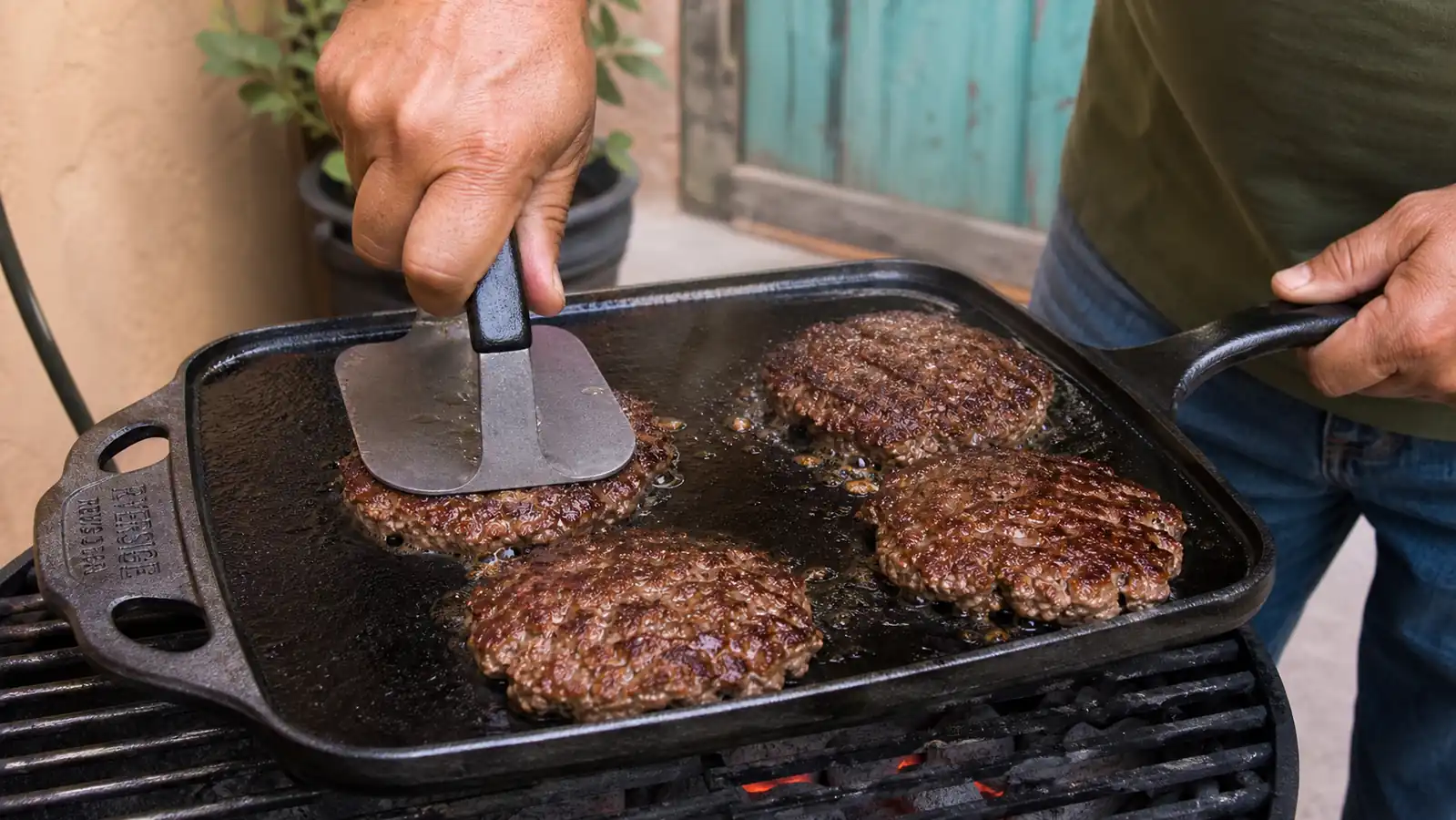
Charcoal runs hotter and burns faster up here at five thousand feet than it does at sea level, the thin dry air feeds the fire more oxygen than it should. A bare grate over that fire gives you hot spots you can map by the scorch marks. Set roughly nine and a half pounds of cast iron over the same coals and the mass evens things out, the griddle soaks up the spikes instead of passing them straight to the food. My scrambled eggs stopped scorching in one corner and going runny in the other the week I started using it.
It Actually Sears Instead Of Just Marking
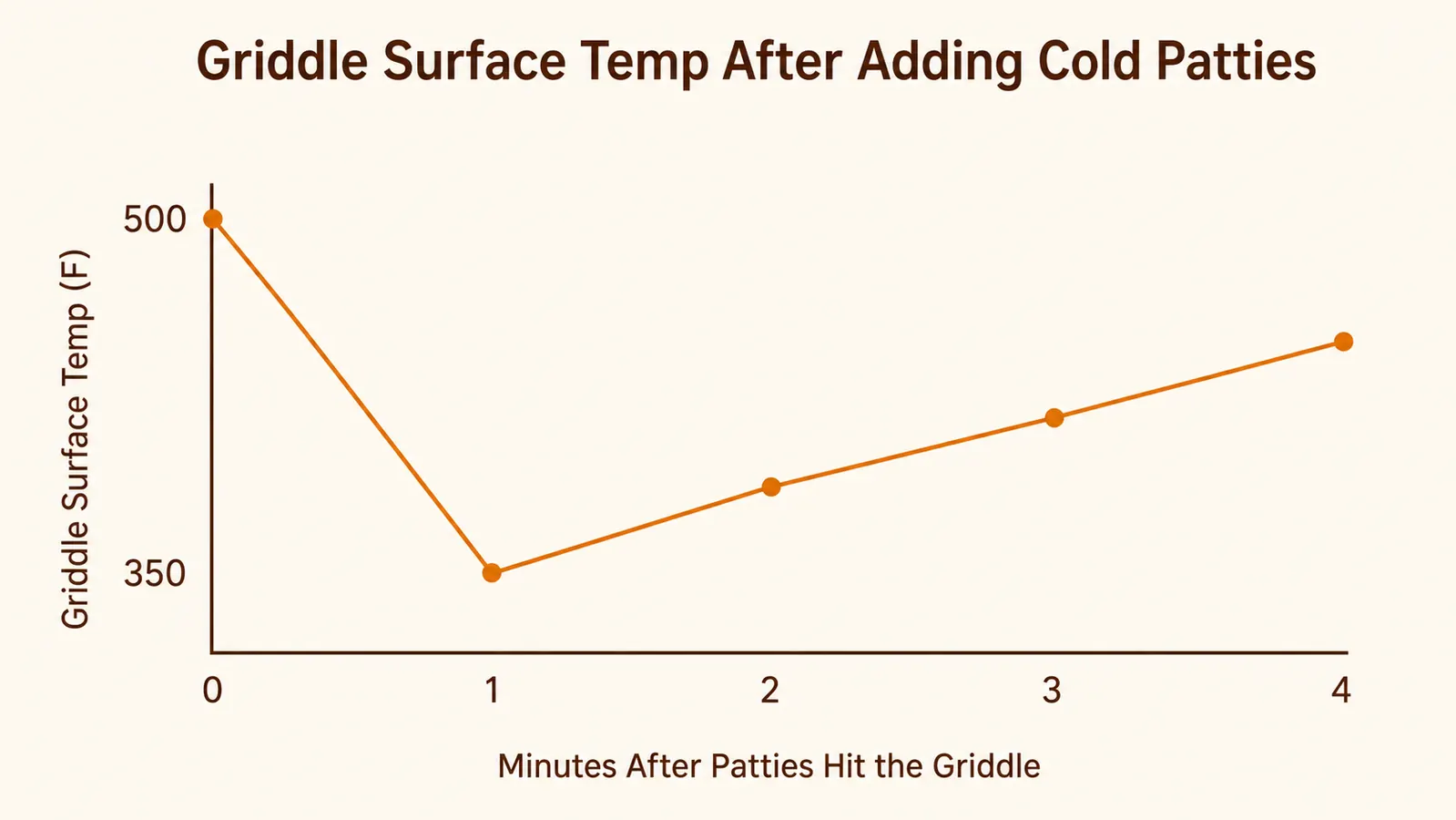
Open grates lose most of a burger's fat and juice straight into the coals, which is great for smoke and bad for crust. The first time I ran four quarter pound patties across the smooth side, my infrared gun read 500 degrees before I dropped them and 350 within about a minute of contact. Four minutes later it was climbing back through 450, hot enough to keep building crust instead of steaming the meat in its own runoff. That's the difference between a smash burger with a real crust and one that just tastes like a hamburger patty.
Bacon Grease Stops Being a Flare-Up Problem
Bacon on an open grate means fat hitting hot coals and flames jumping up to lick whatever's cooking next to it. On the griddle, the grease pools and cooks the next thing in the pan instead of catching fire. I do bacon, then green chile hash browns in the same grease, then eggs, all without moving the pan or fighting a flare-up. That's a full Saturday breakfast for four people cooked outside on one grill with a single flip of the Lodge pan.
Nothing Falls Through the Grates Again
Shrimp, sliced squash, thin fish fillets, anything under about half an inch thick has a real chance of ending up in the coals on an open grate. The griddle solves that by being a solid surface, not a set of bars. I've cooked whole trout fillets and thin-sliced nopales on it without losing a single piece, and the smooth side gives you enough control to actually turn delicate food instead of watching it break apart on you.
It Comes Pre-Seasoned and Gets Better Outside, Not Worse
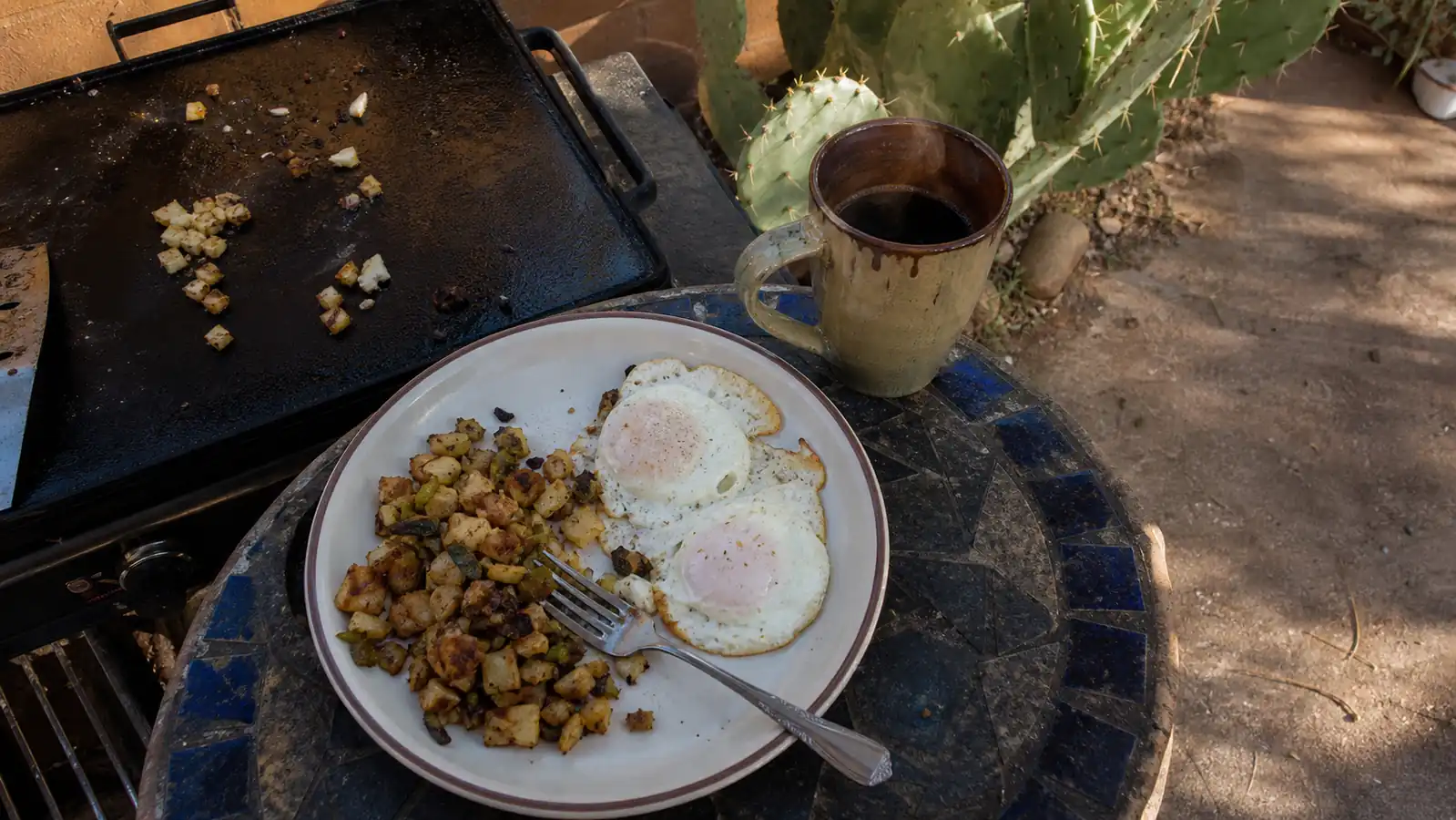
Lodge ships this griddle pre-seasoned, so it's cooking on day one without the usual oven-seasoning ritual. What surprised me is how much faster it built a real working patina once it started living over charcoal instead of a stovetop burner. Radiant heat from lump and briquettes runs hotter and more even across the whole surface than a stove burner ever will, and eighteen months in, mine has a finish that's darker and more slick than the cast iron I keep in the kitchen.
It Sits Flush and Stable On a Kettle's Grates
At sixteen and three quarter by nine and a half inches, the Lodge pan sits centered on a 22 inch Weber kettle's cooking grate without teetering, which matters more than it sounds like when you're flipping four burgers at once. I've used lighter, cheaper griddles that rock the second you press a spatula down on one side. Cast iron's weight keeps it planted, and that stability is part of why I trust it enough to walk away for a minute and grab the tongs.
It Picks Up Real Smoke Flavor an Indoor Pan Never Will
A cast iron griddle on the stove is just a pan. The same pan set over lit mesquite or pecan on my kettle sits right in the smoke column, and food cooked on it picks up a faint wood note that a griddle in the kitchen can't touch. Eggs and potatoes off this griddle taste like they came off the grill because they did, even though nothing ever touched an open flame directly.
It Keeps the Grill In Use Through the Cold Months
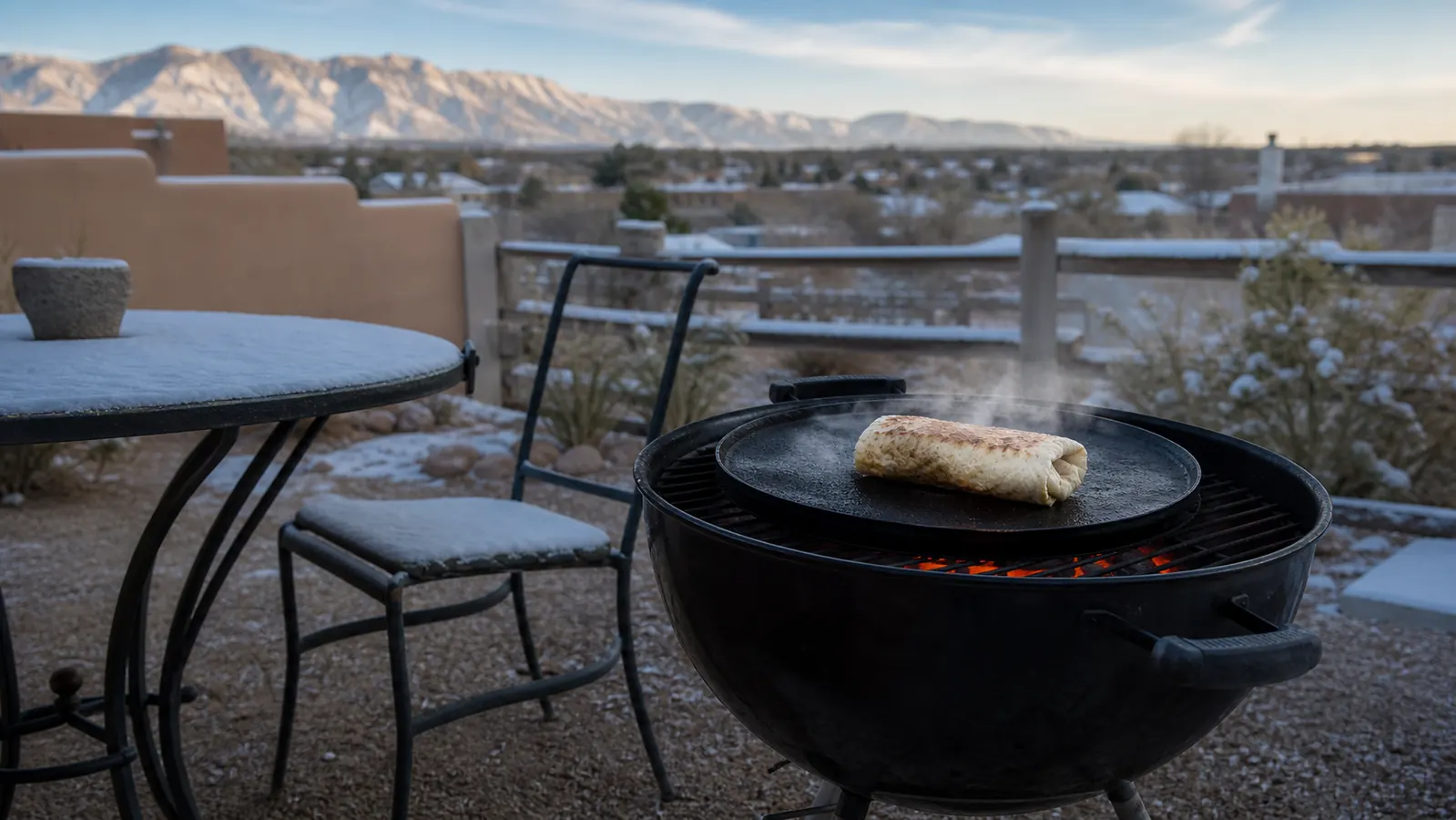
A quick breakfast doesn't always justify lighting a full chimney of charcoal, but a smaller bed of coals under a cast iron griddle heats fast and holds heat through a chilly morning. I've cooked green chile breakfast burritos on this pan with snow still sitting on the patio table, coffee steaming right next to it. The griddle is the reason my kettle doesn't get put away from November to March.
One Pan Replaces Gear You'd Otherwise Have To Buy Twice
The Lodge Reversible Cast Iron Grill/Griddle Pan runs budget-friendly at today's price, which is less than most single-purpose flat-top attachments made for one specific grill brand. Cast iron doesn't wear out the way stamped steel griddles do either, mine still has flat, true cooking surfaces on both sides after two summers and one very rusty near-miss I'll cover below. Buy the Lodge pan once and it outlasts the grill it started on.
What I'd Skip
I'd skip the cheap stamped steel griddle inserts sold as universal grill accessories, the thin metal warps within a season of real heat and never sits flat again. I'd also skip using any cast iron griddle bone dry straight out of a hot dishwasher cycle, that's how the rusty near-miss happened, a quick air-dry and a wipe of oil after every cook is the whole trick. And I wouldn't bother with a nonstick-coated flat top for outdoor use, coatings don't hold up to charcoal heat the way bare cast iron does.
A griddle that sits over real coals cooks different than the same pan on a stove, and once you taste the difference you stop wanting to go back inside.
Ready to Move Breakfast Off the Stove?
The Lodge Reversible Cast Iron Grill/Griddle Pan fits most kettle grills and gas grates alike, and it's the single piece of gear I'd replace last.
Amazon Check Today's Price on Amazon →